التشخيص
قد يبدأ تشخيص السرطانة القنوية الغزوية بإجراء الفحص ومناقشة الأعراض. وأحيانًا يبدأ التشخيص باختبار تصويري، مثل تصوير الثدي بالأشعة (الماموغرام)، يظهر وجود شيء مقلق في الثدي. ولتأكيد ما إذا كان يوجد سرطان أم لا، قد يوصي اختصاصي الرعاية الصحية بإجراء طبي —يُسمى خزعة— لأخذ عينة من أنسجة الثدي لفحصها في المختبر. في حين أن عدة اختبارات يمكنها رصد شيء في الثدي قد يكون سرطانًا، الخزعة هي الاختبار الوحيد الذي يمكنه تحديد ما إذا كنتِ مصابة بسرطانة قنوية غزوية أم لا.
فحص الثدي
خلال فحص الثدي، يفحص اختصاصي الرعاية الصحية الثديين للتحقق من عدم وجود أي شيء غير طبيعي، بما في ذلك تغيرات في الجلد أو الحلمة. ثم يتحسس اختصاصي الرعاية الصحية الثديين للتحقق من وجود كُتل. يتحسس اختصاصي الرعاية الصحية أيضًا عظم الترقوة والمنطقة حول الإبطين للتحقق من وجود كُتل.
تصوير الثدي بالأشعة (الماموغرام)
الحصول على صورة الثدي الشعاعية
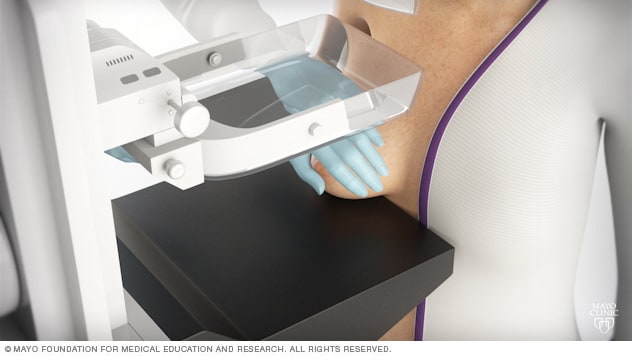
الحصول على صورة الثدي الشعاعية
أثناء صورة الثدي الشعاعية (الماموغرام)، تقفين أمام جهاز الأشعة السينية المصمم لتصوير الثدي الشعاعي. ثم تضع مساعدةٌ فنيةٌ ثديَ المريضة على سطح مستوٍ بعد أن تضبط ارتفاع هذا السطح ليناسب طول المريضة. وبعدها تساعدكِ على ضبط وضعية الرأس والذراع والجذع بطريقة لا تعوق رؤية الثدي.
تصوير الثدي بالأشعة (الماموغرام) هو إجراء لتصوير أنسجة الثدي بالأشعة السينية. يشيع استخدام هذا الإجراء لفحص سرطان الثدي. إذا أَظهرت صورة الثدي الشعاعية الاستقصائية شيئًا مثيرًا للقلق، فقد يلزم إجراء تصوير الثدي بالأشعة مجددًا لفحص المنطقة عن قُرب. تُسمى تصوير الثدي بالأشعة الأكثر تفصيلاً هذه تصوير الثدي بالأشعة التشخيصية. وفي أغلب الأحيان، يُستخدم لفحص الثديين من كثب.
في تصوير الثدي بالأشعة، تبدو السرطانة القنوية الغزوية عادةً مثل ورم ذي حواف غير منتظمة.
تصوير الثدي بالموجات فوق الصوتية
يستخدم التصوير بالموجات فوق الصوتية موجات صوتية لالتقاط صور للأجزاء الداخلية من الجسم. وقد يوفر تصوير الثدي بالموجات فوق الصوتية لفريق الرعاية الصحية مزيدًا من المعلومات عن الكتلة الموجودة في الثدي. فعلى سبيل المثال، قد يُظهر التصوير بالموجات فوق الصوتية ما إذا كانت هذه الكتلة صلبة أم عبارة عن كيسات مليئة بالسوائل. يستخدم فريق الرعاية الصحية هذه المعلومات لتحديد الفحوصات التي قد تحتاجين إلى إجرائها بعد ذلك.
في تصوير الثدي بالموجات فوق الصوتية، تبدو السرطانة القنوية الغزوية عادةً مثل بقعة داكنة ذات حواف غير منتظمة. قد يظهر التصوير بالموجات فوق الصوتية خطوطًا رفيعة تمتد من حافة السرطان.
تصوير الثدي بالرنين المغناطيسي
تصوير الثدي بالرنين المغناطيسي
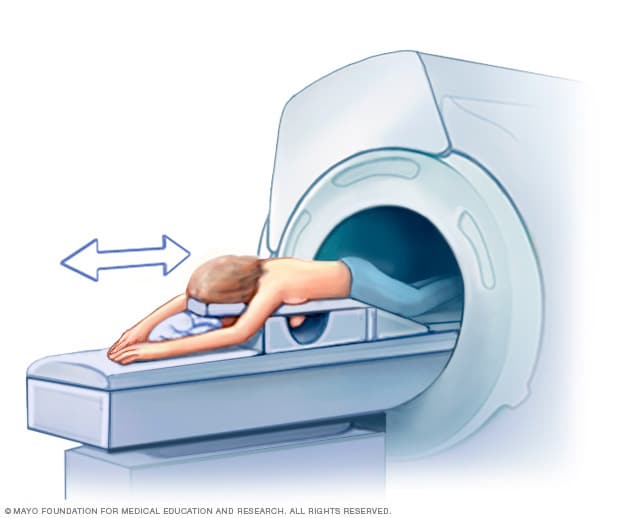
تصوير الثدي بالرنين المغناطيسي
يتضمن تصوير الثدي بالرنين المغناطيسي الاستلقاء على البطن على طاولة فحص مبطنة. ويُدخَل الثديان في تجويف مفرّغ موجود في الطاولة. يحتوي التجويف على ملفات تستقبل الإشارات من جهاز التصوير بالرنين المغناطيسي. ثم تنزلق الطاولة نحو الفتحة الكبيرة لهذا الجهاز.
تستخدم أجهزة التصوير بالرنين المغناطيسي مجالاً مغناطيسيًا وموجات راديوية لالتقاط صور للأجزاء الداخلية من الجسم. يمكن أن يلتقط تصوير الثدي بالرنين المغناطيسي صورًا أكثر تفصيلاً للثدي. في بعض الأحيان يُجرى هذا الفحص للتحقق من كثب من وجود أي مناطق أخرى مصابة بالسرطان في الثدي المصاب. ويمكن أيضًا أن يُجرى للبحث عن السرطان في الثدي الآخر. قبل تصوير الثدي بالرنين المغناطيسي، تتلقين عادةً مادة التباين عن طريق الحقن. تساعد هذه المادة في إظهار الأنسجة بشكل أوضح في الصور.
خزعة الثدي
الخزعة الداخلية بالإبرة
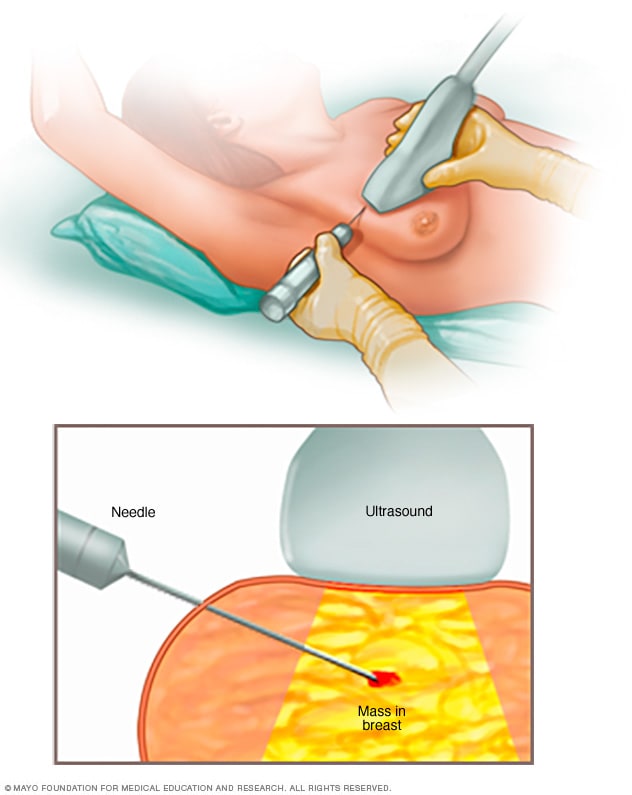
الخزعة الداخلية بالإبرة
في إجراء الخزعة اللبية بالإبرة، يُستخدم أنبوب طويل ومجوف لأخذ عينة من الأنسجة. ثم تُرسَل العينة إلى مختبر ليفحصها أطباء متخصصون في تحليل الدم وأنسجة الجسم، ويطلق عليهم اختصاصيو الباثولوجيا (خبراء الأمراض).
الخزعة إجراءٌ طبي تُؤخذ فيه عينة من الأنسجة لفحصها في المختبر. لأخذ خزعة من الثدي، يُدخل اختصاصي الرعاية الصحية إبرة عبر الجلد ونسيج الثدي، ويوجّه الإبرة اعتمادًا على الصور الملتقطة بالأشعة السينية أو التصوير بالموجات فوق الصوتية أو أي نوع آخر من أنواع التصوير. وبمجرد وصولها إلى المكان الصحيح، يبدأ اختصاصي الرعاية الصحية بسحب عينة نسيج من الثدي. وغالبًا توضع علامة على النقطة التي سُحبت منها عينة النسيج. تظهر هذه العلامة المعدنية الصغيرة في الاختبارات التصويرية، حيث تساعد فريق الرعاية الصحية في تحديد المنطقة محل الفحص.
الفحوصات المختبرية
تُرسَل عينة الأنسجة المأخوذة بالاختزاع إلى مختبر لفحصها. ويمكن أن تُظهر الفحوصات ما إذا كانت خلايا العينة خلايا سرطانية أم لا. وهناك اختبارات أخرى يمكن أن تعطي تفاصيل أكثر عن الخلايا. تُجرى الاختبارات بواسطة اختصاصيي الباثولوجيا (خبراء الأمراض). اختصاصيو الباثولوجيا (خبراء الأمراض) هم أطباء يبحثون عن الأمراض في الخلايا والسوائل والأنسجة المستأصلة من الجسم.
وتُذكر النتائج غالبًا في تقرير علم الأمراض. وقد تُظهِر النتائج ما يلي:
- نوع الخلية. تُظهر النتائج ما إذا كانت الخلايا السرطانية خلايا قنوية، أم خلايا فصيصية، أم أنواع أخرى من الخلايا. تحتوي السرطانة القنوية الغزوية على خلايا قنوية.
- درجة الخلية. تعتمد درجة خلايا سرطان الثدي على مظهر الخلايا وشكلها تحت المجهر. ويستدل فريق الرعاية الصحية من درجة السرطان على ما إذا كان من المحتمل أن ينمو السرطان ببطء أم بسرعة.
- حالة مستقبلات الهرمون. تستخدم معظم خلايا سرطان الثدي هرمونَي الإستروجين والبروجسترون لمساعدتها على النمو. تحتوي الخلايا التي تنفذ ذلك على مستقبلات تساعدها في التقاط الهرمونات السارية في مجرى الدم. إذا أظهر الاختبار وجود مستقبلات لأحد الهرمونين أو كليهما، فيكون السرطان إيجابيًا لمستقبلات الهرمونات. أما إذا لم يجد الاختبار مستقبلات، فيكون السرطان سلبيًا لمستقبلات الهرمونات.
- حالة بروتين HER2. تستخدم بعض خلايا سرطان الثدي بروتينًا يُسمى مُستقبِل عامل نمو البشرة البشري 2 (بروتين HER2) لمساعدتها في النمو. ورغم أن خلايا الثدي السليمة تُنتج كميات معينة من بروتين HER2، فإن الخلايا السرطانية تُنتج كميات أكبر بكثير من هذا البروتين. إذا أظهرت الاختبارات أن الخلايا السرطانية تحتوي على نسخ إضافية من جين بروتين HER2 أو مستويات متزايدة من بروتين HER2، فيكون السرطان إيجابيًا لبروتين HER2. أما إذا لم يكشف الاختبار عن هذه النتائج، فيكون السرطان سلبيًا لبروتين HER2.
- درجة Ki-67. Ki-67 هو بروتين يحدد مدى سرعة انقسام الخلايا السرطانية، ويسمى أيضًا معدل التكاثر. تتراوح درجة Ki-67 بين 0% و 100%. تشير الدرجة الأعلى إلى معدل أعلى لانقسام الخلايا ونمو أسرع.
يستخدم فريق الرعاية الصحية نتائج الفحوصات المخبرية لتحديد مرحلة السرطان، وفهم مآل المرض، ووضع خطة علاجية.
اختبارات تصنيف مراحل السرطان
بمجرد تشخيص فريق الرعاية الصحية إصابتكِ بالسرطانة القنوية الغزوية، قد تُجرى لكِ اختبارات أخرى لتحديد مدى انتشار السرطان. تُسمى هذه الخطوة تحديد مرحلة السرطان. بناءً على مرحلة إصابتكِ بالسرطان، يتمكن فريق الرعاية الصحية من معرفة مآل المرض.
قد لا تتوفر معلومات كاملة عن مرحلة السرطان لديكِ إلا بعد إجراء جراحة سرطان الثدي.
قد تتضمن الاختبارات والإجراءات المُستخدَمة لتحديد مرحلة سرطان الثدي الآتي:
لا تحتاج جميع المريضات إلى كل هذه الاختبارات. إذ يحدد فريق الرعاية الصحية الاختبارات المناسبة بناءً على حالتكِ.
تتشابه مراحل السرطانة القنوية الغزوية مع مراحل أنواع أخرى من سرطان الثدي. تُصنّف مراحل سرطان الثدي من 0 إلى 4، حيث يدل الرقم الأدنى على أن السرطان في مرحلة أقل تفاقمًا ومن المحتمل علاجه والشفاء منه بدرجة كبيرة. ومع نمو السرطان داخل نسيج الثدي وتفاقمه أكثر، فإنه ينتقل إلى مرحلة أعلى.
للمزيد من المعلومات
الدرجات
درجة السرطان هي رقم يوضح لفريق الرعاية الصحية مدى اختلاف شكل الخلايا السرطانية عن الخلايا السليمة. وتتراوح درجات السرطانة القنوية الغزوية (IDC) بين الأولى والثالثة.
لتحديد الدرجة، يستخدم الأطباء في المختبر —يُطلق عليهم خبراء الأمراض— المجهر لفحص الخلايا السرطانية المأخوذة من الخزعة. وإذا بدت الخلايا السرطانية مشابهة للخلايا السليمة، فتُصنّف بدرجة منخفضة. وهذا السرطان منخفض الدرجة ينمو ببطء. أما إذا كانت الخلايا السرطانية مختلفة للغاية عن الخلايا السليمة، فتُصنّف بدرجة عالية. وهذا السرطان عالي الدرجة ينمو بسرعة.
تشمل درجات السرطانة القنوية الغزوية ما يلي:
- الدرجة الأولى. تُصنّف الدرجة الأولى بأنها درجة منخفضة. وتبدو فيها الخلايا السرطانية مشابهة للخلايا السليمة. غالبًا تنمو السرطانة القنوية الغزوية من الدرجة الأولى ببطء وينخفض احتمال انتشارها. وفي بعض الأحيان، تُسمى سرطانًا جيد التمايز.
- الدرجة الثانية. تُصنّف الدرجة الثانية بأنها درجة متوسطة. وتبدو فيها الخلايا السرطانية مختلفة قليلاً عن الخلايا السليمة. تنمو السرطانة القنوية الغزوية من الدرجة الثانية بسرعة أكبر مقارنة بالسرطانة من الدرجة الأولى. ويزداد أيضًا احتمال انتشارها. وفي بعض الأحيان، تُسمى سرطانًا متوسط التمايز.
- الدرجة الثالثة. تُصنّف الدرجة الثالثة بأنها درجة عالية. وتبدو فيها الخلايا السرطانية مختلفة بشكل كبير عن الخلايا السليمة. السرطانة القنوية الغزوية من الدرجة الثالثة سريعة النمو. وهي الأكثر خطورة من حيث احتمال الانتشار. وفي بعض الأحيان، تُسمى سرطانًا ضعيف التمايز.
تساعد معرفة درجة الورم فريق الرعاية الصحية في فهم مآل المرض وتحديد خطة العلاج المناسبة. يزداد احتمال انتشار السرطانات عالية الدرجة، لذا تتطلب علاجًا مكثفًا. من المرجح أن تحتوي خلايا السرطانة القنوية الغزوية من الدرجة الأولى أو الثانية على مستقبلات الهرمون، وبالتالي تستجيب للعلاج بحاصرات الإستروجين. بينما تكون السرطانات من الدرجة الثالثة أكثر استجابة للعلاج الكيميائي.
العلاج
غالبًا يتضمن علاج السرطانة القنوية الغزوية جراحة لاستئصال السرطان. تشمل خيارات العلاج الأخرى العلاج الإشعاعي والعلاج الكيميائي والعلاج بحاصرات الإستروجين والمعالجة الاستهدافيّة والمعالجة المناعية. ويخضع معظم الأشخاص لأكثر من نوع علاج واحد.
يشبه علاج السرطانة القنوية الغزوية علاج أنواع سرطان الثدي الأخرى. لا توجد علاجات محددة للسرطانة القنوية الغزوية. تعتمد خيارات العلاج أكثر على مرحلة السرطان وحالة مستقبل الهرمونات وحالة بروتين HER2.
ستُجرى عمليات جراحية لمعظم المصابات بالمرحلة الأولى أو الثانية من السرطانة القنوية الغزوية بوصفها الخيار الأول للعلاج. في معظم الحالات، تتلقى المصابات بسرطان الثدي علاجات أخرى بعد الجراحة، مثل العلاج الإشعاعي والعلاج الكيميائي والعلاج الهرموني. تقتل هذه العلاجات الأخرى أي خلايا سرطانية قد تبقى بعد الجراحة وتقلل خطر عودة السرطان.
في بعض الأحيان يبدأ العلاج بالأدوية. قد يقترح فريق الرعاية هذا الخيار في حال الإصابة بالسرطانة القنوية الغزوية من المرحلة الثالثة التي قد نمت بشكل كبير أو انتشرت إلى العُقَد اللمفية. وقد يقلص استخدام الدواء أولاً حجم السرطان بحيث تصبح الجراحة ممكنة أو التفكير في إجراء جراحة أقل توغلاً. كذلك يسمح لفريق الرعاية بمعرفة كيفية استجابة السرطان للأدوية. يُظهر مدى الاستجابة لفريق الرعاية مآل المرض ويساعدهم في اتخاذ قرارات بشأن الخطوات التالية.
بالنسبة إلى السرطانة القنوية الغزوية من المرحلة الرابعة التي انتشرت إلى أجزاء أخرى من الجسم، يتضمن العلاج استخدام الأدوية. وعادةً لا تُجرى جراحة استئصال السرطان من الثدي إذا كان السرطان قد انتشر.
توجد عدة خيارات أخرى لعلاج سرطان الثدي. ولستِ مضطرة للنظر فيها وحدكِ. بإمكان فريق الرعاية الصحية شرح الخيارات المتاحة لكِ والتعاون معكِ لاختيار خطة علاج تناسب احتياجاتكِ وأهدافكِ. فكري في طلب رأي ثانٍ من اختصاصي أورام ثدي آخر في مركز أو عيادة متخصصة في أورام الثدي. كذلك يكون مفيدًا لبعض المريضات التحدث إلى ناجيات من سرطان الثدي واجهن قرارات مشابهة.
جراحة سرطان الثدي
استئصال الكتلة
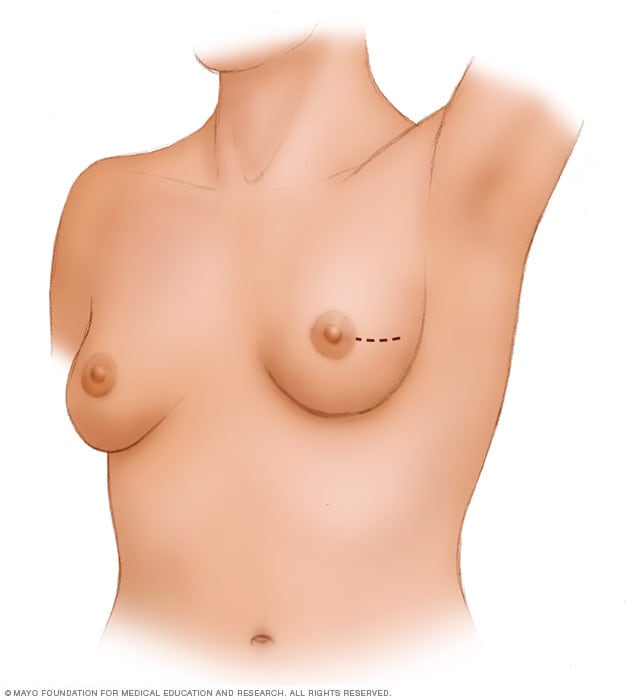
استئصال الكتلة
يتضمن استئصال الكتلة إزالة الورم السرطاني وبعض الأنسجة السليمة المحيطة به.
وتوضح هذه الصورة أحد الأشكال المحتملة للشقوق التي يُمكن إحداثها لتنفيذ هذا الإجراء، غير أن الجرّاح هو من يحدد الطريقة الأفضل حسب حالتك.
استئصال الثدي

استئصال الثدي
في جراحة الاستئصال الكامل للثدي، يستأصل الجرّاح أنسجة الثدي والحلمة والهالة والجلد. ويُعرف الاستئصال الكامل للثدي أيضًا باستئصال الثدي البسيط. وهناك إجراءات أخرى لاستئصال الثدي قد تترك بعض الأجزاء من الثدي كالجلد أو الحلمة. تُجرى جراحة لإعادة بناء ثدي جديد اختياريًا. ويُمكن إجراؤها في ذات وقت استئصال الثدي أو في وقت لاحق.
تتضمن جراحة سرطان الثدي عادةً استئصال سرطان الثدي وأحيانًا استئصال بعض العُقَد اللمفية القريبة. تشمل الإجراءات الجراحية الرئيسية المستخدمة لعلاج السرطانة القنوية الغزوية ما يلي:
- استئصال الكتلة الورمية. في جراحة استئصال الكتلة الورمية، يُستأصل سرطان الثدي وبعض الأنسجة السليمة المحيطة به. وهي تسمح لكِ بالحفاظ على معظم حجم ثديكِ. ولهذه الجراحة أسماء أخرى مثل الجراحة الحافظة للثدي والاستئصال الموضعي الشامل. يخضع معظم المرضى للعلاج الإشعاعي بعد استئصال الورم.
- استئصال الثدي. في جراحة استئصال الثدي، تُستأصل كل أنسجة الثدي. يُستأصل الثدي بأكمله —يُسمى أيضًا استئصال الثدي البسيط— بما في ذلك الفُصيصات والقنوات والأنسجة الدهنية وبعض الجلد، بما في ذلك الحلمة والهالة. وتشمل الإجراءات الطبية الأخرى استئصال الثدي مع الحفاظ على الجلد، وفيه لا يُتسأصل الجلد، واستئصال الثدي مع الحفاظ على الحلمة، وفيه لا تُستأصل الهالة والحلمة والجلد.
- جراحة العُقَد اللمفية. تُجرى جراحة العُقَد اللمفية لإزالة العُقَد اللمفية المجاورة لفحصها بحثًا عن السرطان. فعندما ينتشر سرطان الثدي، فإنه ينتقل غالبًا إلى العُقَد اللمفية الموجودة تحت الذراع. خزعة العقدة الليمفاوية الحارسة هي إجراء طبي لإزالة بعض العُقَد اللمفية لفحصها. يؤدي استئصال العُقَد اللمفية الإبطية إلى إزالة معظم العُقَد اللمفية الموجودة تحت الإبط.
بالنسبة إلى السرطانة القنوية الغزوية في مراحلها المبكرة، استئصال الورم الذي يكون متبوعًا بالعلاج الإشعاعي يحقق معدل البقاء على قيد الحياة نفسه مثل إجراء استئصال الثدي. علمًا بأن نوع السرطان لا يؤثر في الإجراء الطبي الذي ينبغي أن يُجرى لكِ. يعتمد القرار بشكل أكبر على تفضيلاتكِ الشخصية وتفاصيل مرض السرطان الذي لديكِ. يفضل إجراء عملية استئصال الورم في حالات السرطانات الصغيرة للمريضات اللاتي يرغبن في الخضوع للعلاج الإشعاعي. عادةً يُستخدم إجراء استئصال الورم عندما تكون هناك منطقة صغيرة واحدة فقط من السرطان في الثدي. ويُفضل استئصال الثدي في حالات الأورام السرطانية الكبيرة، أو عندما تكون هناك مناطق متعددة من السرطان في الثدي. وقد يُستخدم إجراء استئصال الثدي للمريضات اللاتي لا ترغبن في الخضوع للعلاج الإشعاعي أو لا يستطعن ذلك.
يمكنكِ اختيار إعادة بناء الثدي بعد جراحة استئصال الثدي. إعادة بناء الثدي يُقصد بها جراحة استعادة شكل الثدي. قد تشمل الخيارات إعادة بناء الثدي عن طريق غرسة الثدي أو إعادة بناء الثدي باستخدام أنسجة من الجسم. فكّري في أن تطلبي الإحالة إلى جرّاح تجميل قبل إجراء جراحة سرطان الثدي.
العلاج الإشعاعي
العلاج الإشعاعي
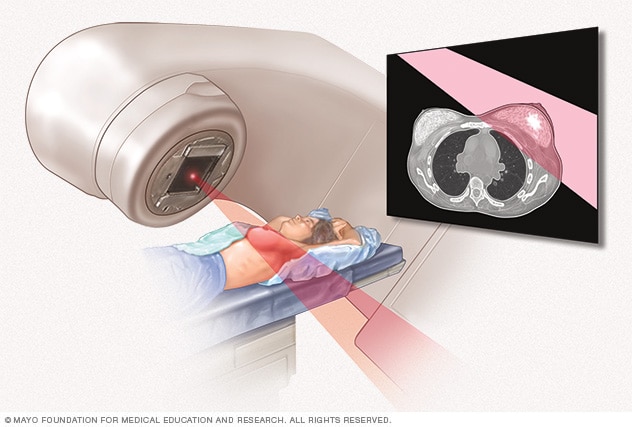
العلاج الإشعاعي
تَستخدم الحزم الإشعاعية الخارجية حزمًا عالية الطاقة لقتل الخلايا السرطانية.
تُوجَّه الحزم الإشعاعية بدقة نحو الورم السرطاني باستخدام جهاز يتحرك حول الجسم.
يُستخدم العلاج الإشعاعي لعلاج السرطان بحزم إشعاعية عالية الطاقة. يمكن أن تتولد هذه الطاقة من الأشعة السينية أو البروتونات أو غيرها من المصادر.
غالبًا يتضمن العلاج الإشعاعي لسرطان الثدي استخدام حزم إشعاعية خارجية. أثناء هذا النوع من العلاج الإشعاعي، تستلقين على طاولة بينما يتحرك جهاز من حولك. يوجّه الجهاز الإشعاع إلى مواضع محددة في الجسم.
غالبًا يُستخدم العلاج الإشعاعي بعد الجراحة لعلاج السرطانة القنوية الغزوية، إذ يمكنه القضاء على أي خلايا سرطانية قد تكون متبقية بعد الجراحة. يقلل الإشعاع خطر تكرار الإصابة بالسرطان.
العلاج الكيميائي
يستخدم العلاج الكيميائي أدوية قوية لعلاج السرطان. يتوفر كثير من أدوية العلاج الكيميائي. يتضمن العلاج الكيميائي لسرطان الثدي غالبًا مجموعة من الأدوية. يُعطى أغلبها عن طريق الوريد. ويتوفر بعضها في شكل أقراص.
يُستخدَم العلاج الكيميائي غالبًا بعد الجراحة لعلاج السرطانة القنوية الغزوية. فالعلاج الكيميائي يمكنه القضاء على أي خلايا سرطانية قد تبقى بعد الجراحة، كما يقلل خطر التعرض لتكرار الإصابة بالسرطان.
يُعطى العلاج الكيميائي أحيانًا قبل الجراحة. قد يساعد ذلك في تقليص حجم السرطان بحيث تصبح الجراحة ممكنة، أو التفكير في إجراء جراحة أقل توغلاً. كذلك يسمح لفريق الرعاية بمعرفة كيفية استجابة السرطان للأدوية.
عند انتشار السرطان إلى أجزاء أخرى من الجسم، يمكن أن يساعد العلاج الكيميائي في السيطرة عليه. قد يخفف هذا العلاج أعراض السرطان المتفاقم، مثل الألم.
العلاج بحاصرات مستقبل الإستروجين
العلاج بحاصرات مستقبل الإستروجين مخصص لعلاج سرطان الثدي الحساس للهرمونات. وهذا يعني أن الخلايا السرطانية تحتوي على بروتينات تُسمى المستقبلات. ترتبط المستقبلات بهرموني الإستروجين والبروجسترون. وينمو السرطان استجابةً لهذه الهرمونات. ويُطلق اختصاصيو الرعاية الصحية على هذه السرطانات اسم السرطانات الإيجابية لمستقبلات الهرمونات. معظم سرطانات الثدي —بما في ذلك معظم السرطانات القنوية الغزوية— حساسة للهرمونات.
يُطلق على العلاج بحاصرات مستقبل الإستروجين أيضًا اسم المعالجة الهرمونية والعلاج الهرموني لسرطان الثدي.
قد تشمل العلاجات بحاصرات مستقبل الإستروجين ما يلي:
- الأدوية التي تمنع أو تدمر مستقبلات الهرمونات. وتُعرف بالأدوية المعدّلة الانتقائية لمستقبلات الإستروجين.
- أدوية تخفض إنتاج الهرمونات. تُسمى هذه الأدية مثبطات الأروماتاز.
- الجراحة أو الأدوية التي تمنع المبيضين من إفراز الهرمونات.
غالبًا يُستخدم العلاج بحاصرات مستقبل الإستروجين بعد الجراحة وعلاجات أخرى. إذ يمكنه تقليل خطر تكرار الإصابة بالسرطان.
وإذا انتشر السرطان ووصل إلى أجزاء أخرى من الجسم، فيمكن للعلاج بحاصرات مستقبل الإستروجين المساعدة في السيطرة عليه.
العلاج الاستهدافي
يستخدم العلاج الاستهدافي أدوية تهاجم مواد كيميائية محددة في الخلايا السرطانية. ويمكن لهذه العلاجات الاستهدافية القضاء على الخلايا السرطانية عن طريق تثبيط نشاط هذه المواد الكيميائية.
تُسبب بعض العلاجات التي تستهدف الخلايا السرطانية إفراز كميات إضافية من بروتين HER2. يُطلق على سرطان الثدي الذي يُسبب إنتاج كميات إضافية من بروتين HER2 اسم سرطان الثدي إيجابي البروتين HER2. تهاجم أدوية علاج استهدافي أخرى بروتينات أخرى في الجسم قد تساعد الخلايا السرطانية في النمو. يمكن اختبار الخلايا السرطانية لمعرفة ما إذا كانت هذه الأدوية فعالة معكِ أم لا.
قد تُستخدم أدوية العلاج الاستهدافي قبل الجراحة لتقليص حجم سرطان الثدي وتسهيل استئصاله. قد تُستخدم الأدوية أيضًا بعد الجراحة لتقليل احتمال عودة السرطان مرة أخرى.
ويُستخدم بعضها فقط إذا انتشر السرطان إلى أجزاء أخرى من الجسم.
العلاج المناعي
العلاج المناعي علاج تُستخدم فيه أدوية تساعد الجهاز المناعي في الجسم على قتل الخلايا السرطانية. يتصدى الجهاز المناعي في الجسم للأمراض عن طريق مهاجمة الجراثيم وغيرها من الخلايا التي لا ينبغي أن تكون موجودة في الجسم. تستطيع الخلايا السرطانية البقاء على قيد الحياة بالاختباء من الجهاز المناعي. ويساعد العلاج المناعي خلايا الجهاز المناعي على العثور على الخلايا السرطانية والقضاء عليها.
قد يكون العلاج المناعي خيارًا مناسبًا لعلاج السرطانة القنوية الغزوية الثلاثية السلبية. يعني سرطان الثدي الثلاثي السلبية أن الخلايا السرطانية لا تحتوي على مستقبلات هرمونية ولا تنتج بروتين HER2 إضافيًا. وقد يُستخدم هذا العلاج قبل إجراء الجراحة وبعدها.
للمزيد من المعلومات
التأقلم والدعم
معرفة الإصابة بالسرطانة القنوية الغزوية يمكن أن تكون غير متوقعة، ومن الطبيعي أن تكون لديك تساؤلات عما سيحدث في المستقبل. قد تتلقي كثيرًا من المعلومات وتواجه قرارات متعلقة بالجراحة والعلاجات الإشعاعية والدوائية. من الشائع أن تنتابك مجموعة من المشاعر التي قد تتغير من يوم إلى آخر، ويستغرق الأمر وقتًا لاستيعاب كل شيء. أثناء المضي قدمًا، إليك بعض الأفكار التي قد تفيدك.
تعرّفي على المعلومات اللازمة لتتمكني من اتخاذ القرارات المناسبة بشأن الرعاية التي تحتاجين إليها
إذا رغبتِ بمعرفة المزيد عن سرطان الثدي، فاسألي فريق الرعاية الصحية عن التفاصيل. دوّني النوع والمرحلة وحالة مستقبل الهرمون. اسألي عن مصادر جيدة للحصول على المعلومات التي يمكنكِ من خلالها معرفة المزيد عن خيارات العلاج المتاحة لك،
إذ قد تساعد معرفة المزيد عن السرطان وخيارات العلاج المتاحة في الشعور بثقة أكبر عند اتخاذ القرارات المتعلقة بالعلاج. ومع ذلك، قد لا يرغب البعض في معرفة تفاصيل عن السرطان. إذا شعرتِ بذلك، فأخبري فريق الرعاية أيضًا.
التحدث إلى ناجيات أخريات من سرطان الثدي
عند التحدث إلى نساء أخريات مشخّصات بسرطان الثدي، قد تجدين ما يفيدكِ ويشجعكِ على التغلب على هذا المرض. اسأل فريق الرعاية الصحية عن مجموعات الدعم الموجودة في منطقتك أو اتصل بالجمعية الأمريكية للسرطان أو أي منظمة أخرى لمكافحة السرطان في منطقتك للعثور على الموارد. يمكنك العثور على الدعم عبر الإنترنت من خلال منصة Mayo Clinic Connect، وهي مجتمع يمكنك من خلاله التواصل مع آخرين للحصول على دعم ومعلومات عملية وإجابات عن الأسئلة اليومية.
ابحث عن شخص يجيد الاستماع
قد يكون العثور على شخص مستعد للاستماع إليك أثناء حديثك عن آمالك ومخاوفك مفيدًا في التأقلم مع تشخيص السرطان. قد يكون هذا الشخص من الأسرة أو الأصدقاء. كما يمكن الاستفادة من الدعم المهني المقدم من الاستشاري النفسي، أو الاختصاصي الاجتماعي الطبي، أو المرشد الروحي.
الاستعداد لموعدك
احجزي موعدًا مع الطبيب أو غيره من اختصاصيي الرعاية الصحية إذا ظهرت عليكِ أي أعراض تثير قلقكِ. إذا أظهر فحص أو اختبار تصويري أنكِ ربما تكونين مصابة بسرطان الثدي، فعلى الأرجح سيحيلكِ فريق الرعاية الصحية إلى اختصاصي.
يشمل الاختصاصيون الذين يعتنون بالمصابات بسرطان الثدي من يأتي:
- اختصاصيو صحة الثدي.
- جرّاحو الثدي.
- أطباء متخصصون في الاختبارات التشخيصية مثل صورة الثدي الشعاعية (الماموغرام) (اختصاصيو الأشعة).
- أطباء متخصصون في علاج السرطان (اختصاصيو الأورام).
- أطباء يعالجون السرطان بالإشعاع (اختصاصيو أشعة الأورام).
- استشاريو الأمراض الوراثية.
- جرّاحو التجميل.
ما يمكنكِ فعله للاستعداد
- دوّني أي أعراض تشعرين بها، بما في ذلك أي أعراض قد تبدو غير مرتبطة بالسبب الذي حددتِ الموعد الطبي من أجله.
- دوّني معلوماتكِ الشخصية الأساسية، بما في ذلك أي ضغوط شديدة تعرضتِ لها أو تغيرات حياتية حدثت لكِ مؤخرًا.
- دوّني السيرة المرَضية العائلية التي تشمل الإصابة بالسرطان. اذكري أي فرد من أفراد العائلة أُصيب بالسرطان من قبل. واذكري صلة القرابة بينكِ وبين كل فرد من المصابين، ونوع السرطان الذي شُخّص به، وعمره عند التشخيص، وما إذا كان قد نجا من السرطان أم لا.
- جهّزي قائمة بكل الأدوية أو الفيتامينات أو المكمّلات الغذائية التي تتناولينها.
- احتفظي بكل السجلات المتعلقة بتشخيص الإصابة بالسرطان وعلاجه. نظمي هذه السجلات في ملف أو مجلد يمكنكِ أخذه إلى مواعيدك الطبية.
- فكري في اصطحاب أحد أفراد العائلة أو الأصدقاء معكِ. قد يكون من الصعب أحيانًا استيعاب كل المعلومات المقدمة إليكِ أثناء الموعد الطبي. وقد يتذكر من يرافقك شيئًا قد فاتك أو نسيته.
- دوّن الأسئلة التي تريد طرحها على اختصاصي الرعاية الصحية.
الأسئلة التي تريدين طرحها على الطبيب
الوقت الذي تقضينه مع اختصاصي الرعاية الصحية محدود. لذا جهّزي قائمة بالأسئلة لمساعدتكِ في الاستفادة القصوى من وقتكما. رتّبي أسئلتك من الأهم إلى الأقل أهمية تحسّبًا لنفاد الوقت. من الأسئلة الأساسية التي ينبغي طرحها على الطبيب بخصوص سرطان الثدي ما يلي:
- ما نوع سرطان الثدي الذي أُصبتُ به؟
- لأيّ مرحلة وصل السرطان لديّ؟
- هل يمكنك أن تشرح لي تقرير علم الأمراض الخاص بي؟ هل يمكنني الحصول على نسخة للاحتفاظ بها في سجلاتي؟
- هل أحتاج إلى إجراء مزيد من الاختبارات؟
- ما الخيارات العلاجية المتاحة لي؟
- ما فوائد كل علاج تنصح به؟
- ما الآثار الجانبية لكل خيار علاجي؟
- هل سيسبب العلاجُ انقطاعَ الطمث؟
- كيف سيؤثر كل خيار علاجي في حياتي اليومية؟ هل بإمكاني مواصلة العمل؟
- هل تُوصي بعلاج بدلاً من آخر؟
- كيف تعرف أن هذه العلاجات ستكون مفيدة لحالتي؟
- إذا كان المريض صديقك أو أحد أفراد عائلتك، فبمَ كنت ستنصحه؟
- متى يجب عليّ اتخاذ القرار بشأن علاج السرطان؟
- ماذا سيحدث إذا لم أرغب في تلقي علاج للسرطان؟
- ما تكلفة علاج السرطان؟
- هل سيغطي التأمين الصحي تكاليف الاختبارات والعلاجات التي تُوصي بها؟
- هل يتعين عليّ استشارة طبيب آخر؟ هل سيغطي التأمين هذا؟
- هل توجد أي كتيبات أو مواد مطبوعة أخرى يمكنني أخذها معي؟ ما المواقع الإلكترونية أو الكتب التي توصي بالاطلاع عليها؟
- هل هناك أي تجارب سريرية أو علاجات جديدة ينبغي أن أفكر فيها؟
لا تترددي في طرح أي أسئلة أخرى تتبادر إلى ذهنكِ أثناء الموعد الطبي إلى جانب الأسئلة التي جهزتها من قبل.
ما الذي يمكنك توقعه من الطبيب
استعدي للإجابة عن بعض الأسئلة المتعلقة بالأعراض التي لديكِ وبصحتكِ، مثل:
- متى ظهرت عليك هذه الأعراض لأول مرة؟
- هل أعراضك مستمرة أم متقطعة؟
- ما درجة شدة الأعراض لديكِ؟
- هل سبق أن كشف تصوير الثدي بالأشعة (الماموغرام) عن شيء مثير للقلق؟
- هل سبق أن أُجريت لكِ خزعة من الثدي؟