تكيّسات الثدي. الأعراض والأسباب
نظرة عامة
أكياس الثدي هي تكيسات مليئة بالسائل تتكوّن داخل الثدي. وتكون غير سرطانية في العادة، أي أنها تكون أورامًا حميدة. وقد يكون لديكِ كيس واحد في الثدي أو أكثر. وقد يكون لديكِ أكياس في أحد الثديين أو كليهما. يكون ملمس الكيس الموجود في الثدي شبيهًا بثمرة العنب أو بالون مملوء بالماء غالبًا، ولكن في بعض الأحيان يكون ملمسه صلبًا. وقد يتحرك الكيس قليلاً عند الضغط عليه. كما قد تُسبب الأكياس أحيانًا الشعور بألم في الثديين عند لمسهما.
لا تحتاجين إلى تلقي علاج للأكياس الموجودة في الثدي إلا إذا كانت كبيرة ومؤلمة أو مزعجة. قد تؤدي التغيّرات الهرمونية التي تسبق الدورة الشهرية مباشرة إلى زيادة حجم الأكياس وزيادة الألم المصاحب لها. في بعض الأحيان، قد يكون تصريف السائل من كيس موجود في الثدي كافيًا لتخفيف الأعراض.
رغم أن أكياس الثدي قد تحدث في أي عمر، فإنها عادةً تحدث قبل سن الخمسين وأثناء انقطاع الطمث. ولكنها يمكن أن تحدث أيضًا بعد انقطاع الطمث لدى السيدات اللاتي يتناوَلن علاجًا هرمونيًا.
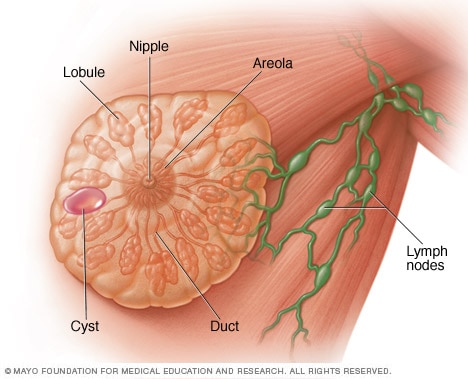
تكيس الثدي
قد يتحرك تكيس الثدي، كيس بيضاوي أو دائري ممتلئ بسائل، بشكل طفيف عند الضغط عليه.
الأعراض
تشمل مؤشرات تكيسات الثدي وأعراضها ما يلي:
- وجود كتلة ناعمة ودائرية أو بيضاوية ويمكن تحريكها بسهولة ولها حواف ملساء. وعادةً لا تكون مثل هذه التكتلات سرطانية.
- إفرازات الحلمة التي قد يكون لونها شفافًا أو أصفر أو أصفر باهتًا أو بنيًا داكنًا.
- الشعور بألم في الثدي أو إيلام عند لمس منطقة الكتلة في الثدي.
- زيادة حجم الكتلة وزيادة الشعور بألم عند لمس الثدي قبل بدء الدورة الشهرية مباشرة.
- نقصان حجم الكتلة واختفاء الأعراض الأخرى بعد انتهاء الدورة الشهرية.
لا تزيد تكيسات الثدي خطر إصابتكِ بسرطان الثدي، لكن قد تصعّب العثور على كتل جديدة أو ملاحظة أي تغييرات أخرى في الثديين. قد تشعرين بتكتل الثديين وألم فيهما أثناء الدورة الشهرية، لذا من المهم أن تكوني على دراية بطبيعة شعوركِ بثدييكِ أثناء دورة الحيض. وبهذه الطريقة، ستتمكنين من رصد أي تغيرات قد تطرأ وتتطلب فحصًا من قِبل اختصاصي الرعاية الصحية.
متى ينبغي زيارة الطبيب
يكون ملمس أنسجة الثدي متكتلاً في العادة. ولكن إذا شعرتِ بكتلة جديدة في الثدي لا تتلاشى، أو تتضخم، أو تبدو مختلفة، أو تستمر بعد دورة حيض أو دورتين، فبادري بزيارة اختصاصي الرعاية الصحية فورًا. يُرجى زيارة اختصاصي الرعاية الصحية في حالة حدوث تغيُّرات جديدة للجلد على أحد الثديين أو كليهما.
الأسباب
السبب الدقيق للإصابة بأكياس الثدي غير معروف. ويتفق معظم الخبراء على أن الأكياس قد تحدث بسبب التغيُّرات الهرمونية أثناء الدورة الشهرية.
تتكوّن أكياس الثدي عندما يتراكم السائل داخل الغدد الموجودة في الثدي. علمًا بأن كلاً من الثديين يحتوي على فصوص من الأنسجة الغدّية. ويتكوّن النسيج الغدّي من خلايا تُكوِّن الغدد. وتترتب هذه الفصوص في الثديين مثل بتلات زهرة الأقحوان. وتنقسم هذه الفصوص إلى فصيصات أصغر تُنتج الحليب أثناء فترتي الحمل والرضاعة. يمكن أن تتكوّن الأكياس عندما تكون قنوات الحليب أو غدد أخرى مسدودة أو متمددة.
وتتعدد أحجام أكياس الثدي، وذلك حسب كمية السائل الموجودة بداخلها.
- التكيسات الدقيقة: تكون صغيرة جدًا لدرجة عدم الشعور بها ولكن يمكن رؤيتها خلال الاختبارات التصويرية الطبية، مثل تصوير الثدي الإشعاعي أو التصوير بالموجات فوق الصوتية.
- التكيسات الكبيرة: تكون كبيرة بما يكفي للشعور بها، وقد تنمو حتى يصل قطرها إلى نحو 1 إلى 2 بوصة (2.5 إلى 5 سنتيمترات).
عوامل الخطورة
تتضمن العوامل التي قد تزيد خطر الإصابة بأكياس في الثدي ما يلي:
- اختلال توازن الهرمونات. قد يكون لاختلال التوازن بين هرموني الإستروجين والبروجسترون دورٌ في الإصابة بأكياس في الثدي، خاصة إذا كان مستوى الإستروجين مرتفعًا للغاية.
- التغيُّرات الهرمونية خلال فترة الحيض. قد يزداد حجم الأكياس أو تصبح مؤلمة أكثر بسبب التغيُّرات الهرمونية التي تحدث كل شهر.
- أن تكون المريضة في الثلاثينيات أو الأربعينيات من العمر. يزداد احتمال الإصابة بالأكياس لدى السيدات اللاتي تتراوح أعمارهن بين 35 و 50 عامًا. أما الإصابة بالأكياس قبل سن العشرين أو بعد انقطاع الطمث فهي أقل شيوعًا.
- أخذ علاج هرموني لعلاج انقطاع الطمث. قد يؤدي استخدام أدوية هرمونية للمساعدة في علاج أعراض انقطاع الطمث إلى زيادة احتمال الإصابة بأكياس في الثدي. يمكن أن يحدث هذا سواء أكانت المرأة لا تزال تمر بمرحلة انقطاع الطمث أم أنها قد انتهت منها بالفعل.
- أمراض المبيض. السيدات المصابات بمتلازمة المبيض المتعدد التكيّسات (PCOS) عرضة بشكل أكبر لخطر الإصابة بأكياس في الثدي.
- عدم الإنجاب. قد تكون السيدات اللاتي لم ينجبن أطفالاً أو اللاتي ينتظرن حتى يكبرن في السن لإنجاب طفل عرضة بشكل أكبر لخطر الإصابة. قد يكون هذا بسبب فترة أطول من الزيادات الشهرية في هرمون الإستروجين والبروجسترون الناتجة عن الحيض.
الحمل بحد ذاته لا يزيد احتمالات الإصابة بالأكياس، ولكن التغيُّرات الهرمونية التي تحدث أثناء الحمل قد تجعل الأكياس الصغيرة في الثديين أكبر حجمًا وأسهل في الشعور بها.
CON-20370271
لا تؤيد مايو كلينك أي شركات أو منتجات تظهر في الإعلانات. تُستخدَم عائدات الإعلانات لدعم أنشطتنا غير الربحية.
