概述
Monomorphic ventricular tachycardia (VT) is a type of irregular heartbeat, called an arrhythmia. It starts in the lower chambers of the heart, called the ventricles. In this condition, the heart usually beats more than 100 times a minute. The heart may beat so fast that it can't pump enough blood to the body.
Monomorphic VT is a type of ventricular tachycardia. It also may be called monomorphic V-tach.
The term "monomorphic" means each heartbeat looks about the same on a heart test called an electrocardiogram (ECG or EKG). In monomorphic VT, the lower heart chambers beat very fast, but the heartbeat signals still follow an organized pattern.
Monomorphic VT can be serious. The fast heartbeat may cause symptoms such as chest pain and shortness of breath. Sometimes, monomorphic VT can cause a life-threatening fast heartbeat called ventricular fibrillation (VFib). VFib can lead to sudden cardiac arrest.
Damage or scarring of the heart muscle from a heart attack is a common cause of monomorphic VT. A disease of the heart muscle called cardiomyopathy also may cause it. But sometimes monomorphic VT happens in people who do not have changes to the heart structure that can happen after a heart attack or with cardiomyopathy.
Treatment can stop an episode of monomorphic VT and help prevent future episodes. Treatment depends on how long the fast heartbeat lasts, how it affects blood flow and whether there's underlying heart disease.
Types
Monomorphic ventricular tachycardia (VT) is a type of irregular heartbeat, called an arrhythmia, that affects the lower heart chambers. It can be grouped by how long an episode of the fast heartbeat lasts:
- Nonsustained monomorphic ventricular tachycardia lasts less than 30 seconds and stops on its own. Brief episodes might not cause any symptoms.
- Sustained monomorphic ventricular tachycardia lasts 30 seconds or longer. An episode that lasts less than 30 seconds also is considered sustained if it needs to be stopped because it's causing serious problems with blood flow. Sustained monomorphic VT can be life-threatening and may need treatment right away.
Many other types of irregular heartbeats can affect the heart's lower chambers and its ability to pump blood to the rest of the body. Some types that may be confused with monomorphic VT are:
- Polymorphic ventricular tachycardia (VT). The lower heart chambers beat very fast. But unlike monomorphic VT, the shape of the heartbeats looks different from beat to beat on an ECG test.
- Ventricular fibrillation (VFib). The lower heart chambers contract in a very fast and uncoordinated way. VFib needs emergency treatment to prevent sudden cardiac death.
症状
Monomorphic ventricular tachycardia (VT) may not always cause symptoms, especially when an episode of the fast heartbeat is short. When symptoms occur, they can vary based on the speed of the heartbeat, how long the episode lasts and whether you have other heart conditions.
Symptoms of monomorphic VT may include:
- Pounding heartbeat, called palpitations.
- Shortness of breath.
- Chest pain or discomfort.
- Dizziness or lightheadedness.
- Fainting or feeling faint.
- Feeling generally unwell.
When to seek care
Talk with a healthcare professional if you have a fast or pounding heartbeat, dizziness or lightheadedness. Testing may be needed to find out whether a heart rhythm disorder is causing your symptoms.
If you have been diagnosed with monomorphic ventricular tachycardia, follow your healthcare team's instructions about what to do when symptoms occur. Contact your care team if symptoms change, happen more often or get worse.
When to seek emergency care
Monomorphic ventricular tachycardia (VT) can keep the heart from pumping enough blood to the brain and other organs. Some episodes can lead to cardiac arrest.
Call 911 or your local emergency number if you have a fast heartbeat along with any of these symptoms:
- Chest pain or discomfort.
- Severe shortness of breath.
- Fainting or feeling faint.
- Confusion or another sudden change in awareness.
病因
Monomorphic ventricular tachycardia (VT) happens when faulty electrical signals in the lower heart chambers cause the heart to beat too fast. The two lower chambers of the heart are called the ventricles. Most often, monomorphic VT is linked to heart disease that has damaged or scarred the heart muscle. The scar can create a pathway that allows the signals that make the heart beat to travel in a loop. This can repeatedly trigger fast heartbeats.
Heart conditions that can cause monomorphic ventricular tachycardia include:
Sometimes monomorphic VT occurs in people who don't have structural heart disease. When this happens, it's called idiopathic ventricular tachycardia.
How does the heart beat?
To better understand the cause of monomorphic ventricular tachycardia, it may help to know how the heart works.
The typical heart has four chambers.
- The two upper chambers are called the atria.
- The two lower chambers are called the ventricles.
The heart's electrical system controls the heartbeat. The heart's electrical signals start in a group of cells at the top of the heart called the sinus node. The signals travel through the upper heart chambers to another group of cells called the atrioventricular (AV) node. From there, the signals travel to the ventricles, causing them to squeeze and pump blood.
In a healthy heart, this heart signaling process usually goes smoothly, resulting in a resting heart rate of 60 to 100 beats per minute.
But some things can change how electrical signals travel through the heart. In monomorphic VT, faulty electrical signaling in the heart's lower chambers makes the heart beat more than 100 times a minute.
典型心跳
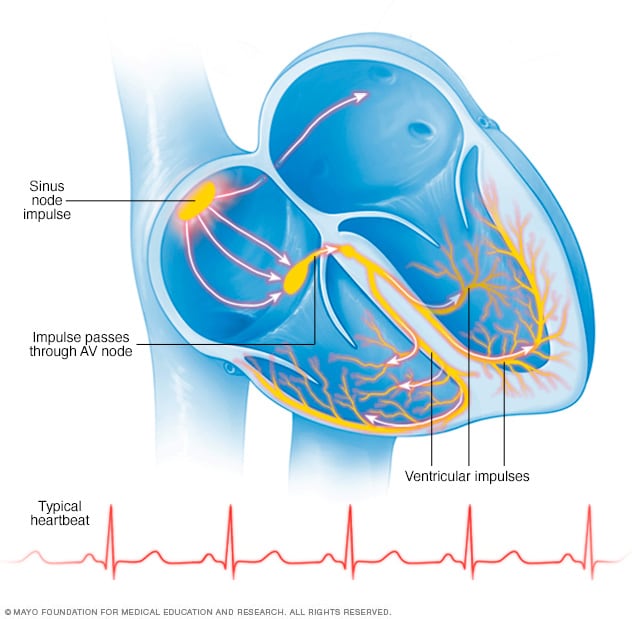
典型心跳
在典型心律中,窦房结处的微小细胞群会发出电信号(脉冲)。信号通过心房到达房室(AV)结,再传入心室,引起心室收缩并泵出血液。
风险因素
The risk of monomorphic ventricular tachycardia (VT) is higher in people who have:
Other things may trigger an episode of monomorphic VT in someone who is already at risk. These include:
- Low levels of certain minerals in the blood, called electrolytes. These include potassium and magnesium.
- Some medicines that affect the heartbeat.
- Stimulant drugs such as cocaine or methamphetamine.
并发症
Monomorphic ventricular tachycardia (VT) can keep the heart from pumping enough blood to the body. If blood flow drops too much, the condition can be life-threatening.
Possible complications of monomorphic VT may include:
- Heart failure. Monomorphic VT can make heart failure worse in people who have it.
- Ventricular fibrillation. Monomorphic VT can lead to ventricular fibrillation (VFib). This dangerous heart rhythm needs treatment right away.
Oct. 02, 2026