Pregnancy and childbirth put a lot of stress on the body, especially the pelvic floor and abdominal muscles. These muscles stretch to support the growing baby and help during delivery. Sometimes they become weak, overstretched or injured.
After childbirth, it is common to notice changes in your body that don't feel quite right. You may wonder whether these changes are part of typical recovery or a sign that you need care.
Some symptoms, such as mild pelvic pressure or needing to urinate more often, improve over time. Other symptoms, such as leaking urine or pain during sex, may continue or get worse. When this happens, effective treatment is available to help you feel better.
Postpartum care: What to expect after a vaginal birth
The Postpartum Pelvic Wellness and Recovery Program at Mayo Clinic in Rochester, Minnesota, provides care for pelvic health during pregnancy and after childbirth. Obstetrics and gynecology specialists evaluate pelvic floor injuries and postpartum conditions. They provide personalized, coordinated care to support healing and recovery.
Symptoms that may need attention
Pelvic floor symptoms can look different for each person. You may notice one or more of the following:
- Changes in bladder or bowel function, such as leaking or urgency.
- Trouble emptying the bladder or bowels.
- A feeling of pressure, heaviness or bulging in the vagina.
- Pain in the pelvis, hips or lower back.
- Pain during sex.
- Ongoing pain or weakness in the pelvis, hips or lower back that affects daily activities.
These symptoms may begin during pregnancy, soon after vaginal or cesarean delivery, or weeks to months later.
At the Postpartum Pelvic Wellness and Recovery Program, specialists help you understand what's happening in your body and offer treatments to support your recovery and help you feel better.
Understanding pelvic health
The pelvic floor is a group of muscles that stretches like a hammock across the bottom of the pelvis. It supports the bladder, uterus, vagina and rectum. These muscles help control the release of urine, stool and gas. They also play a role in sexual function.
Pelvic floor muscles
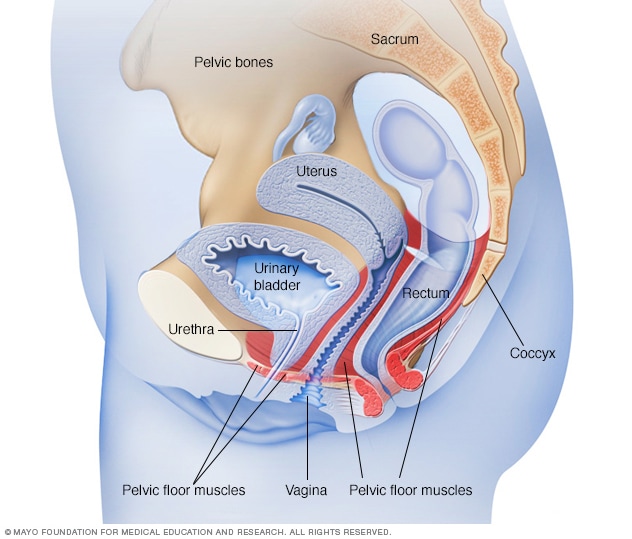
During pregnancy, the pelvic floor changes as hormones shift and pressure from the growing uterus increases. These changes help prepare for childbirth but also may affect how well the muscles support the pelvic organs.
When the pelvic floor muscles are weak, tight or injured, they may not work as they should. This can cause symptoms such as leaking urine, pelvic pressure or heaviness, or pain. These changes can happen even when pregnancy and delivery go as planned.
Experts do not yet know how to prevent pelvic floor injuries during childbirth. Factors that may increase the risk of injury include pushing for a long time, use of forceps, a very fast delivery, having a larger baby or a baby born face up, and older maternal age. Pelvic floor issues can happen after vaginal or cesarean delivery.
Coordinated care, centered on you
The Postpartum Pelvic Wellness and Recovery Program in Minnesota integrates pelvic health education and care with Mayo Clinic's standard obstetric and postpartum services. The program also provides coordinated, team-based care for people who have pelvic floor symptoms or injuries during or after pregnancy.
Your pelvic wellness and recovery care team may include:
- Midwives.
- Obstetricians.
- Occupational therapists.
- Physical therapists.
- Urogynecologists.
When needed, the team also works with other Mayo Clinic experts in:
You and your care team talk through your options and decide together what is right for you.
Evaluation and care
Care is based on your needs and may include:
- Education about how the pelvic floor works, how injuries occur and your specific condition.
- Support for healing perineal wounds.
- Evaluation and treatment of pelvic floor or anal sphincter injuries from childbirth.
- Counseling before or during pregnancy if you have a history of pelvic floor injury or surgery.
- Surgical and nonsurgical treatment options.
Conditions treated
The Postpartum Pelvic Wellness and Recovery Program at Mayo Clinic provides care for a range of pelvic health concerns during pregnancy and after childbirth, including:
- Difficulty emptying the bladder.
- Leaking stool or gas, also called fecal incontinence.
- Leaking urine, also called urinary incontinence.
- Muscle and joint recovery concerns.
- Ongoing pain or functional problems after prior perineal repair.
- Openings that form between the vagina and bladder or rectum, known as vaginal fistulas.
- Overactive bladder.
- Pelvic girdle pain and joint instability.
- Perineal wound infections or complications.
- Third- and fourth-degree vaginal tears, including injury to the anal sphincter.
- Vaginal bulging or pelvic organ prolapse.
Advanced diagnosis and testing
When more evaluation is needed, Mayo Clinic specialists use advanced tests to better understand the cause of your symptoms and guide your care.
Depending on your needs, tests may include:
- Pelvic floor or anal sphincter ultrasound or MRI.
- Anorectal manometry, a test that measures how well the muscles in your rectum and anus work when you pass stool.
- Urodynamic testing, which shows how well your bladder and urethra store and release urine.
Treatment options
Your treatment plan is based on your symptoms, exam results and recovery goals.
Many people get better with nonsurgical care. If you need surgery, it is done by surgeons experienced in pregnancy- and childbirth-related pelvic injuries.
Nonsurgical treatments include:
- Pelvic floor physical therapy guided by specialists in pregnancy and postpartum recovery.
- Pessary fitting to provide pelvic support and relieve symptoms.
Surgical treatments include:
- Repair of anal sphincter injuries from childbirth.
- Revision of episiotomies or vaginal tears.
- Repair of levator ani muscle injuries.
- Repair of vaginal or urinary fistulas.
- Treatment for urinary or fecal incontinence.
- Surgery for pelvic organ prolapse, with options that preserve the uterus and allow for future pregnancy.
Your team monitors your progress and adjusts your care plan over time as healing continues and your recovery needs change.
Research and clinical innovation
The Postpartum Pelvic Wellness and Recovery Program is built on an innovative care model that brings pelvic health into routine obstetric care. Mayo Clinic experts work together across specialties to provide support when pelvic floor injuries or symptoms develop.
Ongoing research focuses on reducing the risk of pelvic floor injury, improving healing and recovery, and supporting future childbirth after injury.
Appointments and referrals
If you receive obstetric care at Mayo Clinic, pelvic health education and support are part of your care. Your obstetric healthcare professional can refer you to the Postpartum Pelvic Wellness and Recovery Program if you have pelvic floor symptoms or injuries.
If you received obstetric care outside Mayo Clinic and have pelvic floor symptoms, injuries or healing concerns, you can schedule an appointment at Mayo Clinic without a referral. Be sure to say that you are postpartum so you are connected with the right care.