Overview
Tricuspid valve regurgitation
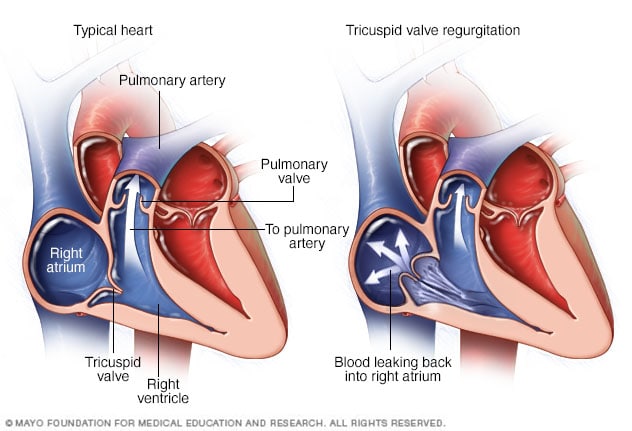
Tricuspid valve regurgitation
In tricuspid valve regurgitation, the valve between the two right heart chambers doesn't close properly. The upper right chamber is called the right atrium. The lower right chamber is called the right ventricle. As a result, blood flows backward.
Tricuspid valve regurgitation is a type of heart valve disease. The valve between the two right heart chambers doesn't close as it should. This causes blood to flow backward through the valve. Blood moves from the lower right heart chamber, called the right ventricle, into the upper right chamber, called the right atrium. It may be described as a leaky tricuspid valve and is one type of tricuspid valve disease. The condition also may be called tricuspid regurgitation or tricuspid insufficiency.
If the valve leak is severe, forward blood flow may decrease and pressure may rise in the right atrium and veins.
Some people are born with heart valve disease that leads to tricuspid valve regurgitation. This is called congenital heart valve disease. But tricuspid valve regurgitation also may happen later in life due to infections, pacemaker implantation issues or other health conditions.
Mild and even moderate tricuspid valve regurgitation may not cause symptoms or need treatment. If the condition is severe and causes symptoms, medicine or a procedure to repair or replace the valve may be needed.
The tricuspid valve's job is to allow blood flowing into the heart from the body to flow to the right ventricle where it's pumped to the lungs for oxygen. If the tricuspid valve is leaky, blood can flow backwards, causing the heart to pump harder. Over time, the heart becomes enlarged and functions poorly.
Valve conditions in children and Ebstein anomaly
Products & Services
Types
The main types of tricuspid valve regurgitation are primary, secondary and device related. Primary regurgitation mainly affects the tricuspid valve's leaflets or supporting structures. Secondary regurgitation happens when changes to the right atrium, right ventricle or ring around the valve keep the tricuspid valve from closing completely. Device-related regurgitation may happen when a wire, called a lead, from a pacemaker or defibrillator crosses the tricuspid valve.
Symptoms
Tricuspid valve regurgitation may cause no symptoms. Some people with severe disease may not have symptoms for years. Your healthcare team may find the condition when doing echocardiograms for another reason.
Symptoms of tricuspid valve regurgitation may include:
- Feeling very tired.
- Shortness of breath with activity.
- A rapid or pounding heartbeat.
- Pounding or pulsing feeling in the neck.
- Bulging neck veins.
- Swelling in the belly or legs.
Symptoms may be caused by the tricuspid valve leak, right-sided heart failure or another heart condition.
When to seek care
Make an appointment if you get tired very easily or feel short of breath with activity. You may need to see a doctor trained in heart conditions, called a cardiologist.
Causes
Chambers and valves of the heart
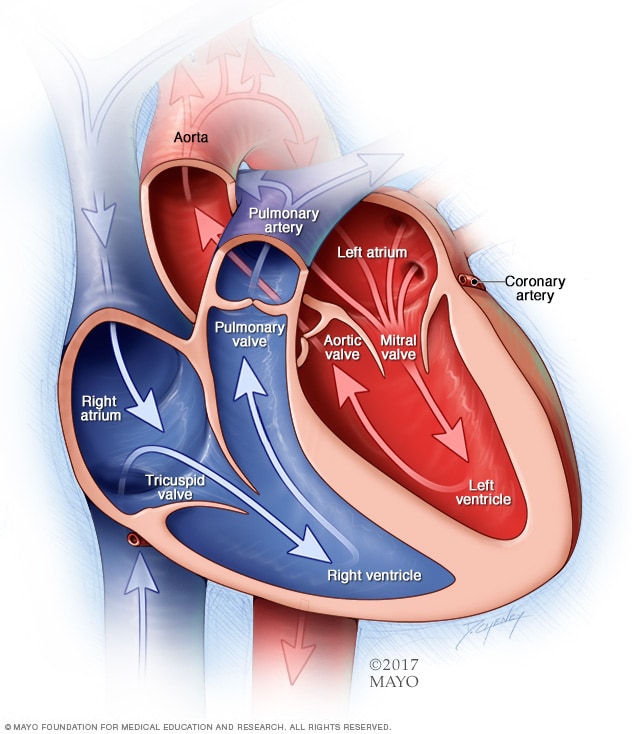
Chambers and valves of the heart
A typical heart has two upper and two lower chambers. The upper chambers, the right and left atria, receive incoming blood. The lower chambers, the more muscular right and left ventricles, pump blood out of the heart. The heart valves, which keep blood flowing in the right direction, are gates at the chamber openings.
To understand the causes of tricuspid valve regurgitation, it may help to know how the heart and heart valves typically work.
A typical heart has four chambers.
- The two upper chambers, called the atria, receive blood.
- The two lower chambers, called the ventricles, pump blood.
Four valves open and close to keep blood flowing in the correct direction. These heart valves are:
- Aortic valve.
- Mitral valve.
- Tricuspid valve.
- Pulmonary valve.
The tricuspid valve is between the heart's two right chambers. It has three thin flaps of tissue, called cusps or leaflets. These flaps open to let blood move from the upper right chamber to the lower right chamber. The valve flaps then close tightly so blood doesn't flow backward.
In tricuspid valve regurgitation, the tricuspid valve doesn't close tightly. So, blood may leak backward from the lower right heart chamber, called the right ventricle, into the upper right heart chamber, called the right atrium.
Tricuspid valve regurgitation can happen with mitral valve regurgitation. When more than one valve is involved, an echocardiogram helps your care team understand what is happening with each valve and the effects on heart-chamber size and pumping function.
Mitral valve disease also may raise pressure in the main veins in the lungs and contribute to secondary tricuspid regurgitation.
Causes of tricuspid valve regurgitation include:
- A heart condition you're born with, also called a congenital heart defect. Some congenital heart defects affect the shape of the tricuspid valve and how it works. Ebstein anomaly is a rare congenital heart defect that is an important congenital cause of tricuspid valve regurgitation in children. In this condition, the tricuspid valve does not form as it should. The valve forms lower than expected in the right ventricle and may not close completely.
- Marfan syndrome. Changes in genes cause this condition. Marfan syndrome and other connective tissue disorders affect the fibers that support and anchor the organs and other structures in the body. It's sometimes related to tricuspid valve regurgitation.
- Rheumatic fever. This condition is a complication of a strep infection that can affect the heart. When this happens, it's called rheumatic heart valve disease. Rheumatic tricuspid valve regurgitation can happen from rheumatic valve damage and often happens with mitral or aortic valve disease. Nonrheumatic tricuspid valve regurgitation means the leak is not caused by rheumatic fever.
- Infection of the lining of the heart and heart valves, called infective endocarditis. Infective endocarditis can damage the tricuspid valve. Injection drug use can raise the risk of infective endocarditis.
- Carcinoid syndrome. Carcinoid syndrome happens when a tumor produces substances that may lead to changes in heart valves. Carcinoid syndrome can lead to carcinoid heart disease. This disease damages heart valves, most commonly the tricuspid and pulmonary valves.
- Chest injury. A blunt injury to the chest, such as from a car accident, may cause damage that leads to tricuspid valve regurgitation.
Some tests or treatments for other conditions can affect the tricuspid valve. These include:
- Pacemaker or other heart device leads. Tricuspid valve regurgitation might happen if wires, called leads, from a pacemaker or defibrillator cross the tricuspid valve and affect the leaflet movement, change the shape of the right ventricle or cause scarring of the valve leaflets.
- Heart biopsy, also called an endomyocardial biopsy. Heart valve damage can sometimes happen when the care team removes a small amount of heart muscle tissue for testing.
- Radiation therapy. Radiation therapy to treat cancer in the chest area can damage the tricuspid valve and lead to tricuspid valve regurgitation.
- Certain medicines. Use of some medicines has been linked with heart valve damage. The link depends on the specific medicine, the dose and how long you've used it. Ask your care team if any of your current or previous medicines may affect the heart valves.
Risk factors
A risk factor is something that raises your chance of developing a health condition.
Things that can raise the risk of tricuspid valve regurgitation include:
- An irregular heartbeat called atrial fibrillation (AFib). Long-lasting atrial fibrillation can enlarge the upper right heart chamber and the ring around the tricuspid valve. This can keep the valve from closing and lead to secondary tricuspid valve regurgitation.
- Being born with a heart condition, called a congenital heart defect. A congenital heart defect may affect the structure or position of the tricuspid valve.
- Damage to the right heart muscle. A heart attack or other condition that can affect the lower right heart chamber or the muscles supporting the tricuspid valve can lead to tricuspid valve regurgitation.
- Heart failure on the right side or another condition that makes the lower right heart chamber larger. Enlargement of the right ventricle or the tricuspid valve ring can keep the valve leaflets from closing completely. This can cause blood to leak backward. This is called secondary tricuspid regurgitation. A severe leak can add stress to the heart from the extra volume, make the right ventricle larger, and weaken the heart muscle over time.
- High blood pressure in the lungs, also called pulmonary hypertension. Pulmonary hypertension can increase pressure in the right ventricle. This can cause the right ventricle to enlarge and keep the tricuspid valve leaflets from closing. This can cause or worsen secondary tricuspid regurgitation. Severe regurgitation also can worsen the enlarged right side of the heart.
- A history of infective endocarditis. This infection can damage the inner lining and valves in the heart and can damage the tricuspid valve.
- History of radiation therapy to the chest area. Radiation can affect the tricuspid valve and cause damage, which can lead to regurgitation.
Complications
Complications of tricuspid valve regurgitation may depend on how severe the condition is. Possible complications include:
- An irregular and often rapid heartbeat, called atrial fibrillation (AFib). Some people with severe tricuspid valve regurgitation also have this common heart rhythm condition. Long-lasting atrial fibrillation may enlarge the right atrium and tricuspid valve ring, which can worsen the leak. Severe tricuspid valve regurgitation also may enlarge the right atrium and contribute to an irregular rhythm in the atria.
- Right-sided heart failure and effects on the liver or kidneys. Severe tricuspid valve regurgitation can raise pressure in the right atrium and veins. The right ventricle can enlarge and weaken. This can reduce forward blood flow and cause heart failure on the right side of the heart. Heart failure is when the heart muscle doesn't pump blood as well as it should. Fluid may build up in the legs or belly. Ongoing pressure in the veins and fluid buildup may affect the kidneys and liver.
Sept. 23, 2026