Overview
Heart failure occurs when the heart muscle doesn't pump blood as well as it should. When this happens, blood often backs up and fluid can build up in the lungs, causing shortness of breath.
Some heart conditions cause the heart to become too weak or stiff to fill and pump blood properly. These conditions include narrowed arteries in the heart and high blood pressure.
Proper treatment may improve the symptoms of heart failure and may help some people live longer. Lifestyle changes can improve quality of life. Try to lose weight, exercise, use less salt and manage stress.
But heart failure can be life-threatening. People with heart failure may have severe symptoms. Some may need a heart transplant or a device to help the heart pump blood.
Heart failure also may be called congestive heart failure. The term "congestive" refers to fluid buildup in the lungs or other parts of the body. You also may see the term "cardiac failure" used to mean heart failure.
In the United States, congestive heart failure is a common condition.
Heart failure care at Mayo Clinic
Types
Healthcare professionals may describe congestive heart failure by:
- Which side of the heart is affected.
- How well the heart squeezes or relaxes.
- Whether symptoms started suddenly or have been present for a long time.
- Whether the heart is affected by blockages or vessel narrowing or a different cause.
These things help guide testing and treatment.
There are different types of heart failure.
- Left-sided heart failure. This type affects the lower left heart chamber, called the left ventricle. This is the heart's main pumping chamber. Fluid may back up in the lungs, causing shortness of breath. This shortness of breath can occur when walking, sitting, lying down or bending over, and even at rest.
- Right-sided heart failure. This type affects the lower right chamber, called the right ventricle. Fluid may back up into the belly, legs and feet, causing swelling in the legs or belly or nausea and bloating.
Sometimes, heart failure affects both sides of the heart.
Heart failure also may be described by how much blood the lower left heart chamber pumps out with each squeeze. This is called the ejection fraction (EF). Ejection fraction also helps determine the type of heart failure and guide treatment.
- In heart failure with preserved ejection fraction (HFpEF), the ejection fraction is 50% or higher. But the heart still may not pump enough blood to meet the body's needs. HFpEF is a type of left-sided heart failure. It also may be called diastolic heart failure. The left ventricle can't relax, and the heart has trouble filling with blood.
- In heart failure with reduced ejection fraction (HFrEF), the ejection fraction is often 40% or lower. HFrEF is a type of left-sided heart failure. It also may be called systolic heart failure. The left ventricle can't squeeze as well as it should. The heart isn't strong enough to pump enough blood to the body.
Chronic, acute and decompensated heart failure
You also may hear the terms "chronic," "acute" and "decompensated." They describe when heart failure begins or how it changes.
- Chronic heart failure. It continues over time. Symptoms may be stable for a while and then get worse.
- Acute heart failure. It starts suddenly or gets worse quickly. It needs prompt medical care.
- Acute decompensated heart failure. This is a sudden or gradual worsening of chronic heart failure. It often needs added treatment in a hospital.
End-stage or advanced heart failure
During end-stage congestive heart failure, you may have severe symptoms that interfere with daily life. Symptoms may occur while you are resting or with very little activity. The symptoms continue despite treatment. Some people with advanced heart failure cannot tolerate standard medicines.
Symptoms
If you have congestive heart failure, your heart can't supply enough blood to meet your body's needs.
Symptoms may develop slowly. Sometimes, heart failure symptoms start suddenly. Heart failure symptoms may include:
- Shortness of breath with activity, when lying down, when bending over or even at rest. Shortness of breath also is called dyspnea.
- Fatigue and weakness.
- Swelling in the legs, ankles and feet.
- Fast or irregular heartbeat.
- Reduced ability to exercise.
- Wheezing.
Other symptoms may include:
- A cough that doesn't go away or a cough that brings up white or pink mucus with spots of blood.
- Swelling of the belly area, causing nausea, bloating or a sensation of fullness.
- Very fast weight gain from fluid buildup.
- Nausea and lack of appetite.
- Trouble concentrating or decreased alertness.
- Chest pain if heart failure is caused by a heart attack.
These symptoms can be caused by many different health conditions. A complete checkup by a healthcare professional is needed to make a diagnosis.
Symptoms of end-stage or advanced heart failure
Symptoms that heart failure may be at an advanced stage include:
- Shortness of breath with very little activity or at rest.
- Swelling that is hard to control and requires higher doses or additional medicines called diuretics.
- Low blood pressure or worsening kidney or liver function.
- Repeated hospital stays or ER visits, dangerous heartbeats, or repeated shocks from an implantable cardioverter-defibrillator (ICD).
- Difficulty tolerating heart failure medicines, which may require lowering the dose or stopping some medicines because of problems such as low blood pressure or worsening kidney function.
These symptoms cannot tell exactly how long someone will live. If you have advanced heart failure, your care team can talk with you about treatment choices and what matters to you.
Heart failure
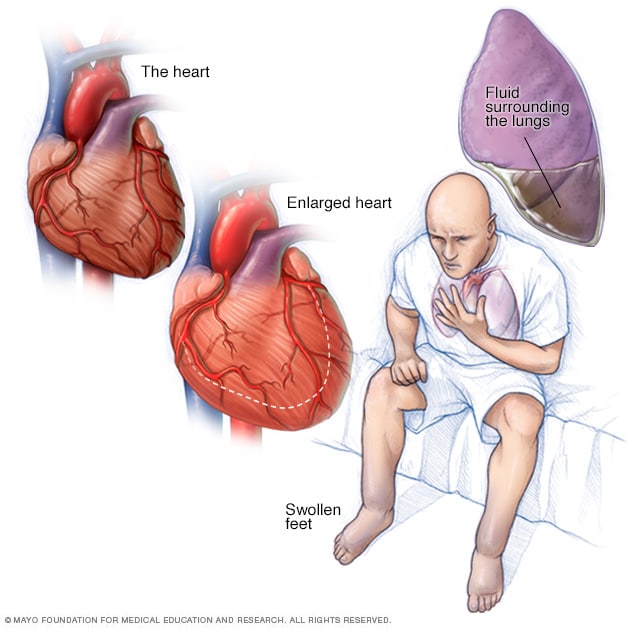
Heart failure
Heart failure occurs when the heart muscle doesn't pump blood as well as it should. Blood often backs up and causes fluid to build up in the lungs and in the legs. The fluid buildup can cause shortness of breath and swelling of the legs and feet. Poor blood flow may cause the skin to look blue or gray. Some types of heart failure can lead to an enlarged heart.
When to seek care
See your healthcare professional if you think you might have symptoms of heart failure.
Call your healthcare professional right away if you have heart failure and:
- Your symptoms suddenly get worse.
- You develop a new symptom.
- You gain 5 pounds (2.3 kilograms) or more within a few days.
These changes could mean that heart failure is getting worse or that treatment isn't working.
Follow the action plan from your healthcare professional. It may give a different weight-change limit or other instructions based on your condition.
When to seek emergency care
Call 911 or your local emergency number if you have any of the following:
- Chest pain.
- Fainting or severe weakness.
- Fast or irregular heartbeat with shortness of breath, chest pain or fainting.
- Repeated shocks from a defibrillator if you have one.
- Sudden, severe shortness of breath and coughing up white or pink foamy mucus.
These symptoms may be due to heart failure. But there are many other possible causes. Don't try to diagnose yourself.
In the emergency room (ER), healthcare professionals do tests to learn whether your symptoms are due to heart failure or something else.
Causes
Chambers and valves of the heart
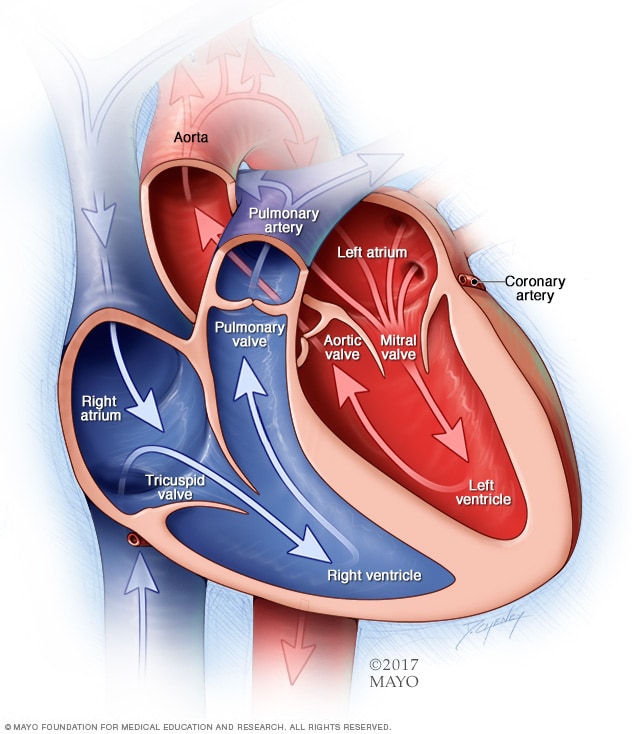
Chambers and valves of the heart
A typical heart has two upper and two lower chambers. The upper chambers, the right and left atria, receive blood as it comes into the heart. The lower chambers, the right and left ventricles, pump blood out of the heart. The heart valves act like gates at the openings of the heart chambers. They keep blood flowing in the right direction.
Enlarged heart, in heart failure
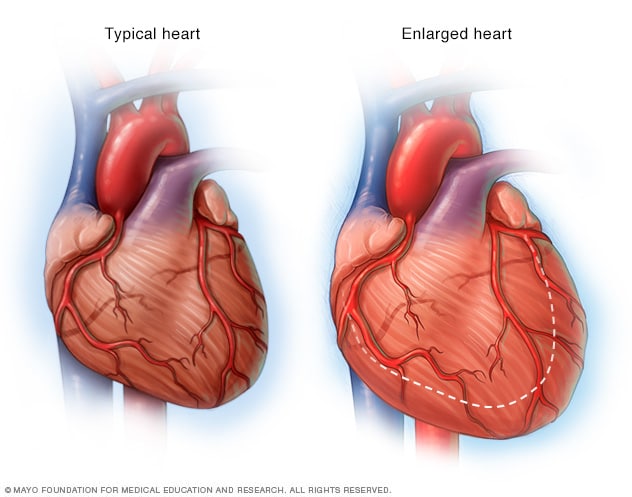
Enlarged heart, in heart failure
If the heart weakens, as it can with heart failure, it begins to enlarge. This forces the heart to work harder to pump blood to the rest of the body.
Heart failure can be caused by a weakened, damaged or stiff heart.
- If the heart is damaged or weakened, the heart chambers may stretch and get bigger. The heart can't pump out the needed amount of blood.
- If the main pumping chambers of the heart, called the ventricles, are stiff, they can't fill with enough blood between beats.
The heart muscle can be damaged by certain infections, heavy alcohol use, recreational drug use and some chemotherapy medicines.
Any of the following conditions also can damage or weaken the heart and cause heart failure.
Your genes also can play a role. Some conditions that cause heart failure, including hypertrophic cardiomyopathy, may be inherited but not all are. Ask your healthcare professional whether genetic counseling or testing may be helpful if several relatives have had heart failure or cardiomyopathy.
Causes of sudden or worsening heart failure also include:
- A heart attack or reduced blood flow to the heart.
- Allergic reactions.
- A severe infection, such as pneumonia.
- A blood clot in the lungs, called a pulmonary embolism.
- Very high blood pressure.
- A sudden heart valve issue.
Other causes include:
- Any illness that affects the whole body.
- Viruses that attack the heart muscle.
- A fast or irregular heartbeat.
- Missing heart failure medicines or taking a medicine that can worsen heart failure.
- Having too much sodium or fluid.
- Use of some medicines, including some chemotherapy medicines to treat cancer.
Risk factors
Heart and blood vessel conditions that increase the risk of heart failure or make existing heart failure worse include:
- Coronary artery disease. Narrowed arteries may limit the heart's supply of oxygen-rich blood, resulting in weakened heart muscle.
- Heart attack. A heart attack is a form of coronary artery disease that occurs suddenly. Damage to the heart muscle from a heart attack may mean the heart can no longer pump as well as it should.
- Heart valve disease. Having a heart valve that doesn't work properly raises the risk of heart failure.
- High blood pressure. The heart works harder than it has to when blood pressure is high.
- Irregular heartbeats. Irregular heartbeats, especially if they are very frequent and fast, can weaken the heart muscle and cause heart failure.
- Congenital heart disease. Some people who develop heart failure were born with changes in the structure or function of their heart.
Other health conditions that may increase the risk of heart failure or make it worse include:
- Diabetes. Having diabetes increases the risk of high blood pressure and coronary artery disease.
- Sleep apnea. This condition causes breathing to repeatedly stop and start during sleep. It can lower blood oxygen levels and raise the risk of irregular heartbeats. Obstructive and central sleep apnea can worsen heart failure, including right-sided heart failure.
- Obesity. People who have obesity have a higher risk of developing heart failure.
- Viral infections, including COVID-19. Some viral infections can injure the heart and cause myocarditis, irregular heartbeats or heart failure. They also may worsen existing heart failure.
- Stroke. A stroke can affect signals between the brain and heart. Some people have irregular heartbeats or changes in how the heart squeezes or relaxes after a stroke. Heart failure can sometimes occur, but it does not happen to everyone who has a stroke.
- Pneumonia and other respiratory infections. These infections can trigger or worsen heart failure. They also can cause shortness of breath, so tests may be needed to find the cause.
- Anorexia nervosa. This eating disorder is linked with a higher risk of heart failure and other heart conditions.
Medicines that may increase the risk of heart failure or make it worse include:
- Some diabetes medicines. The diabetes medicines rosiglitazone and pioglitazone (Actos) have been found to increase the risk of heart failure in some people. Don't stop taking these medicines without first talking to your healthcare professional.
- Some other medicines. Other medicines that may lead to heart failure or heart conditions include nonsteroidal anti-inflammatory drugs (NSAIDs) and some medicines used to treat high blood pressure, cancer, blood conditions, irregular heartbeats, nervous system diseases, mental health conditions, lung and urinary conditions, and infections.
Other risk factors for heart failure include:
- Aging. The heart's ability to work decreases with age, even in healthy people.
- Alcohol use. Drinking too much alcohol may weaken the heart muscle and lead to heart failure.
- Drugs, including amphetamines and alcohol.
- Smoking or using tobacco. If you smoke, quit. Using tobacco increases the risk of heart disease and heart failure.
Complications
If you have heart failure, it's important to have regular health checkups, even if symptoms improve. Your healthcare professional can examine you and run tests to check for complications.
Complications of heart failure depend on your age, overall health and the severity of heart disease. They may include:
- Kidney damage or failure. Heart failure can reduce the blood flow to the kidneys. Untreated, this can cause kidney failure. Kidney damage from heart failure can require dialysis for treatment.
- Other heart changes. Heart failure can cause changes in the heart's size and function. These changes may damage heart valves and cause irregular heartbeats.
- Liver damage. Heart failure can cause fluid buildup that puts too much pressure on the liver. This fluid backup can lead to scarring, which makes it more difficult for the liver to work properly.
- Sudden cardiac death. If the heart is weak, there is a risk of dying suddenly due to a dangerous irregular heartbeat.
Prevention
One way to prevent heart failure is to treat and manage the conditions that can cause heart failure or increase the risk. These conditions include coronary artery disease, high blood pressure, diabetes and obesity.
Some of the same lifestyle changes used to manage heart failure also may help prevent it. Try these heart-healthy tips:
- Don't smoke.
- Get plenty of exercise.
- Eat healthy foods.
- Maintain a healthy weight.
- Reduce and manage stress.
- Take medicines as directed.
Sept. 25, 2026