Peripheral nerve injuries Diagnosis and treatment
Diagnosis
To diagnose peripheral nerve injuries, a healthcare professional might start by asking about your symptoms and examining your body. You may be asked about any accidents or previous surgeries you've had. The exam might include physical and neurological tests. If there are symptoms of a nerve injury, you may need diagnostic tests. These may include:
- Electromyography (EMG). In an EMG, a thin-needle electrode is placed in the muscle. The electrode records the muscle's electrical activity at rest and in motion. Lessened muscle activity can suggest nerve injury.
- Nerve conduction study. Electrodes placed at two different points in the body measure how well electrical signals pass through the nerves.
- MRI. This imaging test uses a magnetic field and radio waves to make detailed images of areas affected by nerve damage.
- Ultrasound. Like MRI, these high-frequency sound waves make detailed images of the area affected by nerve damage.
Treatment
If a nerve is injured but not cut, the injury is more likely to heal. Injuries in which a nerve has been cut all the way through are harder to treat. When this happens, recovery may not be possible.
Treatment is based on the extent and cause of the injury. It also is based on how well the nerve is healing.
- If the nerve is healing properly, you may not need surgery. You may need to rest the affected area until it's healed. Nerves recover slowly. Maximal recovery may take many months or years.
- Regular checkups allow your healthcare team to make sure your recovery is on track.
- If the injury is caused by a medical condition, a healthcare professional treats the condition.
- Depending on the type and severity of the nerve injury, you may need medicines to lessen your pain. Pain relievers such as aspirin or ibuprofen (Advil, Motrin IB, others) may be used. Medicines used to treat depression, seizure or insomnia may be used to relieve nerve pain. Some people with peripheral nerve injuries may need corticosteroid injections for pain relief.
- A healthcare professional may suggest physical therapy to prevent stiffness and restore function.
Surgery
If your injury does not seem to be healing, you may need surgery. A surgeon can use EMG testing in the operating room to check whether scarred nerves are getting better. Doing an EMG test directly on the nerve is more accurate and reliable than doing the test over the skin.
Sometimes a nerve sits inside a tight space similar to a tunnel. When this happens, a surgeon may make the space larger. If the nerve is squeezed by scarring, a surgeon may free it from the scar.
If a section of an injured nerve is cut completely or damaged beyond repair, a surgeon can do a nerve repair. This involves removing the damaged section and then reconnecting healthy nerve ends. Or a surgeon may do a nerve graft. In a nerve graft, the surgeon takes a piece of nerve from another part of the body and uses it to close the gap between the nerves. These procedures can help nerves regrow.
Sometimes the surgeon can use another working nerve to make an injured nerve work. This is known as nerve transfer.
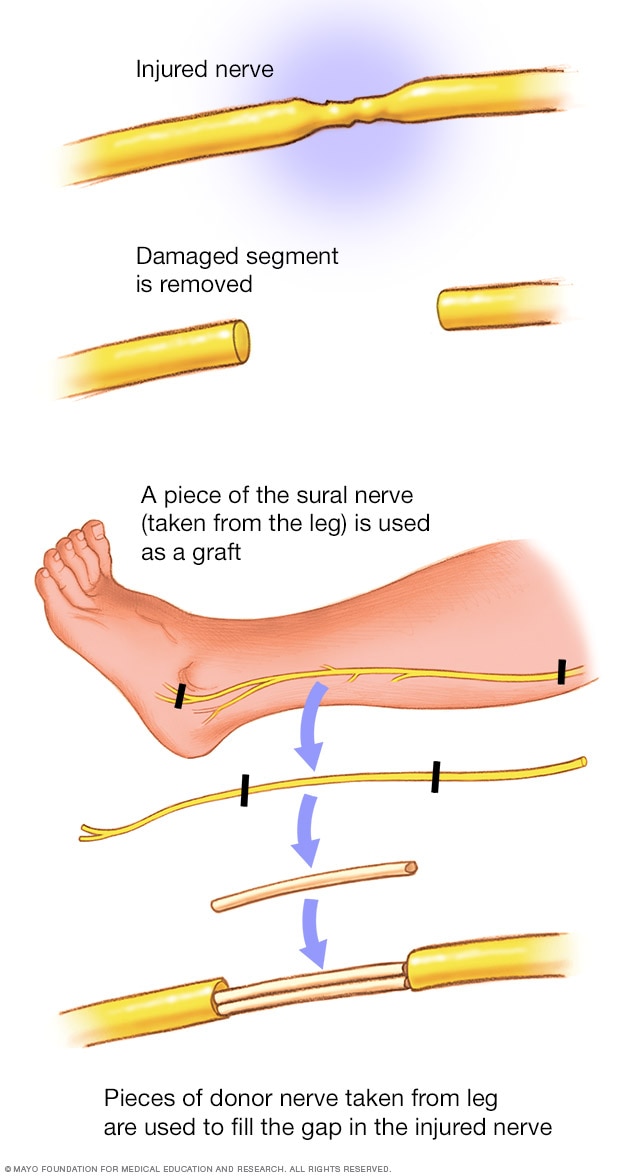
Peripheral nerve graft
To repair a damaged nerve, a surgeon removes a small part of the sural nerve in the leg and implants this nerve at the site of the repair. The sural nerve is a sensory nerve in the back of the lower leg that is easy to reach.
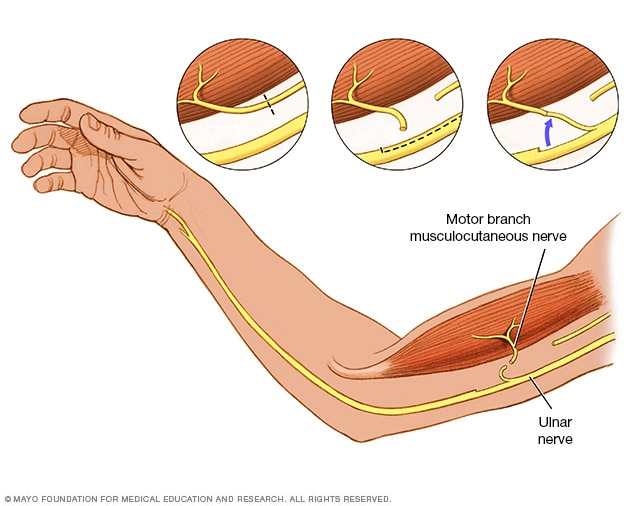
Peripheral nerve transfer
To restore function, a surgeon can bypass a damaged section of nerve and connect to a healthy nerve.
If a nerve cannot be repaired and a nerve transfer is not possible, a tendon transfer may help. In a tendon transfer, a surgeon restores function to muscles by moving tendons from one muscle to another
Restoring function
A number of treatments can help restore function to the affected muscles.
- Braces or splints. These devices keep the affected limb, fingers, hand or foot in the proper position. This can help improve muscle function.
- Electrical stimulator. Stimulators can activate muscle served by an injured nerve while the nerve regrows. But this treatment may not work for everyone. A healthcare professional can talk with you about whether electrical stimulation is an option.
- Physical therapy. Therapy uses specific movements or exercises to keep affected muscles and joints active. This can prevent stiffness and help restore function and feeling.
- Exercise. Exercise can strengthen muscle and support range of motion. It also may lessen muscle cramps.
Clinical trials
Explore Mayo Clinic studies testing new treatments, interventions and tests as a means to prevent, detect, treat or manage this condition.
Preparing for your appointment
Many tests may be used to help diagnose peripheral nerve injury. When you make your appointment, be sure to ask whether you need to prepare for these tests. For instance, you may need to stop taking certain medicines for a few days or avoid using lotions the day of the test.
If possible, bring a family member or friend. It can be hard to take in all the information you get during an appointment. Someone who comes with you may remember things that you missed or forgot.
Here are some other ways to get the most from your appointment:
- Write down all your symptoms, including how you were injured, how long you've had your symptoms and whether they've gotten worse over time.
- Make a list of all medicines, vitamins and supplements that you take and the doses.
- Ask questions. Children and adults with peripheral nerve injuries may have many options for restoring lost function. Be sure to ask about all the treatments available. If you run out of time and have more questions, reach out to your healthcare team.
CON-20251929
Mayo Clinic does not endorse companies or products. Advertising revenue supports our not-for-profit mission.
Advertising & Sponsorship
Mayo Clinic Press
Check out these best-sellers and special offers on books and newsletters from Mayo Clinic Press.
