Overview
Multiple endocrine neoplasia, type 2, also called MEN 2, is a rare condition. It causes tumors in the thyroid and parathyroid glands, adrenal glands, lips, mouth, eyes, and digestive tract. Genetic testing can find the changed gene that causes MEN 2. Healthcare professionals can treat the medical issues that the condition may cause.
MEN 2 is an inherited condition. This means people who have the changed gene can pass it on to their children. Each child has a 50% chance of getting the condition.
Types
There are two types of MEN 2:
- MEN 2A. This also is called classical MEN 2A. It causes medullary thyroid cancer. It also causes tumors of the parathyroid glands and adrenal glands that are not cancer.
- MEN 2B. This type of MEN 2 is rare. It causes medullary thyroid cancer. It also causes tumors on the adrenal gland, on the lips, on the tongue and in the digestive tract that are not cancer. MEN 2B does not cause issues with the parathyroid glands.
Symptoms
Multiple endocrine neoplasia, type 2B (MEN 2B)
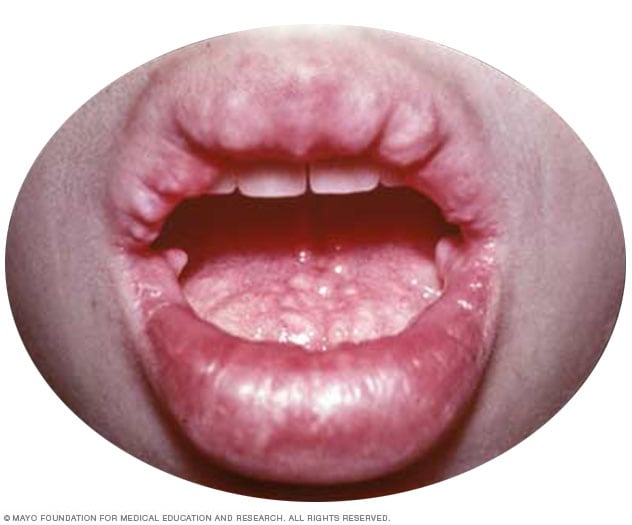
Multiple endocrine neoplasia, type 2B (MEN 2B)
People with MEN 2B have tumors on nerves in the lips, mouth, eyes and digestive tract. They also may have a tumor on the adrenal gland, called pheochromocytoma, and medullary thyroid cancer.
Symptoms of MEN 2 depend on the types of tumors it causes. People who have MEN 2B often have bumps on the tongue, lips and eyes. People with MEN 2B also tend to be tall and thin with long arms and legs. Following are symptoms that may be linked to each tumor type.
Medullary thyroid cancer:
- Lumps in the throat or neck.
- Trouble breathing or swallowing.
- Hoarseness.
- Loose stools.
Parathyroid hyperplasia, also called primary hyperparathyroidism:
- Muscle and joint pain.
- Trouble passing stool.
- Tiredness.
- Memory issues.
- Kidney stones.
- High blood calcium.
Adrenal tumors, also called pheochromocytoma:
- High blood pressure.
- Fast heart rate.
- Anxiety.
- Headaches.
A thyroid tumor may cause symptoms by pressing on tissues around it or, rarely, by releasing hormones. Some people who have medullary thyroid cancer have no symptoms.
When to see a doctor
If you have any of these symptoms, contact your healthcare professional.
Causes
MEN 2 is an inherited condition. This means someone who has a changed gene that causes MEN 2 can pass that gene on to their children.
But some people may be the first in their families to have this condition. If you're diagnosed with medullary thyroid cancer or pheochromocytoma, a rare adrenal tumor, talk with your healthcare professional about genetic testing for MEN 2.
Risk factors
The main risk factor for multiple endocrine neoplasia 2 is a family history of the condition. The risk also is higher if you have one of the tumor-causing conditions linked to MEN 2, such as pheochromocytoma or medullary thyroid cancer.
Complications
MEN 2 can affect the parathyroid glands, which sit in the neck. The parathyroid glands then put too much calcium into the blood. This is known as primary hyperparathyroidism. The extra calcium in the blood can cause many issues, including weak bones, called osteoporosis, and kidney stones. The extra calcium also causes the need to urinate a lot.
Medullary thyroid cancer shows up as a lump on the thyroid or neck. It can be hard to swallow when the tumor is large. There may be other symptoms if the cancer spreads outside the neck. Finding and treating medullary thyroid cancer early can improve outcomes.
People with MEN 2 also can have a condition called pheochromocytoma. This condition causes tumors on an adrenal gland that are not cancer. The adrenal glands sit at the top of the kidneys. These tumors can release hormones that cause high blood pressure, sweating and other symptoms.
Prevention
There's no way to prevent MEN 2. But genetic testing can show if someone has a changed gene that causes MEN 2. Children of someone who has this changed gene could inherit it and get MEN 2. Parents, sisters and brothers also can have the changed gene, even if they don't have symptoms.
If someone in your family is diagnosed with MEN 2, your healthcare professional is likely to suggest that you and your family members have genetic testing. This can lead to removing the thyroid gland early in life to treat or manage MEN 2. Being screened for parathyroid or adrenal tumors also can help.
Finding conditions that are linked with MEN 2 at an early stage can help prevent serious complications. There's no cure for MEN 2.
If there are no gene changes found in family members, most often they don't need other screening tests. But genetic testing doesn't find all MEN 2 gene changes. If tests don't find MEN 2 in people who may have it, they and their family members may have regular blood and imaging tests over time to check for signs of the condition.