Overview
Cerebellum and brainstem
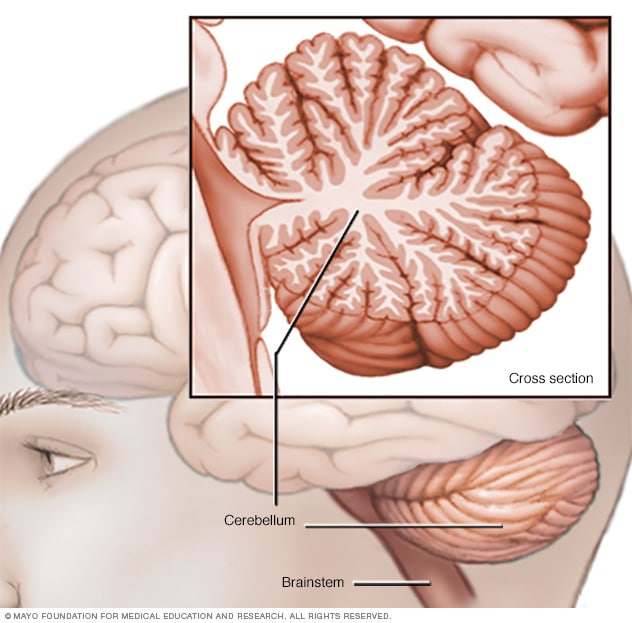
Cerebellum and brainstem
Lasting ataxia usually results from damage to the part of the brain that controls muscle coordination, known as the cerebellum.
Ataxia describes poor muscle control that causes clumsy movements. It can affect walking and balance, hand coordination, speech and swallowing, and eye movements.
Ataxia usually happens when there is damage to the cerebellum or its connections. The cerebellum is the part of the brain that controls muscle coordination. Ataxia related to this area of the brain is often called cerebellar ataxia. Many conditions can cause cerebellar ataxia, including genetic conditions, stroke, tumors, multiple sclerosis, degenerative diseases and alcohol misuse. Certain medicines also can cause ataxia. Ataxia also can happen when nerves in the spinal cord or in the arms and legs are damaged. This is called sensory ataxia because it is not caused by damage to the cerebellum.
Treatment for ataxia depends on the cause. Devices such as walkers and canes might help maintain independence. These also are called adaptive devices. Physical therapy, occupational therapy, speech therapy and regular exercise also might help.
Products & Services
Symptoms
Ataxia symptoms can develop over time or start suddenly. Ataxia can be a symptom of several nervous system conditions.
Movement and coordination symptoms
- Poor coordination.
- Walking unsteadily or with feet set wide apart.
- Poor balance.
- Trouble with fine motor tasks such as eating, writing or buttoning a shirt.
- Changes in speech.
- Falling often.
- Trouble swallowing.
Eye and balance-related symptoms
- Back-and-forth eye movements that can't be controlled.
- Dizziness or a spinning sensation.
Changes in sensation
- Numbness or tingling in the hands or feet.
- Loss of feeling in the legs. This may make balance worse, especially in the dark.
When to see a doctor
If you don't already have a condition that causes ataxia, such as multiple sclerosis, see your healthcare professional as soon as possible if you:
- Lose balance.
- Lose muscle coordination in a hand, arm or leg.
- Have trouble walking.
- Slur your speech.
- Have trouble swallowing.
Seek emergency medical care if ataxia symptoms begin suddenly. Sudden problems with balance, coordination or speech can signal a stroke or another serious nervous system condition.
Causes
Autosomal recessive inheritance pattern
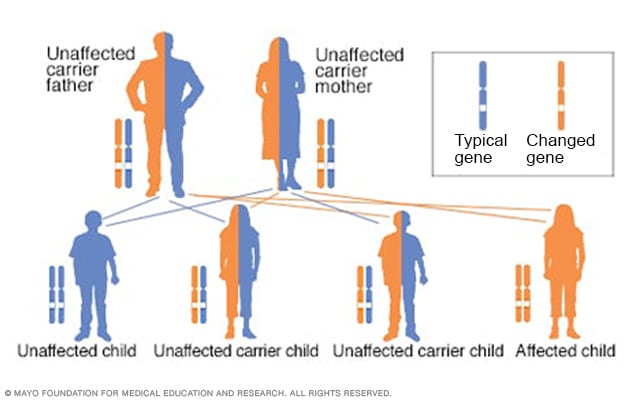
Autosomal recessive inheritance pattern
To have an autosomal recessive disorder, you inherit two changed genes, sometimes called mutations. You get one from each parent. Their health is rarely affected because they have only one changed gene. Two carriers have a 25% chance of having an unaffected child with two unaffected genes. They have a 50% chance of having an unaffected child who also is a carrier. They have a 25% chance of having an affected child with two changed genes.
Autosomal dominant inheritance pattern
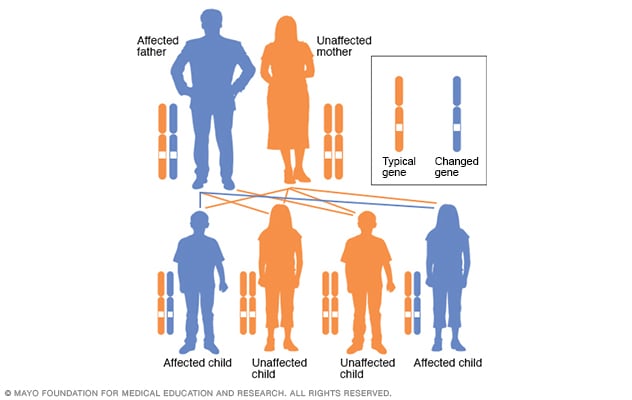
Autosomal dominant inheritance pattern
In an autosomal dominant condition, the changed gene is a dominant gene. It's located on one of the nonsex chromosomes, called autosomes. Only one changed gene is needed to be affected by this type of condition. A person with an autosomal dominant condition — in this example, the father — has a 50% chance of having an affected child with one changed gene. The person has a 50% chance of having an unaffected child.
Cerebellar ataxia is caused by damage to the part of the brain called the cerebellum or its connections. The cerebellum is located at the base of the brain and connects to the brainstem. The cerebellum helps control balance, eye movements, swallowing and speech.
Ataxias are often categorized according to their cause. There are three major groups of ataxia causes: hereditary, acquired and sporadic.
Hereditary ataxia
Hereditary ataxia means that the ataxia is caused by changes in genes that are passed down in families. These gene changes affect how nerve cells work, especially in the cerebellum and spinal cord. Symptoms may begin in childhood, adolescence or adulthood and often worsen over time.
People with hereditary ataxia may inherit a changed gene from one parent or from both parents. The pattern of inheritance helps explain who in a family may be affected. There are two types of hereditary ataxia: autosomal dominant and autosomal recessive.
Autosomal dominant ataxias
In autosomal dominant ataxia, a person inherits one changed gene from one parent. Each child of an affected parent has a chance of developing the condition.
- Spinocerebellar ataxias. This is a group of related conditions caused by different gene changes. More than 40 related conditions have been identified. All cause challenges with coordination and balance, and some also affect vision, speech, sensation or thinking.
- Episodic ataxias. Different types of episodic ataxia are linked to different genes. Episodic ataxia causes episodes of poor coordination that come and go. Attacks may be triggered by stress, exercise, caffeine or sudden movement. Some types respond well to medicine, and symptoms may improve later in life.
Autosomal recessive ataxias
In autosomal recessive ataxia, a person inherits a changed gene from both parents. The parents usually do not have symptoms.
- Friedreich ataxia. This is the most common hereditary ataxia. It affects the spinal cord, peripheral nerves and, over time, the cerebellum. Symptoms often begin in childhood or adolescence and may include trouble walking, changes in the feet or spine, and heart disease.
- RFC1-associated ataxia. This condition usually begins later in adulthood. It often causes balance problems along with dizziness and numbness or tingling.
- Ataxia-telangiectasia. This rare childhood condition affects coordination and the immune system. It increases the risk of infections and certain cancers.
- Wilson's disease. In this condition, copper builds up in the body, including in the brain and liver. Early treatment can prevent or reduce nervous system damage.
Acquired ataxia: Medical conditions
Acquired ataxia is ataxia that develops because of something that happens to the body or brain. It is not from changes in genes passed down from families. Some medical conditions can cause ataxia, including:
- Stroke. A stroke that affects the cerebellum or nearby nerve pathways can cause sudden problems with balance, coordination and speech. This may happen when a blood vessel is blocked or when bleeding occurs in the brain.
- Brain tumors or abscesses. A growth or infection in the cerebellum can press on or damage brain tissue that controls movement and balance.
- Multiple sclerosis. This condition damages the protective covering of nerves in the brain and spinal cord. When multiple sclerosis affects areas involved in coordination, ataxia can develop.
- Autoimmune diseases. In some conditions, the immune system attacks healthy tissue by mistake. This can damage the cerebellum or related nerve pathways. Examples include celiac disease, sarcoidosis and other inflammatory conditions that affect the brain or spinal cord.
- Infections. In rare cases, infections that affect the brain can cause ataxia. Rarely, ataxia can develop after infections such as chickenpox in childhood and other viral infections. Symptoms may appear during recovery and often improve over days or weeks. COVID-19 infection may affect the nervous system and lead to ataxia.
- Paraneoplastic syndromes. These rare conditions happen when the immune system reacts to cancer and also damages parts of the nervous system. Ataxia can appear months or even years before the cancer is found.
- Head injury. An injury to the brain can damage areas that control coordination and balance, leading to ataxia.
- Thyroid and parathyroid conditions. Issues with thyroid or parathyroid hormone levels can affect nerve and muscle function and cause coordination problems.
Acquired ataxia: Substances and deficiencies
Acquired ataxia can be caused by certain substances. Or it can be caused by getting too much or not enough of certain vitamins. The effects of a certain substance or vitamin deficiency can damage the cerebellum or affect how nerves send signals that control movement and balance.
Causes of acquired ataxia include:
- Alcohol. Drinking too much alcohol over a long period can damage the cerebellum and lead to ongoing problems with balance and coordination. Symptoms may improve if alcohol use stops.
- Medicines. Some medicines can affect the nervous system and cause ataxia. These include certain antiseizure medicines, sedatives and some types of chemotherapy.
- Toxins. Exposure to toxic substances can damage the brain and nerves. This can include heavy metals such as lead or mercury and solvents such as paint thinner.
- Vitamin deficiencies. Not getting enough of certain vitamins can affect nerve function and cause ataxia. These include vitamin E, vitamin B-12 and vitamin B-1, also called thiamine. When vitamin deficiency is the cause, symptoms may improve with treatment.
- Too much vitamin B-6. Taking large amounts of vitamin B-6 over time can damage nerves and lead to trouble with balance and coordination.
Idiopathic ataxia
Idiopathic ataxia means the ataxia started without a known cause and without a known factor such as alcohol, brain injury or infection. Symptoms often begin in adulthood and may slowly worsen over time. This is sometimes called sporadic ataxia.
Possible causes of idiopathic ataxia include:
- Damage to the cerebellum from prior illness, infection or inflammation.
- Autoimmune conditions that affect the brain.
- Toxic exposure, such as long-term alcohol use or certain medications.
- Structural changes in the brain, including a tumor or stroke.
- In some cases, the cause remains unknown.
In some people with idiopathic ataxia, their symptoms are the first sign of a degenerative condition called multiple system atrophy (MSA). This rare condition affects movement and automatic body functions such as blood pressure, bladder control and breathing during sleep. It can cause ataxia along with stiffness, fainting when standing and other nervous system symptoms.
Risk factors
Risk factors are traits or exposures that increase the chance of developing ataxia. Having one or more risk factors does not mean a person will develop ataxia.
There are several risk factors for ataxia. People who have a family history of ataxia are at a higher risk of having ataxia.
Genetic and age-related risk factors
- Family history of ataxia.
- Older age, which increases the risk of degenerative forms of ataxia and nervous system conditions linked to ataxia.
Lifestyle, medicines and exposures
- Long-term heavy alcohol use.
- Taking certain medicines that affect the nervous system, such as some antiseizure medicines or sedatives.
- Exposure to toxic substances, such as heavy metals like lead or mercury or solvents such as paint thinner.
Medical and nutritional risk factors
- Thyroid or parathyroid conditions that affect the small glands in the neck that help control energy levels and calcium in the body.
- Vitamin deficiencies, including vitamin E, vitamin B-1, also called thiamine, vitamin B-6 or vitamin B-12.
- Too much vitamin B-6, which can damage nerves over time.
Sept. 15, 2026