诊断

威尔逊氏症可能很难诊断,因为其症状通常与肝炎及其他肝病非常相似。此外,相关症状可能随着时间的推移而出现变化。逐渐出现的行为变化尤其难以与威尔逊氏症联系起来。

医生需要结合症状和检查结果来进行诊断。用于诊断威尔逊氏症的检查和程序包括:

  • 血检和尿检。血液检查可以监测肝功能并检查一种名为铜蓝蛋白(可与血液中的铜结合)的蛋白质水平。此外还可以检查血液中的铜水平。医生还可能会测量 24 小时内尿液中排出的铜含量。
  • 眼科检查。眼科医生会使用一种带高强度光源的显微镜检查您的眼睛是否有角膜色素环。这项检查称为裂隙灯检查。这些圆环是由眼睛内积聚过多的铜造成的。威尔逊氏症还与一种白内障有关,名为向日葵样白内障。这种白内障可在眼科检查中观察到。
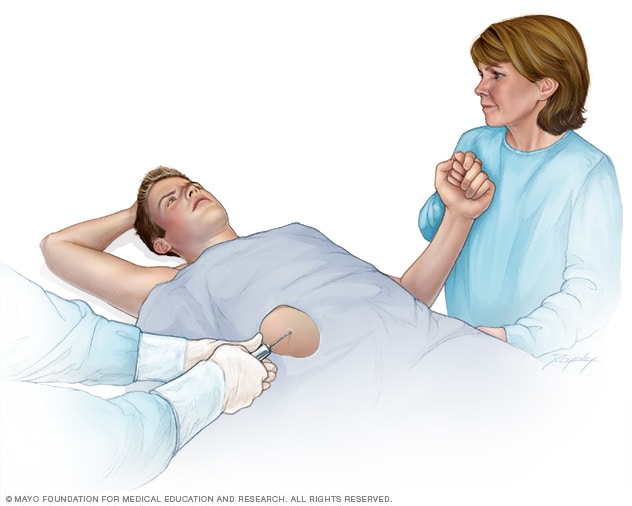
  • 取出肝脏组织样本进行检测,也称为活检。在活检过程中,医生会将一根细针穿过皮肤插入肝脏。然后,医生会抽取少量组织样本。接着在实验室中检验组织中的铜是否过量。
  • 基因检测。血液检查可以识别导致威尔逊氏症的基因突变。如果您有导致威尔逊氏症的变异基因,医生还可以为您的任何兄弟姐妹进行筛查。如果他们中的任何一个也存在变异基因,则可以在出现症状之前开始治疗。

Diagnostic criteria

Healthcare professionals diagnose Wilson's disease based on a combination of symptoms, lab values, and imaging or genetic tests. A structured scoring tool, such as the Leipzig diagnostic criteria, can help healthcare professionals combine these symptoms and test results to confirm or rule out Wilson's disease. The tool assigns points based on symptoms and test results. A Leipzig score of 4 or higher, for example, means Wilson's disease is highly likely.

Tests and procedures may include:

Blood and urine tests

Blood tests can show how well your liver is working and measure ceruloplasmin, a protein that binds copper in the blood. Blood tests also can check the level of copper in your blood. Your healthcare professional may want to measure the amount of copper removed in your urine during a 24-hour period.

  • Ceruloplasmin. This test checks the levels of a protein that binds copper in the blood. In Wilson's disease, ceruloplasmin levels are typically low. What is considered low depends on the specific laboratory, but below 20 milligrams per deciliter (mg/dL) or 0.2 grams per liter (g/L) is often considered low. The levels are low because the ATP7B gene change that causes Wilson's disease prevents copper from binding properly to ceruloplasmin protein. Some people with Wilson's disease do not have low ceruloplasmin levels. And you can have low ceruloplasmin levels without having Wilson's disease. For example, liver disease caused by something else may lower ceruloplasmin levels.
  • Serum copper. This test checks the level of copper in blood. By itself, the test is not used to diagnose Wilson's disease. With Wilson's disease, total serum copper levels usually are low due to low ceruloplasmin. However, the level of free copper — copper that isn't bound to ceruloplasmin — is often higher than usual.
  • 24-hour urinary copper. Your healthcare professional may want to measure the amount of copper removed in your urine during a 24-hour period. With Wilson's disease, this level is typically high. What is considered high depends on the specific laboratory, but higher than 40 to 100 micrograms (mcg) a day usually is considered high.
  • Other liver tests. Other tests might be done to check how well your liver is working. These are called liver function tests. But Wilson's disease can cause liver damage with normal liver function and normal test results. This is called compensated liver disease.

Eye exam

During an eye exam, an eye specialist can use a special light called a slit-lamp to check for Kayser-Fleischer rings and sunflower cataracts.

Kayser-Fleischer rings are golden-brown or copper-colored and appear around the outside edge of the colored part of the eye, called the iris. The rings are caused by copper buildup in a part of the cornea called the Descemet membrane. The cornea is the clear, dome-shaped layer that covers the pupil and iris. Kayser-Fleischer rings are seen in most people with neurological symptoms and about half of people with symptoms of liver disease only.

Wilson's disease also can cause a special kind of cataract, called a sunflower cataract. This is caused by copper buildup in the lens of the eye.

Liver biopsy

In a liver biopsy, a healthcare professional inserts a thin needle through your skin and into your liver to take a small sample of tissue. A laboratory then tests the tissue for extra copper. A copper level higher than 250 micrograms per gram of dry weight liver (mcg/g) is a sign of Wilson's disease.

Genetic testing

A blood test can look for mutations in the ATP7B gene, which is what causes Wilson's disease. There are hundreds of known mutations in the ATP7B gene. One of the most common is p.H1069Q. If you have the changed gene that causes Wilson's disease, any siblings and children should get genetic testing too. Finding the condition early means they can begin treatment before symptoms start.

MRI

Magnetic resonance imaging (MRI) is a medical imaging technique that uses a magnetic field and computer-generated radio waves to create detailed images of organs and tissues in the body. In those with neurological symptoms of Wilson's disease, a brain MRI may show changes in parts of the brain affected by copper buildup. The face of the giant panda sign appears on a brain MRI in about 10% to 15% of people with Wilson's disease. It shows when Wilson's disease has damaged the middle part of the brain called the midbrain. The name of the sign reflects a pattern of lighter and darker colors that look similar to a panda's face in the MRI image.

Conditions that may have similar symptoms

When diagnosing Wilson's disease, healthcare professionals think about other possible conditions that might cause similar symptoms. This helps ensure the correct diagnosis and treatment.

All of these other conditions are caused by different gene changes:

  • Hemochromatosis. Like Wilson's disease, hemochromatosis can affect the liver. But a difference between Wilson's disease and hemochromatosis is that Wilson's disease involves a buildup of copper. Hemochromatosis involves too much iron.
  • Huntington's disease. Both Wilson's disease and Huntington's disease can cause similar movement and behavior symptoms. But Wilson's disease is different from Huntington's disease in that it affects both the liver and the brain due to copper buildup. Huntington's disease affects the brain by causing nerve cells in the brain to decay over time.
  • Aceruloplasminemia. Aceruloplasminemia and Wilson's disease are not related, though both affect the ceruloplasmin protein that binds copper in the blood. Aceruloplasminemia leads to iron buildup, not copper buildup, in the liver.
  • Menkes disease. Menkes disease also affects how the body uses copper. But Wilson's disease is not the same as Menkes disease. Menkes disease leads to a low level of copper in the liver and brain. Wilson's disease results in a high level of copper in the liver and brain.
  • Other copper or iron metabolism conditions. A few other rare inherited conditions can affect copper and iron balance. But they have different genetic causes.

All of these conditions are caused by gene changes different from the gene change that causes Wilson's disease. And all have different effects on the body.

治疗

医生可能会推荐使用一类叫做铜螯合剂的药物。这些药物会附着在铜上,让器官将铜释放到血流中。然后,肾脏会过滤铜,并将其释放到尿液中。

后续治疗会侧重于防止铜再次积聚。严重肝损伤的患者可能需要接受肝移植。

Can Wilson's disease be cured?

Treatment protects the body from further damage from Wilson's disease and can improve some symptoms. Medicines do not cure Wilson's disease. A liver transplant cannot cure the gene change that causes Wilson's disease. But a donated liver would not have the mutated gene, so it would process copper properly without more treatment. If Wilson's disease is detected early and treated, a person with the disease can live a full life and have a typical life expectancy.

药物

如果您服用药物治疗威尔逊氏症,则需终生接受治疗。这些药物包括:

  • 青霉胺(Cuprimine、Depen)。青霉胺是一种铜螯合剂,可引发严重的副作用,包括皮肤和肾脏问题,并加重神经系统症状。此外,还可导致骨髓抑制,使骨髓不能产生足够多的红细胞和血小板。如果您对青霉素过敏,应慎使用青霉胺。它还可使维生素 B6(吡哆醇)无法发挥作用。这意味着您需要小剂量服用 B6 补充剂。
  • 曲恩汀(Cuvrior、Syprine)。曲恩汀是另一种铜螯合剂,其作用类似青霉胺,但副作用较小。然而,在服用曲恩汀期间,神经系统系统症状仍可能恶化。
  • 醋酸锌(Galzin)。这种药物可以阻止身体吸收食物中的铜。在使用青霉胺或曲恩汀治疗后,醋酸锌通常被用来预防铜再次积聚。如果您在完成去除过量铜的治疗后无法服用青霉胺或曲恩汀,或者您未表现出任何症状,则可使用醋酸锌作为主要疗法。醋酸锌可能会导致胃部不适。

医生还可能会为您推荐治疗威尔逊氏症其他症状的方法。

Chelating agents for copper removal

These medicines often are used first, as an initial treatment to lower copper levels quickly:

  • Penicillamine (Cuprimine, Depen). Penicillamine, sometimes referred to as d-penicillamine, is a medicine that removes extra copper from the body. It can cause serious side effects, including skin and kidney issues. It also can cause or worsen neurological symptoms, most often in those who already have neurological symptoms. It also may lower the bone marrow's ability to make enough red blood cells and platelets. Use penicillamine carefully if you have a penicillin allergy. Because penicillamine reduces the effect of vitamin B6, also known as pyridoxine, you'll also need to take small doses of a B6 supplement.
  • Trientine (Cuvrior, Syprine). This is another medicine that removes extra copper from the body. It works much like penicillamine but usually causes fewer side effects. Still, neurological symptoms can get worse when taking trientine.

Zinc therapy to prevent copper absorption

Zinc acetate (Galzin) stops your body from absorbing copper from the food you eat. This medicine usually is used as maintenance therapy to stop copper from building up again after initial treatment with penicillamine or trientine. Zinc acetate may be used as the main treatment if you can't take penicillamine or trientine or if you have no symptoms. The most common side effect of zinc acetate is stomach upset.

Your healthcare professional also might recommend ways to treat other symptoms of Wilson's disease.

手术

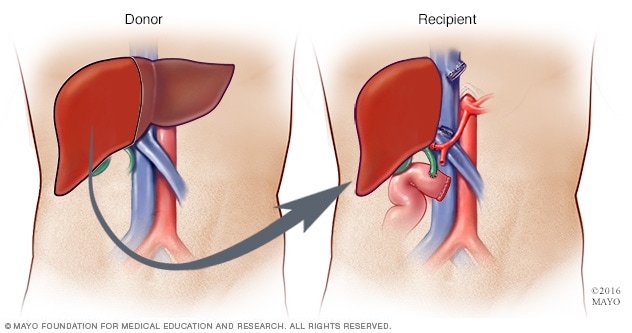
如果您的肝脏损害很严重,则可能需要进行肝移植。在肝移植过程中,外科医生会切除病变肝脏,并将其替换为捐赠者的健康肝脏。

大多数移植的肝脏来自于已故捐赠者。有时,肝脏可来自于活体捐赠者,比如家庭成员。在此情况下,外科医生会切除病变肝脏,并将其替换为捐赠者的部分肝脏。

生活方式与家庭疗法

如果您患有威尔逊氏症,医生可能会建议您限制饮食中的铜摄入量。另外,如果您家中使用的是铜制水管,最好能检测自来水中的铜水平。请务必避免摄入含铜的复合维生素。

含铜量高的食物包括:

  • 肝脏。
  • 贝类。
  • 蘑菇。
  • 坚果。
  • 巧克力。

请向医疗护理团队了解有关含铜量高的食物的更多信息。

准备您的预约

您可能要先去看家庭医生。然后您可能会被转诊给专门治疗肝脏疾病的医生(即肝病科医生)。

您能做些什么

约诊时,请询问是否需要提前做准备,变更饮食以便进行血液检查。

请列出以下各项:

  • 您的症状以及症状开始的时间。
  • 关键个人信息,包括重大压力、其他医疗状况以及任何威尔逊氏症家族史。
  • 您服用的所有药物、维生素或其他补充剂,包括相应剂量。
  • 要向医生咨询的问题

如有可能,请让家人或朋友陪您就诊,帮您记住医生提供的信息。

关于威尔逊氏症,要向医生咨询的问题包括:

  • 我需要做哪些检查?
  • 您推荐哪种治疗方法?
  • 推荐的治疗有哪些副作用?
  • 是否有其他治疗方案?
  • 我还有一些其他健康状况。我如何才能同时管理好这些状况?
  • 我是否需要限制摄入的食物种类?
  • 我是否应该咨询专科医生?
  • 我的家人要进行威尔逊氏症检查吗?
  • 有没有可以供我参考的手册或其他印刷材料?您是否可以推荐一些网站?

如果还有其他问题,请随时提出。

医生可能做些什么

医生可能会问一些问题,例如:

  • 您的症状是一直存在还是偶尔出现?
  • 您的症状有多严重?
  • 这些症状已持续多长时间?
  • 有没有什么因素似乎会令您的症状好转或加重?
  • 您是否有其他家人患有威尔逊氏症?
Dec. 27, 2025
  1. Elsevier Point of Care. Clinical overview: Wilson disease. https://www.clinicalkey.com. Accessed Sept. 18, 2025.
  2. Schilsky ML. Wilson disease: Clinical manifestations, diagnosis and natural history. https://www.uptodate.com/contents/search. Accessed Sept. 18, 2025.
  3. AskMayoExpert. Wilson disease. Mayo Clinic; 2024.
  4. Goldman L, et al., eds. Wilson disease. In: Goldman-Cecil Medicine. 27th ed. Elsevier; 2024. https://www.clinicalkey.com. Accessed Sept. 18, 2025.
  5. Schilsky ML. Wilson disease: Epidemiology and pathogenesis. https://www.uptodate.com/contents/search. Accessed Sept. 18, 2025.
  6. Gao Q, et al. From cell death to neurological disease: Unraveling the role of copper. Neurobiology of Disease. 2025; doi:10.1016/j.nbd.2025.107042.
  7. Wilson disease. American Liver Foundation. https://liverfoundation.org/liver-diseases/rare-disease/wilsons-disease. Accessed Sept. 25, 2025.
  8. Schilsky ML. Wilson disease: Management. https://www.uptodate.com/contents/search. Accessed Sept. 25, 2025.
  9. Schilsky ML. Gene test interpretation: ATP7B (Wilson disease gene). https://www.uptodate.com/contents/search. Accessed Sept. 25, 2025.
  10. Ganaraja VH, et al. Current management of neurological Wilson's disease. Tremor and Other Hyperkinetic Movements. 2025; doi:10.5334/tohm.938.
  11. Dove LM, et al. Liver transplantation in adults: Patient selection and pretransplantation evaluation. https://www.uptodate.com/contents/search. Accessed Sept. 27, 2025.
  12. Liver transplant. American Liver Foundation. https://liverfoundation.org/liver-diseases/treatment/liver-transplant. Accessed Sept. 27, 2025.
  13. Schilsky ML, et al. A multidisciplinary approach to the diagnosis and management of Wilson disease: 2022 practice guidance on Wilson disease from the American Association for the Study of Liver Diseases. Hepatology. 2022; doi:10.1002/hep.32801.
  14. Wilson disease. American College of Gastroenterology. https://gi.org/topics/wilson-disease. Accessed Sept. 27, 2025.
  15. Mulligan C, et al. Wilson's disease: An overview and approach to management. Neurologic Clinics. 2020; doi:10.1016/j.ncl.2020.01.005.
  16. Melmed S, et al. Pathophysiology of type 2 diabetes mellitus. In: Williams Textbook of Endocrinology. 15th ed. Elsevier; 2025. https://www.clinicalkey.com. Accessed Nov. 8, 2025.
  17. Liu R, et al. Biochemical, enzymatic, and computational characterization of recurrent somatic mutations of the human protein tyrosine phosphatase PTP1B in primary mediastinal B cell lymphoma. International Journal of Molecular Sciences. 2022; doi:10.3390/ijms23137060.
  18. Hemochromatosis. Mayo Clinic. https://www.mayoclinic.org/diseases-conditions/hemochromatosis/symptoms-causes/syc-20351443. Accessed Nov. 17, 2025.
  19. Huntington's disease. National Institute of Neurological Disorders and Stroke. https://www.ninds.nih.gov/health-information/disorders/huntingtons-disease. Accessed Nov. 17, 2025.
  20. Menkes disease. National Institute of Neurological Disorders and Stroke. https://www.ninds.nih.gov/health-information/disorders/menkes-disease. Accessed Nov. 17, 2025.
  21. Copper conscious eating. Wilson Disease Association. https://wilsondisease.org/living-with-wilson-disease/copper-conscious-eating. Accessed Nov. 17, 2025.
  22. Copper food lists. Wilson Disease Association. https://wilsondisease.org/living-with-wilson-disease/copper-conscious-eating/copper-food-lists. Accessed Nov. 17, 2025.
  23. Parekh JR, et al. Wilson's disease: 'Face of giant panda' and 'trident' signs together. Oxford Medical Case Reports. 2014; doi:10.1093/omcr/omu005.

相关

产品与服务