Colon cancer surgery
Learn about the procedures used to treat colon cancer, from simple polyp removal to colectomy.
Medical review by: Mayo Clinic Staff
Updated: September 10, 2026
If you have been diagnosed with colon cancer, surgery will likely be a part of your treatment plan. Some patients with early-stage colon cancer only need surgery and don’t have any other types of treatment. But surgery might be used with other treatments in your care plan, and there are many types of surgery for colon cancer.
When deciding which surgery will likely give you the best outcomes, you and your healthcare team consider your cancer’s location and stage, as well as your treatment and recovery goals. Just as your colon cancer surgeons provide important expertise about treating colon cancer, you provide important expertise about your symptoms and your experience. That's why it’s crucial to deeply understand both your diagnosis and your potential surgical options.
Colon cancer surgery can help take out your cancer or take out colon blockages to help ease your symptoms. If your cancer has spread outside of your colon, surgery also can help remove it from those distant locations. Some surgeries can be minimally invasive, which means your surgeon uses several small cuts, called incisions. This can help you have a faster and simpler recovery. For these procedures, surgeons use special tools to find and cut away your cancer. Sometimes, these are robotic tools controlled by your surgeon.
Mayo Clinic surgeons provide more options for people with colon cancer.
We treat complex colon cancers using advanced surgical techniques and careful planning. Our surgeons often provide surgical options when standard approaches are limited by combining experience, technology, and innovative methods. This allows us to offer surgery to more people and tailor treatment when traditional options are not enough.
Types of colon cancer surgery
There are many types of colon cancer surgery. The type you need depends on your unique diagnosis.
Polypectomy
Colon cancer often begins as small cell growths called polyps. Most polyps are not yet cancer, but some can become cancerous over time. If polyps are caught early, taking them out can remove your risk of colon cancer entirely.
A polypectomy happens during your colonoscopy. During this procedure, your doctor uses a tiny camera on the end of a flexible tube called a colonoscope. This allows them to look at the colon. Tools can be threaded through the tube to take out any polyps or concerning cells.
Experts are studying ways to enhance polyp detection with artificial intelligence (AI). AI-assisted colonoscopies have been shown to help detect and characterize polyps so your care team can find and take out cancer as early as possible.
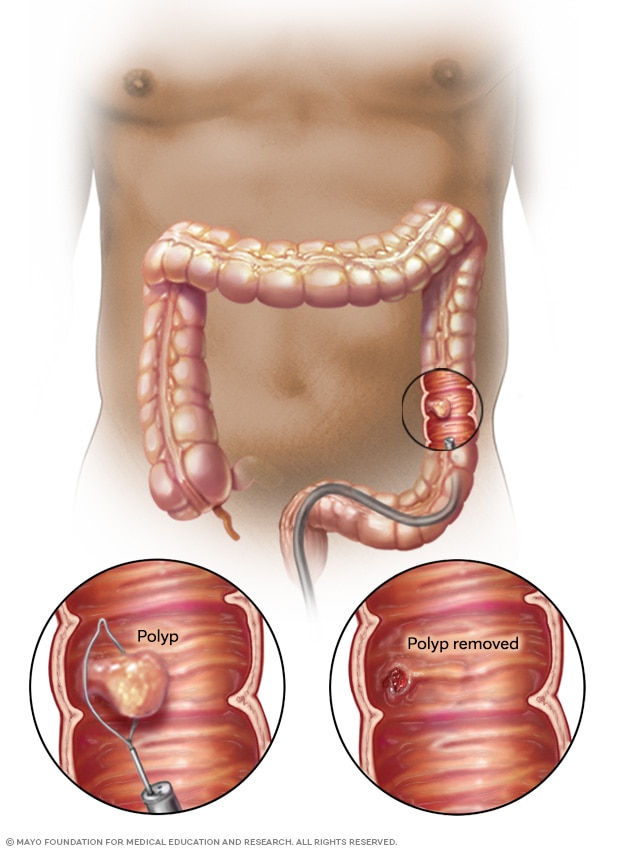
During a polypectomy, specialized tools are placed through a flexible tube called a colonoscope, which is guided into the colon to remove the polyp from the colon's lining.
Endoscopic mucosal resection
If you have early-stage colon cancer or concerning precancerous polyps, your care team also may consider a minimally invasive procedure called endoscopic mucosal resection. Using tools similar to those used in polypectomy, your care team can take out larger polyps or cancer cells from the upper parts of your digestive tract.
Colectomy
A colectomy also is called a colon resection because it is a surgical procedure to take out the diseased part of the colon and any associated lymph nodes. You may need a colectomy if your cancer has grown into or through your colon.
To help control your cancer’s spread, some healthy tissue on each side of your cancer is taken out during a colectomy. These are called margins. All cancer cells might not be visible to the human eye. That's why it is important that a pathologist examine the tissues taken out during surgery and confirm negative margins.
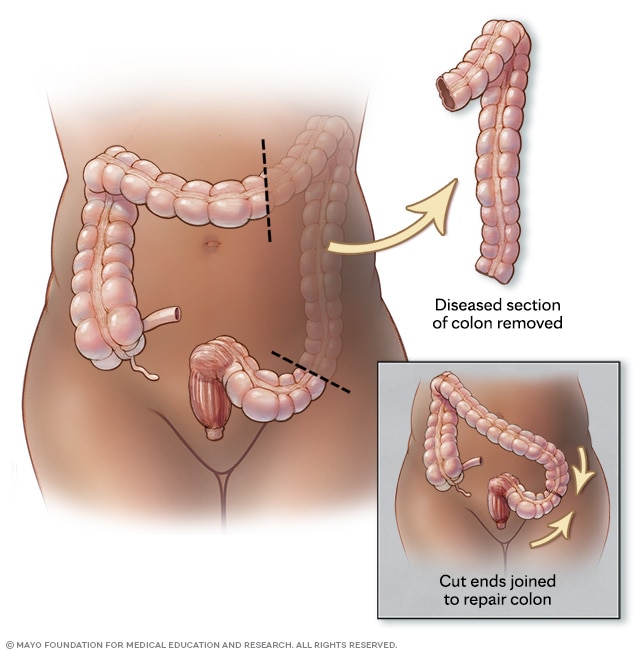
A colectomy is a surgical procedure to remove all or part of the colon, after which the remaining healthy sections are typically reconnected, allowing stools to pass through the colon as usual.
At Mayo Clinic, surgical teams assess cancer margins during surgery to guide decisions in real time.
After colectomy, surgeons and pathologists work together to ensure margins — the edges of removed tissue — are free from cancer cells. Reviewing this information after surgery helps confirm that enough tissue has been removed and supports decisions that may lower the risk of cancer returning.
Depending on the size and location of your colon cancer, you may need:
- Partial colectomy. In this procedure, only the diseased part of the colon is taken out. There are a few types of partial colectomy. Which type you receive depends on which section of your colon is taken out. Right or left hemicolectomy takes out the right or left side of the colon. Sigmoid colectomy takes out the sigmoid colon. Segmental resection takes out a specific segment of the colon where the cancer is.
- Total colectomy. This procedure involves taking out the entire colon while leaving the rectum intact. You may have a total colectomy if you have another health condition, such as inflammatory bowel disease, Lynch syndrome or familial adenomatous polyposis.
- Proctocolectomy. This procedure takes out both the colon and the rectum. You need this type of surgery only if your colon cancer has spread to or is affecting your rectum.
Nearby lymph nodes also are taken out during a colectomy. Testing these lymph nodes can help your care team understand your risk of cancer spread. After a colectomy, the remaining healthy ends of the colon may be connected, allowing waste to leave the body through the colon. This step is known as anastomosis.
“We use modern technology and robotics to use very small incisions to do big operations. We couple that with outstanding and innovative post-operative care that really reduces the risk of complications.”

David W. Larson, M.D., M.B.A.
Mayo Clinic colon and rectal surgeon
Ostomy
Your colon plays an important role in removing stool from your body. If it’s not possible for your surgeon to reconnect the healthy portions of your colon after a colectomy, you may need an ostomy.
During an ostomy, your surgeon creates an opening, usually in the wall of the abdomen. This opening is called a stoma, and it allows stools to leave your body through the opening instead of through the rectum. A stoma typically appears as a red, moist and slightly bulging piece of the intestine. A special pouch, sometimes called an ostomy bag, is attached to the stoma outside the body to collect waste. The pouch provides a discreet and hygienic way to manage passing stools.
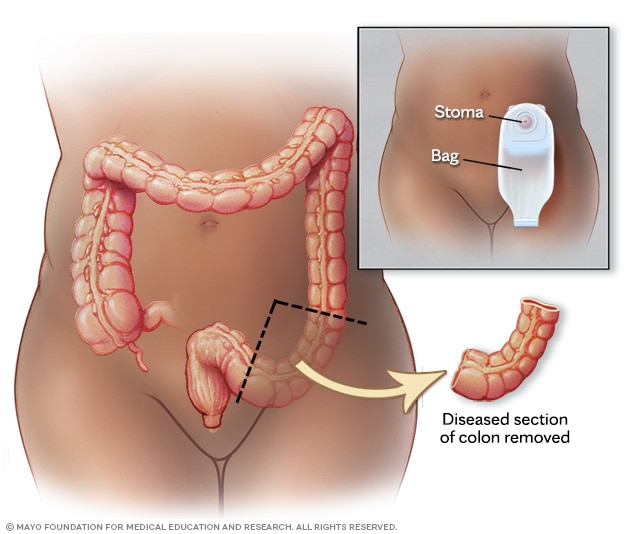
During colostomy surgery, an opening is made in the belly called a stoma. Part of the colon is brought through the stoma and attached to a pouch outside the body. Stools then pass through the stoma and go into the pouch.
Colostomy and ileostomy are common ostomy procedures, and they are named for the part of the bowel in which the opening is created. A colostomy involves the colon, while an ileostomy involves the last part of the small intestine, called the ileum.
For many people, an ostomy can be short-term, also called temporary. A temporary ostomy allows your colon to heal after surgery and is then reversed. Some people may need an ostomy for the rest of their lives, called a permanent ostomy. If your ostomy is permanent, you can still eat the foods you like and take part in all the activities you enjoyed before having an ostomy.
Having an ostomy is a big worry for many patients because it can cause a lot of quality-of-life concerns. That’s why experts continue to study ostomy procedures to address these concerns.
Some people may have procedures that use an internal reservoir instead of an external pouch. Continent ileostomy surgery, also called a Kock pouch or a K-pouch surgery, and ileoanal anastomosis surgery, also called J-pouch surgery, are examples of procedures that use internal reservoirs.
Related
Cytoreductive surgery
If your surgeon cannot take out all of your cancer, your care team may recommend cytoreductive surgery. This also is called debulking surgery. During this type of surgery, your surgeon takes out as much of your cancer as possible. Using cytoreductive surgery along with nonsurgical treatments may provide more treatment options for people with advanced colon cancer.
Surgery for colon blockage
If your cancer has grown to block the colon, it is called a bowel obstruction. If this rare complication happens, you might need surgery right away to fix it. A blockage can prevent the passing of stool or cause severe symptoms, such as pain, bleeding and vomiting. If your cancer is growing but hasn’t totally blocked your intestine, surgery may be planned to clear the blockage and prevent complications.
The most common surgery for colon blockage is a colectomy to take out the blocked section of the intestine. That sometimes is followed by a colostomy or an ileostomy. Depending on the situation, one of these simple ostomy procedures may be done without taking out part of the colon.
Sometimes, colectomy isn’t an option. This could be due to the size and location of your cancer or your health, or because you have multiple tumors. Other types of surgery to address colon blockage include:
- Bypass surgery. A bypass procedure connects a part of the intestine above the blockage to a part below the blockage. That bypasses the obstructed area and creates a new, clear pathway for waste. This allows the digestive system to function as it typically would despite the blockage. A bypass procedure most often is used to ease symptoms.
- Stenting. Stenting is a minimally invasive procedure done with a colonoscope. It involves placing an expandable metal tube in the colon to keep the colon open and allow waste to pass through. Stenting can be a temporary or permanent solution. This procedure helps relieve symptoms of obstruction and can serve as a bridge to surgery. Stenting most commonly is done for cancer growing in the left side of the colon.
Sometimes, a bypass or stenting procedure may be done first, followed by a colectomy at a later time.
Multidisciplinary surgical approaches
Your colon cancer team may be multidisciplinary, which means healthcare professionals from different specialties work together. This can help you have more treatment options and a smoother care experience. There are many surgical options for colon cancer that use treatments from other specialty areas, such as chemotherapy and immunotherapy. Radiation therapy is rarely necessary for colon cancer.
Hyperthermic intraperitoneal chemotherapy
Hyperthermic intraperitoneal chemotherapy (HIPEC) is a specialized treatment that combines chemotherapy and surgery for maximum impact. HIPEC is used for cancer in the abdominal cavity, also called the peritoneum. Cancerous tumors are first taken out with cytoreductive surgery. The cavity is then bathed with hot chemotherapy to kill any microscopic cancer cells that may remain after the surgery.
Pressurized intraperitoneal aerosol chemotherapy
Pressurized intraperitoneal aerosol chemotherapy (PIPAC) uses chemotherapy in an aerosolized form that is given surgically. PIPAC is done with a minimally invasive surgery that uses special tools to disperse the aerosolized chemotherapy. The medicine circulates in the abdominal cavity for 30 minutes so it can penetrate deeply into the cancer cells. It is then removed using a closed air waste evacuation system.
Mayo Clinic helped bring PIPAC into clinical practice
Mayo Clinic performed the first pressurized intraperitoneal aerosol chemotherapy (PIPAC) procedure in 2019. Since then, our teams have continued to study PIPAC through multisite clinical trials, helping define how this approach can be used safely and effectively for select cancers. This ongoing research supports careful patient selection and continued progress in treatment options.
Hepatic artery infusion pump chemotherapy
Hepatic artery infusion pump chemotherapy targets colon cancer that has spread to the liver. During this treatment, your surgeon places a small pump under the skin, typically in the belly. This pump delivers chemotherapy to the liver through a catheter in a blood vessel branch connected to the liver’s main artery. The liver’s main artery is called the hepatic artery. The pump allows your care team to deliver higher doses of chemotherapy directly to your liver so you have fewer widespread side effects.
Liver transplant
If your cancer has spread to your liver, you may be able to have a liver transplant. Your team works closely with transplant experts to help you understand whether you need a transplant. Liver transplantation is an effective therapy for a small number of patients with colorectal liver metastases.
At Mayo Clinic, select people with colorectal cancer may be considered for liver transplant.
Liver transplant for colorectal cancer is a complex option offered at only a few centers in the United States. Our teams bring together surgical expertise, careful patient selection, and coordinated care to make this approach possible in appropriate situations. This expanded option reflects how we continue to advance treatment when standard approaches are limited.
Intraoperative radiation therapy
Intraoperative radiation therapy (IORT) is radiation therapy that is delivered during surgery. IORT is used when surgeons can’t take out enough healthy tissue around the cancer or when the cancer has spread locally but not to distant parts of the body. During IORT, one high dose of radiation is given during surgery. If you need IORT, radiation is given after the cancer has been taken out but before the abdomen has been closed.
Why it’s done
The main goal of colon cancer surgery is to take out cancerous tissues and prevent the spread of cancer. You may also have surgery to ease symptoms and improve your quality of life. If you have early-stage colon cancer, surgery alone can often completely take out the cancer and possibly be a cure.
During surgery, your team also sees how far your cancer has spread within the belly. This helps with staging. It also can help you and your care team make decisions about the next best steps for your treatment.
How you prepare for colon cancer surgery
Preparing for surgery can help you have a smoother recovery and avoid complications. Work with your surgical care team to better understand your situation and the steps you can take to prepare for colon cancer surgery.
Discuss your procedure with a colon cancer surgeon
Before surgery, you meet with a colon cancer surgeon who can explain what to expect from surgery. You also may meet with other members of your multidisciplinary team.
Prepare for this meeting by creating a list of questions to ask:
- What are my options for colon cancer surgery?
- Do you recommend an open procedure or a minimally invasive procedure?
- Will I need to have a colostomy or an ileostomy? If so, will it be temporary or permanent?
- Will I also need to have other types of treatment, such as chemotherapy or radiation?
Questions to ask about risks and recovery:
- What are the risks associated with my surgery?
- What are my options for pain management?
- How much time will I spend in the hospital?
- How much time will I need for recovery?
- How soon can I eat and drink after my surgery?
- What kind of diet should I follow during my recovery? For how long?
- Will I need to limit my activities after surgery?
- When can I return to work?
Questions to ask if you have an ostomy:
- What does a stoma look like, and how do I care for it?
- How often do I need to change the ostomy pouch?
- Can I follow my typical diet after an ostomy procedure?
- How will an ostomy affect my daily life and routines, such as physical activity or intimacy?
- What are the possible complications or risks associated with an ostomy?
- How do I manage odor and prevent leakage from the ostomy pouch?
- What support and resources are available for help with my ostomy?
Follow your healthcare team’s instructions
During the days leading up to the procedure, your healthcare team may have specific instructions for you. Your team may include a patient navigator who can help and is available to answer your questions. Your presurgery instructions might tell you to:
- Stop taking certain medicines. Certain medicines can increase your risk of complications during surgery, so your care team may ask that you stop taking them before your procedure.
- Fast before your surgery. You may need to stop eating and drinking several hours to a day before your procedure. Your care team gives you specific instructions.
- Drink a solution that clears your bowels. You may be prescribed a laxative solution that you mix with water at home. You drink the solution over several hours, following the directions. The solution causes diarrhea to help empty your colon. Your care team also may recommend enemas.
- Take antibiotics. You may be prescribed antibiotics to suppress the bacteria found naturally in your colon and to help prevent infection.
- Stop smoking. Smoking makes it harder for the body to heal after surgery. Quitting smoking before surgery can lead to faster healing and fewer complications.
- Stay active. Physical activity before colon cancer surgery can enhance recovery and overall outcomes. It helps improve cardiovascular fitness, muscle strength and mental well-being. This may reduce complications during surgery and speed up recovery afterward.
Before surgery, you may have a colonoscopy to check the size and location of the cancer. The cancer site may be marked with ink, similar to a tattoo. This makes it easier for your surgeon to find and take out the cancer during your procedure.
Preparing for colon cancer surgery isn’t always possible. For instance, if you need an emergency procedure due to bowel obstruction or bowel perforation, you may not have time to prepare.
Plan for your hospital stay
You’ll likely spend at least a few days in the hospital after your surgery, depending on your situation. Plan for someone to take care of your responsibilities at home and at work. Think ahead to what you might like to have with you while you're recovering in the hospital.
Things you might pack include:
- A robe and slippers.
- Toiletries, such as your toothbrush and toothpaste and, if needed, shaving supplies.
- Comfortable clothes to wear home.
- Activities to pass the time, such as books, magazines or games.
What you can expect
If you need surgery for colon cancer, it’s natural to feel overwhelmed or anxious. We believe having the information about your cancer that you need and a deep understanding of your treatment plan can help.
During the procedure
What happens during your surgery depends on the specific procedure, but generally, you can expect the following:
- Surgery prep. Members of your healthcare team take you to a preparation room where they monitor your blood pressure and breathing. You may receive an antibiotic through a vein in your arm to prevent infection.
- Anesthesia. You are taken to the operating room and positioned on the surgical table. You receive general anesthetic to put you in a sleeplike state so you won't be aware during the operation. Once you are asleep, your surgeon begins the operation.
- Cancer removal. For procedures such as polypectomy, you won't have surgical cuts, called incisions, in the belly. But other colon cancer surgeries require one or more cuts in the belly. In open surgery, also called conventional surgery, a single large incision is made. In minimally invasive surgery, several small incisions are made for laparoscopic or robotic tools.
Your surgeon locates and takes out the cancer. Your surgeon also takes out nearby lymph nodes to see if your cancer has spread. If possible, the remaining parts of your colon are reconnected to restore bowel function. - An ostomy procedure, if necessary. If your surgeon can't reconnect the remaining parts of your colon, a colostomy or an ileostomy may be done.
After the procedure
After surgery, your care team takes you to a recovery room. Here the team can watch you as the anesthetic wears off. Then your team takes you to your hospital room to continue your recovery.
- Bowel function. You’ll likely stay in the hospital until you are able to eat and drink again. This may take a couple of days to a week. You may be encouraged to start on a general diet and eat what sounds good to you a few hours after surgery has ended. Many people find it helpful to eat small bites, chew thoroughly and pause between bites. Eating regular food can help your bowel function return.
- Wound care. Members of the healthcare team teach you how to care for your incision and manage any drains. They also provide instructions for diet and activity levels.
- Ostomy care. If your surgery involved a colostomy or an ileostomy, someone on your healthcare team shows you how to care for your stoma. The nurse explains how to change the ostomy bag that collects waste.
You’ll have follow-up appointments to check on your recovery and discuss further treatment options, if needed.
Support group discussions
From Mayo Clinic Connect, our online patient community.
Find more discussions:
Results
The results of your colon cancer surgery show whether all of your cancer was taken out. If your healthcare professional wasn't sure about the cancer’s stage before surgery, your results may provide that important information as well. Ask your healthcare team when you can expect to find out the results. Your care team may talk about the results with you at a follow-up appointment. Or the team may contact you with the results as soon as they're available.
It's important to talk with your care team about your surgical goals as well. Your goals, including goals for recovery and quality of life, are part of the team's decision-making process.
Many people with colon cancer have other treatments after surgery. Common treatments used after surgery include chemotherapy, immunotherapy and targeted therapy. When you might begin other treatments depends on your cancer. Ask your care team whether you need more treatment.
Risks
Colon cancer surgery can carry a risk of serious complications. Minimally invasive approaches, such as laparoscopic and robotic surgery, may have shorter recovery times and fewer complications. But not everyone can have this type of surgery.
Your risk of complications is based on your general health, the type of surgery you have and the approach your surgeon uses to perform the operation. In general, complications of colon cancer surgery can include:
- Bleeding.
- Blood clots in the legs, called deep vein thrombosis.
- Blood clots in the lungs, called pulmonary embolism.
- Infection.
- Injury to organs near the colon, such as the bladder, ureters and small intestine.
- Formation of scar tissue after surgery, called adhesions, that can cause blockage in the intestine.
- Leaking at the connection site, called an anastomosis, where the healthy ends of intestine were joined.
After surgery, you spend time in the hospital to allow your digestive system to heal. Your healthcare team monitors you for signs of complications from your surgery. You may spend a few days to a week in the hospital depending on your condition and your situation.
Clinical trials
Explore Mayo Clinic studies of tests and procedures to help prevent, detect, treat or manage conditions.
Mayo Clinic’s approach to colon cancer surgery

Colon cancer surgeons at Mayo Clinic use expert skills and techniques, alongside new and advanced technology, to give more people surgical options and smoother recoveries. Our surgeons work with experts from other specialties and we use nonsurgical treatments to help reduce tumor size and improve overall health. This may allow you to have surgery, even if you have been told your tumor is inoperable.
Colon cancer surgery teams at Mayo Clinic have created and continue to study innovative approaches, including robotic and minimally invasive surgery, intraoperative radiation therapy, and pouch surgery. From the most common to the most complex colon cancer diagnoses, surgeons at Mayo Clinic can help you understand which options are likely to give you the best outcomes.
“We’re continuing to push the limits with robotic surgery and digital surgery using augmented reality and artificial intelligence, and this really helps enhance the care that we can deliver for patients with colorectal cancer.”

Amit Merchea, M.D.
Mayo Clinic colon and rectal surgeon
You can also contact our helpful scheduling teams by calling:


