What is a coronary artery spasm?
A coronary artery spasm is a temporary squeezing of one or more arteries that supply blood to the heart. The condition causes chest pain, called angina. During a coronary artery spasm, less blood flows to the heart.
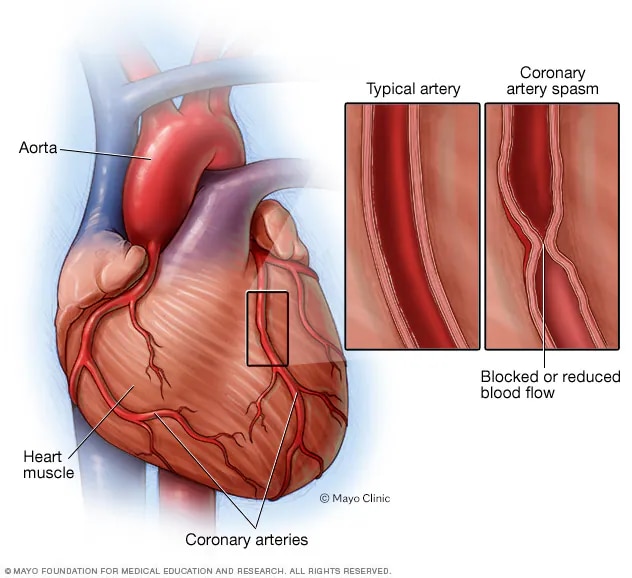
Coronary artery spasm
A coronary artery spasm occurs when one or more of the heart's arteries suddenly tighten. This can reduce blood flow to the heart. A coronary artery spasm can cause chest pain and may lead to a heart attack.
Other names for coronary artery spasms are:
- Prinzmetal's angina.
- Vasospastic angina.
- Variant angina.
Coronary artery spasms are not due to clogged arteries, a common cause of angina. But the two conditions can occur together. Many people who have coronary artery spasms don't have heart disease risk factors such as high cholesterol or high blood pressure.
Very bad chest pain is the main symptom of coronary artery spasms. The pain may feel like:
- Burning.
- Fullness.
- Pressure.
- Squeezing.
- Pain also may be felt in the arms, neck, jaw, shoulder or back.
Call 911 or your local emergency number if you are having sudden or unexplained chest pain. A sudden, extreme coronary artery spasm can lead to a heart attack.
Coronary artery spasms are unpredictable but often happen at rest, usually overnight into early morning. This is different from typical angina, which tends to occur with physical activity.
Things that can cause a coronary artery spasm are:
- Smoking or using tobacco.
- Cold temperatures.
- Extreme emotional stress.
- Stimulant drugs such as amphetamines and cocaine.
Medicines can treat or prevent coronary artery spasms. Such medicines include:
- Nitrates. These medicines help prevent coronary artery spasms. They also can quickly ease chest pain.
- Calcium channel blockers. These medicines relax the arteries. They help lower the risk of coronary artery spasms.
Cholesterol medicines called statins may be used if there also is plaque buildup in the heart arteries.
If a coronary artery spasm causes a dangerously fast heartbeat, a device called an implantable cardioverter-defibrillator (ICD) may be needed. An ICD continuously checks the heartbeat. It delivers electric shocks, when needed, to correct the heartbeat.
From Mayo Clinic to your inbox
Sign up for free and stay up to date on research advancements, health tips, current health topics, and expertise on managing health. Click here for an email preview.
FAQ-20058316
Mayo Clinic does not endorse companies or products. Advertising revenue supports our not-for-profit mission.
Advertising & Sponsorship
Mayo Clinic Press
Check out these best-sellers and special offers on books and newsletters from Mayo Clinic Press.
