Overview
Mitral valve regurgitation is a common type of heart valve disease, also called valvular heart disease. In this condition, the valve between the left heart chambers doesn't close fully. Blood leaks backward across the valve. If a lot of blood leaks backward, the rest of the heart and body doesn't get enough blood. Mitral valve regurgitation can make you feel very tired or short of breath.
Other names for mitral valve regurgitation are:
- Mitral regurgitation (MR).
- Mitral insufficiency.
- Mitral incompetence.
Treatment of mitral valve regurgitation may include regular health checkups, medicines or surgery. You may not need treatment if the condition is mild. If it's severe, you may need a catheter treatment or heart surgery to fix or replace the valve. Without proper treatment, severe mitral valve regurgitation can cause irregular heartbeats or heart failure.
Video: Mitral valve regurgitation
The mitral valve is located between the upper left heart chamber (left atrium) and the lower left heart chamber (left ventricle). A healthy mitral valve keeps your blood moving in the right direction. A leaky valve doesn't close the way it should, allowing some blood to flow backward into the left atrium. If left untreated, a leaky valve could lead to heart failure.
Symptoms
Mitral valve regurgitation is often mild and happens slowly. Some people do not have symptoms for many years.
But sometimes, mitral valve regurgitation develops quickly. When this happens, it's called acute mitral valve regurgitation.
Symptoms of mitral valve regurgitation include:
- Fatigue.
- Irregular heartbeat, called an arrhythmia.
- Shortness of breath, especially when lying down.
- Fast, pounding or fluttering heartbeat, called palpitations.
- Swollen feet or ankles.
When to see a doctor
If you have symptoms of mitral valve regurgitation, make an appointment for a health checkup.
You may be sent to a doctor trained in heart diseases, called a cardiologist.
Causes
Chambers and valves of the heart
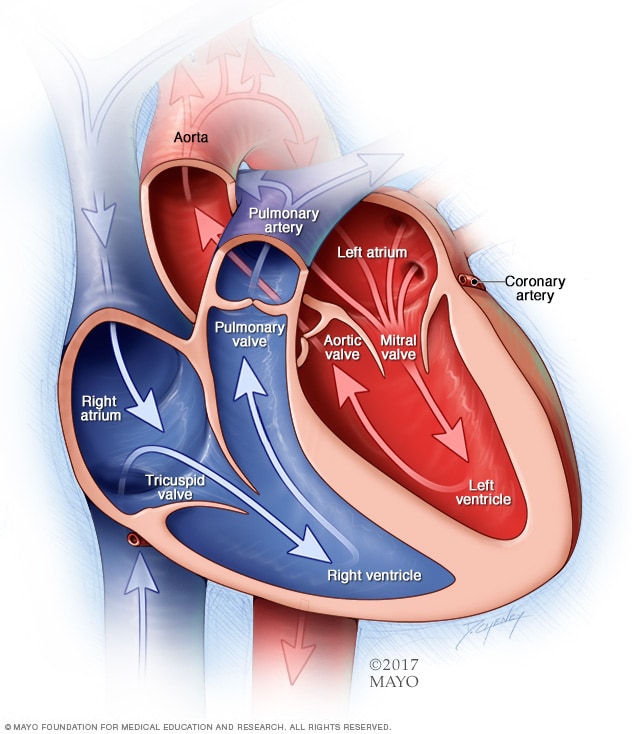
Chambers and valves of the heart
A typical heart has two upper and two lower chambers. The upper chambers, the right and left atria, receive incoming blood. The lower chambers, the more muscular right and left ventricles, pump blood out of the heart. The heart valves help keep blood flowing in the right direction.
To understand the causes of mitral valve disease, it may help to know how the heart works.
The mitral valve is one of four valves in the heart. Heart valves keep blood flowing in the right direction. Each valve has flaps, also called leaflets. The leaflets open and close once during each heartbeat.
In mitral valve regurgitation, the valve flaps don't close tightly. Blood moves backward when the valve is closed. This makes it harder for the heart to work as it should.
Mitral valve prolapse and regurgitation
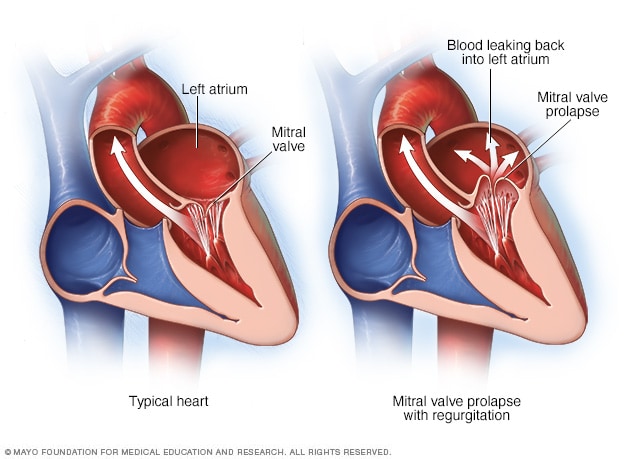
Mitral valve prolapse and regurgitation
The mitral valve separates the two chambers of the left side of the heart. In mitral valve prolapse, the valve flaps bulge into the upper left chamber during each heartbeat. Mitral valve prolapse can cause blood to leak backward, a condition called mitral valve regurgitation.
If mitral valve regurgitation is due to changes in the mitral valve, the condition is called primary mitral valve regurgitation.
If a condition or disease in other areas of the heart cause the valve to leak, the condition is called functional or secondary mitral regurgitation.
Possible causes of mitral valve regurgitation include:
- Mitral valve prolapse. The valve's flaps bulge back into the left upper heart chamber when the heart squeezes. This is a common type of heart valve disease. It can prevent the mitral valve from closing tightly.
- Rheumatic fever. Rheumatic fever is a complication of untreated strep throat. Rheumatic fever can damage the mitral valve, leading to mitral valve regurgitation early or later in life. If rheumatic fever causes mitral valve disease, the condition is called rheumatic mitral valve disease. Rheumatic fever is rare in the United States.
- Heart attack. A heart attack can damage the area of the heart muscle that supports the mitral valve. If there is a lot of heart attack damage, mitral valve regurgitation can occur. A leaky mitral valve caused by a heart attack is called ischemic mitral regurgitation.
- Heart condition present at birth, also called a congenital heart defect. Some people are born with heart structure changes that affect the heart valves.
- Thickening of the heart muscle, called cardiomyopathy. Thickening of the heart muscle makes it harder for the heart to send blood to the rest of the body. The condition can affect how the mitral valve works, causing regurgitation. Types of cardiomyopathy linked to mitral valve regurgitation include dilated cardiomyopathy and hypertrophic cardiomyopathy.
- Damaged tissue cords. Over time, the pieces of tissue that hold the flaps of the mitral valve to the heart wall may stretch or tear. This is especially likely in people with mitral valve prolapse. Or a chest injury can damage the cords. A tear can cause blood to suddenly move backward through the mitral valve. Surgery may be needed to repair the valve.
- Inflammation of the inner lining of the heart's chambers and valves, called endocarditis. An infection usually causes this condition. Germs get into the bloodstream and stick to damaged areas in the heart.
- Radiation therapy. Radiation therapy for cancer in the chest area can lead to mitral valve regurgitation. However, this is rare.
Risk factors
Things that can increase the risk of mitral valve regurgitation include:
- Some infections that affect the heart such as endocarditis.
- Heart attack.
- Heart conditions present at birth, called congenital heart defects.
- History of other heart valve diseases, including mitral valve prolapse and mitral valve stenosis.
- Older age.
- Radiation to the chest.
Complications
Mitral valve regurgitation complications often depend on how severe the disease is. Mild mitral valve regurgitation usually does not cause any complications.
Possible complications of severe mitral valve regurgitation include:
- An irregular and often very fast heartbeat, called atrial fibrillation. Mitral valve regurgitation may trigger this common heart rhythm disorder. Atrial fibrillation, also called AFib, increases the risk of blood clots and stroke.
- High blood pressure in the lungs, called pulmonary hypertension. Long-term untreated or improperly treated mitral regurgitation can make the pressure in the lungs' blood vessels go up. As pressure rises, fluid builds up in the lungs.
- Congestive heart failure. In severe mitral valve regurgitation, the heart has to work harder to pump enough blood to the body. The extra effort causes the left lower heart chamber to get bigger. Untreated, the heart muscle becomes weak. This can cause heart failure.