Aortic valve disease Symptoms and causes
Overview
Aortic valve disease is a type of heart valve disease. In this condition, the valve between the lower left heart chamber and the body's main artery doesn't work as it should.
The aortic valve helps keep blood flowing the right way through the heart. A damaged or diseased aortic valve can affect blood flow to the rest of the heart and body.
Aortic valve disease includes:
- Aortic valve stenosis. Each heart valve has flaps of tissue that open and close once per heartbeat. The flaps also are called cusps. Sometimes the aortic valve flaps become thick and stiff, or they connect together. This makes the valve opening narrow. The narrowed valve reduces or blocks blood flow from the heart to the rest of the body.
- Aortic valve regurgitation. The aortic valve doesn't close tightly. Blood flows backward into the left lower heart chamber.
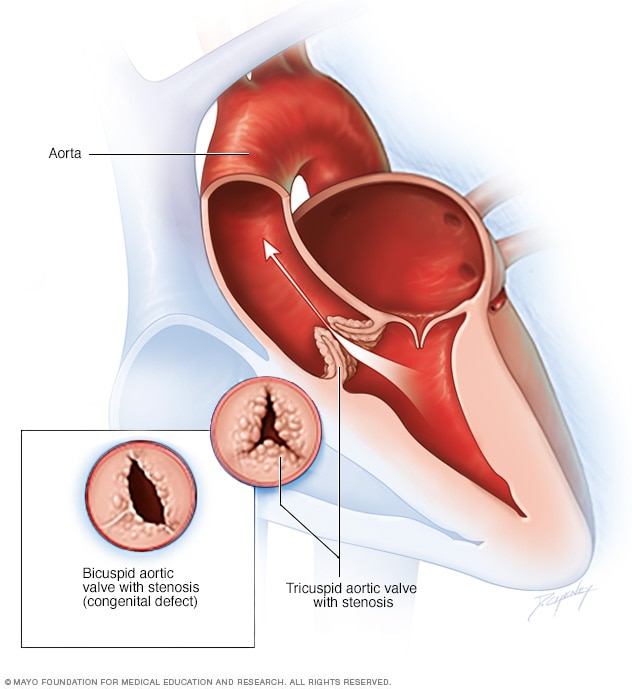
Aortic valve stenosis
Aortic valve stenosis is a type of heart valve disease. The heart's main pumping chamber and the body's main artery, called the aorta, get thick and narrow. The narrowing creates a smaller opening for blood to go through. This reduces or blocks blood flow from the heart to the rest of the body. Typically the aortic valve has three cusps, called a tricuspid aortic valve. But some people are born with an aortic valve that has two cusps, a condition called bicuspid aortic valve.
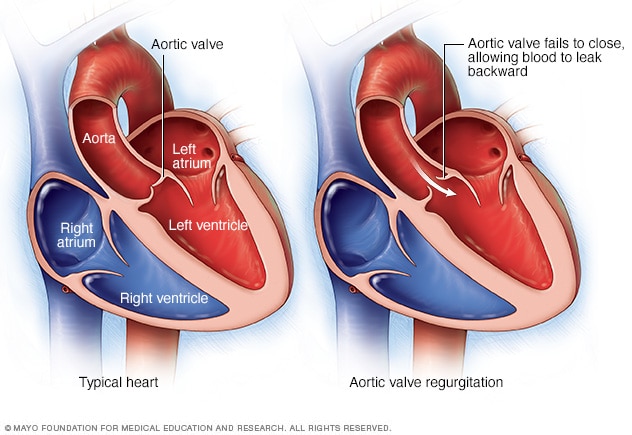
Aortic valve regurgitation
In aortic valve regurgitation, the aortic valve doesn't close as it should. This causes blood to flow backward from the body's main artery, called the aorta, into the lower left heart chamber, called the left ventricle.
A person may be born with aortic valve disease. This type of heart valve disease is called a congenital heart defect. Sometimes aortic valve disease occurs later in life due to other health conditions.
Treatment for aortic valve disease depends on the type of disease and how severe it is. Some people need surgery to repair or replace the aortic valve.
Symptoms
Some people with aortic valve disease may not notice symptoms for many years. Symptoms of aortic valve disease may include:
- Chest pain or tightness.
- Dizziness.
- Fainting.
- Feeling unusually tired after activity or having less ability to be active.
- Irregular heartbeat.
- Shortness of breath, particularly during vigorous activity or when lying down.
- Not eating enough. This is mainly seen in children with aortic valve stenosis.
- Not gaining enough weight. This is mainly seen in children with aortic valve stenosis.
When to see a doctor
If you're having sudden chest pain, call 911 or your local emergency number.
Make an appointment for a health checkup if you have symptoms of aortic valve disease, such as shortness of breath, fatigue after activity, or sensations of a pounding or an irregular heartbeat.
Sometimes the first symptoms of aortic valve disease are related to heart failure. Get a health checkup if you have fatigue that doesn't get better with rest, shortness of breath, and swollen ankles and feet, which are common symptoms of heart failure.
Causes
Aortic valve disease may be caused by a heart condition present at birth, called a congenital heart defect. Other causes of aortic valve disease later in life include:
- Age-related changes to the heart.
- Infections.
- High blood pressure.
- Injury to the heart.
To better understand the causes of aortic valve disease, it may help to know how the heart valves typically work.
The heart has four valves that keep blood flowing in the correct direction. These valves are:
- Aortic valve.
- Mitral valve.
- Tricuspid valve.
- Pulmonary valve.
Each valve has flaps, also called cusps or leaflets, that open and close once during each heartbeat.
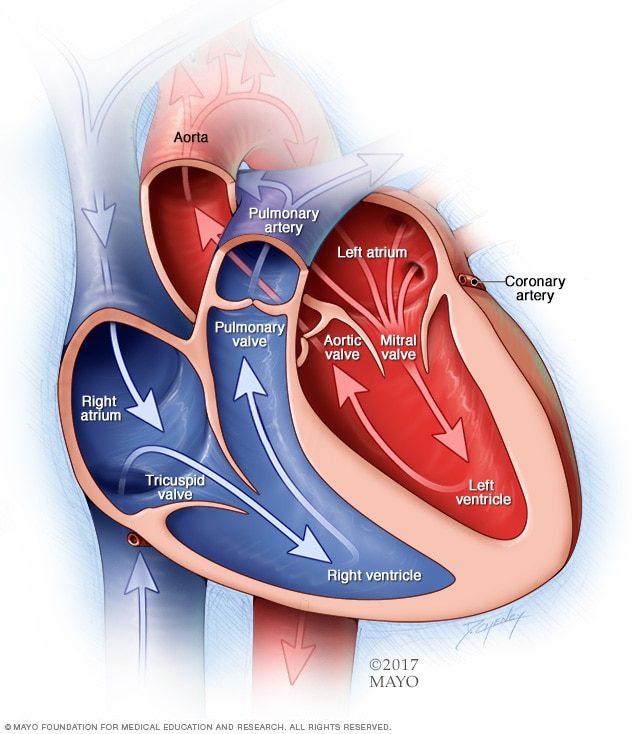
Chambers and valves of the heart
A typical heart has two upper and two lower chambers. The upper chambers, the right and left atria, receive incoming blood. The lower chambers, the more muscular right and left ventricles, pump blood out of the heart. The heart valves, which keep blood flowing in the right direction, are gates at the chamber openings.
In aortic valve disease, the valve between the lower left heart chamber and the body's main artery doesn't work as it should. The lower left heart chamber is called the left ventricle. The body's main artery is called the aorta.
The valve may become thick and stiff or the valve may not close properly.
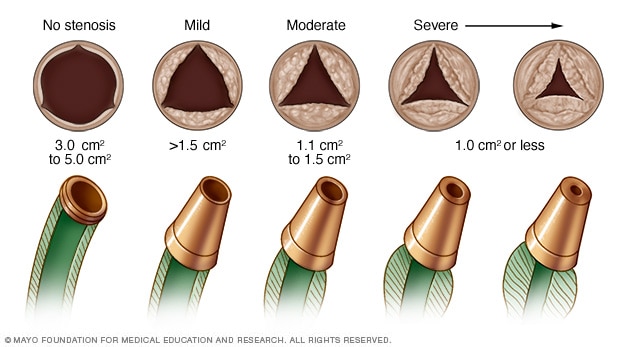
Aortic valve stenosis
In aortic valve stenosis, the aortic valve opening is narrowed, as shown in the top image. The heart must work harder to pump blood across the smaller opening. This increases pressure within the heart. Eventually the strain reduces the heart's ability to pump blood to the body. This is like placing smaller and smaller nozzles on the end of a garden hose, as shown on the bottom image. The narrower the nozzle is, the slower the flow of water. This results in pressure buildup within the garden hose.
Risk factors
Many things can raise the risk of aortic valve disease, including:
- Older age. Calcium can build up on the aortic valve as people age, causing the aortic valve to stiffen and become narrow.
- A heart condition present at birth, called a congenital heart defect. Some people are born with a missing, extra or fused heart valve flap. This increases the risk of aortic valve regurgitation.
- Rheumatic fever. This complication of strep throat can cause aortic stenosis, a type of heart valve disease. If you have heart valve disease due to rheumatic fever, it's called rheumatic heart disease. If not, it's called nonrheumatic heart disease.
- Inflammation of the lining of the heart's chambers and valves, called endocarditis. This life-threatening condition is usually caused by infection. It can damage the aortic valve.
- History of radiation therapy to the chest. Some types of cancer are treated with radiation therapy. Symptoms of aortic valve disease may not be noticed until many years after radiation therapy is received.
- Other health conditions. Chronic kidney disease, lupus and Marfan syndrome, a connective tissue disease, can increase the risk of aortic stenosis or regurgitation.
Complications
Potential complications of aortic valve disease may include:
- Blood clots.
- Stroke.
- Heart failure.
- Irregular heartbeats, called arrhythmias.
- Death due to sudden cardiac arrest.
Proper diagnosis and treatment can help reduce the risk of complications.
Top ranked in the U.S.
Mayo Clinic in Rochester, Minnesota, has been recognized as one of the top Cardiology & Heart Surgery hospitals in the nation by U.S. News & World Report.
CON-20214390
Mayo Clinic does not endorse companies or products. Advertising revenue supports our not-for-profit mission.
Advertising & Sponsorship
Mayo Clinic Press
Check out these best-sellers and special offers on books and newsletters from Mayo Clinic Press.
