Hypoplastic left heart syndrome Symptoms and causes
Overview
Hypoplastic left heart syndrome (HLHS) is a rare heart condition that a child is born with. That means it's a congenital heart defect. In this condition, the left side of the heart doesn't form fully and is too small. So it can't pump blood well. Instead, the right side of the heart must pump blood to the lungs and to the rest of the body.
Treatment for hypoplastic left heart syndrome may include medicines, heart surgery or a heart transplant. Advances in care have improved the outlook for babies born with HLHS.
Symptoms
Babies born with hypoplastic left heart syndrome (HLHS) often are very sick soon after birth. Symptoms of HLHS include:
- Blue or gray skin, lips or fingernails. Depending on skin color, these changes may be harder or easier to see.
- Rapid, difficult breathing.
- Poor feeding.
- Cold hands and feet.
- Weak pulse.
- Being more drowsy or less active than usual.
Without treatment, a baby with this condition may go into shock. Symptoms of shock include:
- Cool, clammy skin that can be pale or lips that can be blue or gray.
- A weak and rapid pulse.
- Breathing that may be slow and shallow or very fast.
- Dull eyes that seem to stare.
When to see a doctor
Get emergency medical help if your baby has:
- Changes in skin or nail color.
- Trouble breathing or fast breathing.
- Weak pulse or fast pulse.
- Cool clammy skin.
Causes
Hypoplastic left heart syndrome (HLHS) happens in the womb when a baby's heart forms. The cause isn't known. Gene changes may play a role.
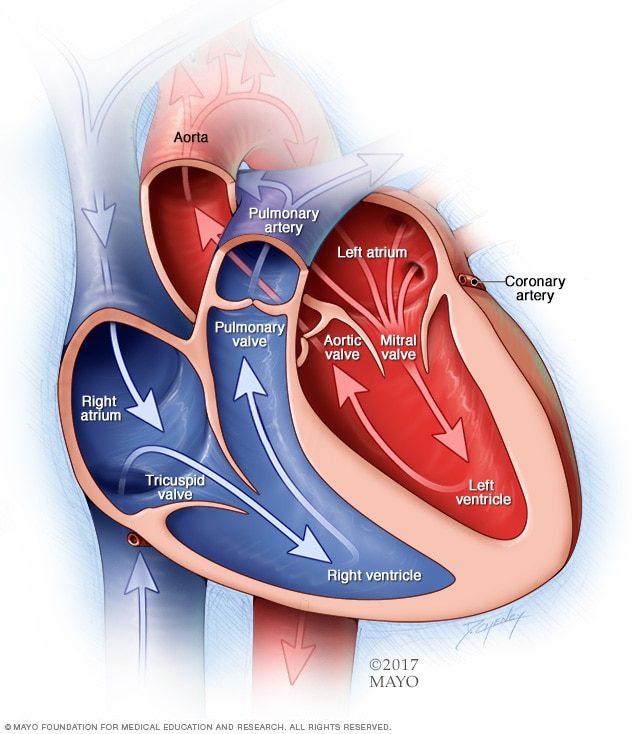
Chambers and valves of the heart
A typical heart has two upper and two lower chambers. The upper chambers, the right and left atria, receive incoming blood. The lower chambers, the more muscular right and left ventricles, pump blood out of the heart. The heart valves, which keep blood flowing in the right direction, are gates at the chamber openings.
In hypoplastic left heart syndrome, the left side of the heart hasn't grown enough so it does not form fully. It can't properly send blood to the body. In HLHS, the following areas of the heart are too small:
- The lower left heart chamber, called the left ventricle.
- The body's main artery, called the aorta.
- The heart valves on the left side of the heart, called the aortic and mitral valves.
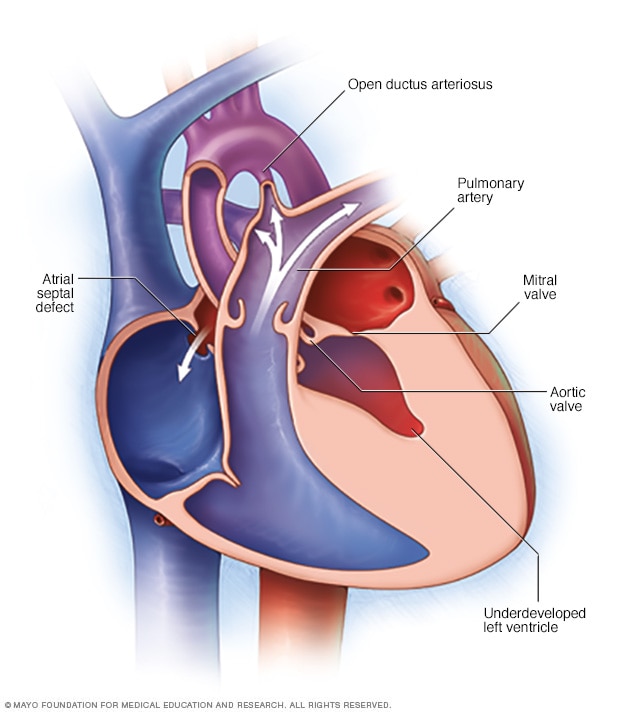
Hypoplastic left heart syndrome
In hypoplastic left heart syndrome, the left side of the heart is smaller than usual. As a result, the body doesn't get enough oxygen-rich blood.
After birth, the right side of a baby's heart usually pumps blood both to the lungs and to the rest of the body. The blood passes through an opening called the ductus arteriosus. This opening, also called a vessel, connects the pulmonary artery directly to the aorta. The oxygen-rich blood goes back to the right side of the heart through a natural opening between the upper chambers of the heart. The opening is called the foramen ovale.
The ductus arteriosus usually closes after the first day or two of life. When that happens, the right side of the heart has no way to pump blood to the body. The left side of the heart takes over this job.
But in babies with hypoplastic left heart syndrome, the left side can't pump blood well. So they need medicine to keep these connections open and keep blood flowing to the body until they have heart surgery.
Risk factors
People who have a child with hypoplastic left heart syndrome (HLHS) have a higher risk of having another baby with this or a similar condition.
There are no other clear risk factors for hypoplastic left heart syndrome.
Complications
With proper treatment, many babies with hypoplastic left heart syndrome (HLHS) survive. But they do need many surgeries and can have less energy and other challenges.
Possible complications of HLHS may include:
- Getting tired more easily during sports or other exercises.
- Irregular heartbeats, called arrhythmias.
- Fluid buildup, called edema, in the lungs, stomach area, legs and feet.
- Not growing well.
- Developmental conditions related to the brain and nervous system.
- Need for more heart surgeries or a heart transplant.
Prevention
There's no way to prevent hypoplastic left heart syndrome. If you were born with a heart condition, talk with a heart doctor and genetic counselor before getting pregnant.
Top ranked in the U.S.
Mayo Clinic in Rochester, Minnesota, has been recognized as one of the top Cardiology & Heart Surgery hospitals in the nation by U.S. News & World Report.
CON-20155127
Mayo Clinic does not endorse companies or products. Advertising revenue supports our not-for-profit mission.
Advertising & Sponsorship
Mayo Clinic Press
Check out these best-sellers and special offers on books and newsletters from Mayo Clinic Press.
