Overview
Cholangiocarcinoma

Cholangiocarcinoma
Cholangiocarcinoma, also called bile duct cancer, happens in the tubes that carry bile, a fluid the body uses for digestion, from the liver to the small intestine. The tubes are called bile ducts. When bile duct cancer forms in the ducts within the liver, it's called intrahepatic cholangiocarcinoma. Bile duct cancer that happens where the right and left bile ducts join to form the common hepatic duct is called hilar cholangiocarcinoma, perihilar cholangiocarcinoma or Klatskin tumor. Bile duct cancer that happens near the small intestine is called distal cholangiocarcinoma.
Hilar (HY-lur) cholangiocarcinoma, also called perihilar (per-e-HY-lur) cholangiocarcinoma or Klatskin tumor, is a type of cancer that starts as a growth of cells that are not typical in the bile ducts. Bile ducts are slender tubes that carry the digestive fluid called bile from the liver to the small intestine.
Cholangiocarcinoma is the medical term for bile duct cancer, and it is classified by location into three types. Hilar cholangiocarcinoma happens where the right and left bile ducts that lead out of the liver join to form the common hepatic duct.
Other bile duct cancers include intrahepatic cholangiocarcinoma, which starts inside the liver, and distal cholangiocarcinoma, which occurs lower in the bile duct near the pancreas. Hilar cholangiocarcinoma is the most common type of bile duct cancer, but it is still a rare form of cancer overall. Common symptoms include yellowing of the skin and the whites of the eyes, weight loss, stomach pain, and itching.
Treatment for hilar cholangiocarcinoma may include surgery to remove the cancer or a combination treatment plan that includes radiation therapy followed by a liver transplant. Surgery is often complex and may require taking out part of the liver along with the affected bile ducts. Other treatments may include chemotherapy, radiation therapy, immunotherapy and targeted therapy.
Products & Services
Symptoms
Hilar cholangiocarcinoma may not cause symptoms at first. Symptoms typically happen when the cancer grows and blocks the bile ducts, preventing bile from draining from the liver into the intestine. Signs and symptoms of hilar cholangiocarcinoma may include:
- Yellowing of the skin and the whites of the eyes, known as jaundice.
- Itching.
- Dark urine.
- Clay-colored stools.
- Stomach pain.
- Fatigue.
- Weight loss.
When to see a doctor
Make an appointment with a doctor or other healthcare professional if you have any symptoms that worry you.
Causes
Gallbladder and bile duct
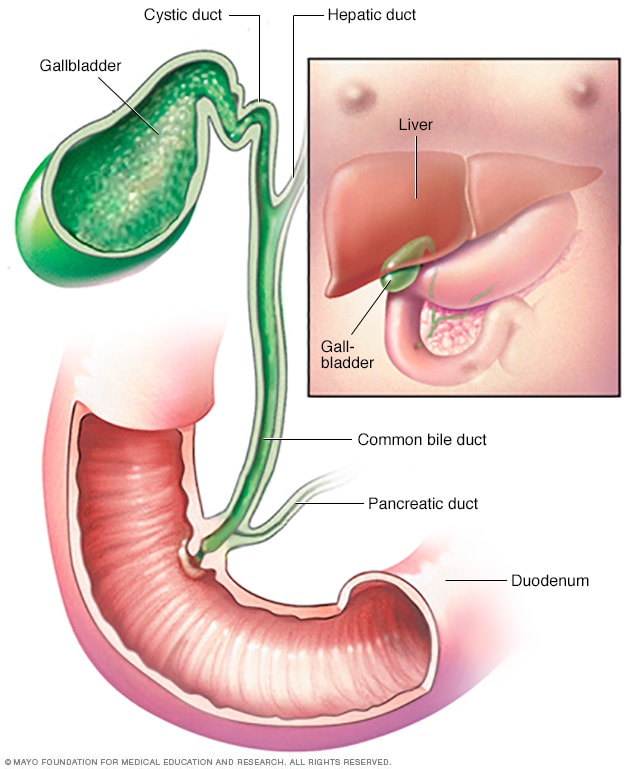
Gallbladder and bile duct
The gallbladder holds a yellow-green fluid called bile. Bile is made in the liver and flows into the gallbladder. It stays in the gallbladder until it's needed to help digest food. While eating, the gallbladder releases bile into the bile duct. The duct carries the bile to the upper part of the small intestine, called the duodenum, to help break down fat in food.
It's not clear what causes most hilar cholangiocarcinomas, but the cancer is often linked to long-term inflammation or injury of the bile ducts. This cancer starts in the bile ducts that connect the liver to the small intestine. Conditions such as primary sclerosing cholangitis, bile duct cysts or stones, liver fluke infection, and long-lasting liver disease increase the risk of developing this cancer.
Hilar cholangiocarcinoma, also called perihilar cholangiocarcinoma or Klatskin tumor, develops when cells in a bile duct get changes in their DNA. A cell's DNA contains the instructions that tell the cell how to grow and when to die. In healthy cells, these instructions keep growth under control. In cancer cells, DNA changes give faulty instructions that tell the cells to grow and divide too quickly and to keep living when typical cells would die.
The buildup of these cells can form a tumor in the bile ducts. Long-term inflammation or injury to the bile ducts, such as from primary sclerosing cholangitis or bile duct cysts, can increase the chance of having these DNA changes.
The cancer cells form a mass called a tumor. The tumor can grow to invade and destroy healthy body tissue. In time, cancer cells can break away and spread to other parts of the body. When cancer spreads, it's called metastatic cancer.
Risk factors
Factors that may increase the risk of hilar cholangiocarcinoma include:
- Primary sclerosing cholangitis. Primary sclerosing cholangitis causes inflammation, hardening and scarring of the bile ducts that can lead to cancer.
- Older age. Hilar cholangiocarcinoma happens most often in adults over age 50. However, it can develop at a younger age in people who have primary sclerosing cholangitis.
- Inflammatory bowel disease. People who have ongoing inflammation of the digestive tract have an increased risk of hilar cholangiocarcinoma.
- Liver cirrhosis. Liver cirrhosis causes scarring of the liver that increases the risk of hilar cholangiocarcinoma.
- Bile duct cysts. Bile duct cysts cause bile ducts to change and get larger. Having bile duct cysts, also called Caroli disease, increases the risk of hilar cholangiocarcinoma.
- Gallbladder conditions. Ongoing inflammation of the gallbladder, called cholecystitis, increases the risk of hilar cholangiocarcinoma. People who get gallstones also are at an increased risk.
- Liver parasites. In areas of Southeast Asia, hilar cholangiocarcinoma is linked to liver flukes. These are parasites that can infect humans. Liver fluke infection can happen from eating raw or undercooked fish.
Complications
Hilar cholangiocarcinoma can lead to several complications, mostly because the tumor blocks the flow of bile from the liver. This blockage can cause infections, liver damage, and other issues that affect digestion and overall health, including:
- Infection in the bile ducts, called cholangitis. When bile can't drain properly, bacteria can grow inside the ducts, leading to infection, fever and chills.
- Liver damage and liver failure. Long-term bile blockage can scar and damage the liver, causing it to not function properly.
- Malnutrition and vitamin deficiency. Because bile helps digest fats, blockage can cause poor absorption of nutrients and vitamins, leading to weight loss and weakness.
- Portal hypertension. Tumor growth or scarring can increase pressure in the veins of the liver, which may cause swelling of the abdomen or enlarged veins in the esophagus.
- Cancer spread, called metastasis. The liver and nearby lymph nodes are common sites of metastases for hilar cholangiocarcinoma. Spread to distant sites, such as the lungs, brain and bones, is not common.
Jan. 20, 2026