概述

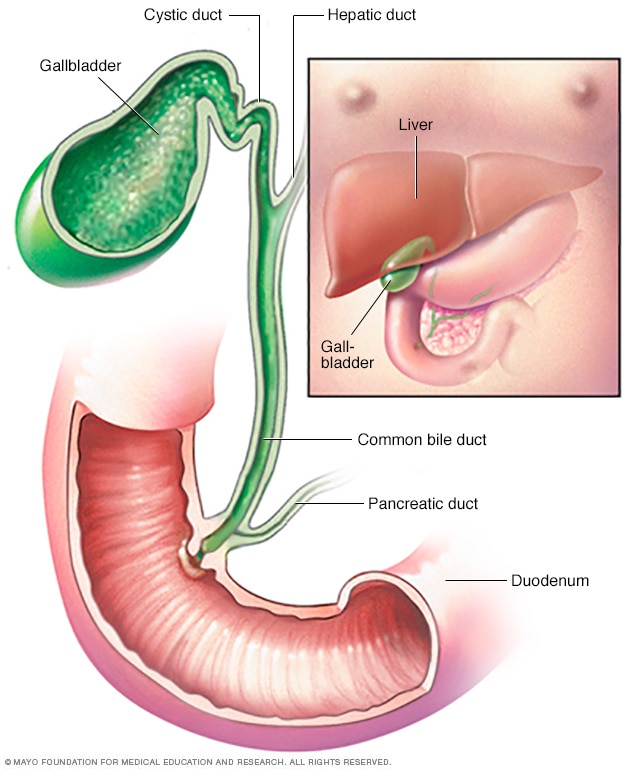
肝门部胆管癌是一种癌症,起源于胆管中的细胞生长物。胆管是一种将消化液(胆汁)从肝脏输送到小肠的细管。

胆管细胞癌是胆管癌的医学术语。肝门部胆管癌是发生在胆管特定部位的胆管癌。肝门部胆管癌发生于从肝脏发出的胆管与从胆囊发出的胆管的汇合处。这类癌症也被称为肝门周围胆管癌或 Klatskin 肿瘤。

肝门部胆管癌是最常见的胆管癌类型,但仍是一种罕见的癌症。常见症状包括皮肤和眼白发黄、体重下降、胃疼和瘙痒。

肝门部胆管癌的治疗方法可能包括手术切除癌症或肝移植。其他治疗方法可包括化疗、放射疗法、免疫疗法和靶向治疗。

症状

肝门部胆管癌在早期阶段可能不会引起症状。症状通常会在癌症生长并阻塞胆管时出现。肝门部胆管癌的体征和症状可能包括:

  • 皮肤和眼白发黄(黄疸)。
  • 瘙痒。
  • 深色尿液。
  • 陶土色大便。
  • 胃疼。
  • 疲劳。
  • 体重下降。

何时就医

如果出现任何令人担忧的症状,请与医生或其他医疗护理专业人员约诊。

病因

大多数肝门部胆管癌的病因尚不明确。这种癌症起始于连接肝脏和小肠的胆管部分。

肝门部胆管癌因胆管细胞的 DNA 发生变化而形成。细胞 DNA 含有指示细胞活动的指令。在健康细胞中,DNA 指令让细胞按设定速度生长和增殖。这些指令会指示细胞在设定的时间死亡。而在癌细胞中,DNA 的变化给出了不同的指令。发生变化的 DNA 指示癌细胞迅速生长和增殖。癌细胞会在健康细胞本应死亡时继续存活。这会导致细胞过多。

这些癌细胞会形成一个肿块,称为肿瘤。肿瘤可能生长、侵入并破坏健康的机体组织。随着时间推移,癌细胞可能脱落并扩散至身体其他部位。扩散的癌症被称为转移癌。

风险因素

可能增加患肝门部胆管癌的风险因素包括:

  • 原发性硬化性胆管炎。 原发性硬化性胆管炎引起的胆管硬化和瘢痕形成可能导致癌症。
  • 年龄较大。 肝门部胆管癌常见于 50 岁以上的人群。
  • 炎性肠病。 消化道慢性炎症患者患肝门部胆管癌的风险会增加。
  • 肝硬化。 肝硬化导致肝脏瘢痕形成,进而增加患肝门部胆管癌的风险。
  • 胆管囊肿。 胆管囊肿会导致胆管扩张和不规则。胆管囊肿会增加患肝门部胆管癌的风险。
  • 胆囊疾病。 慢性胆囊炎症(胆囊炎)会增加患肝门部胆管癌的风险。胆结石患者的风险也会更高。
  • 肝脏寄生虫。 在东南亚地区,肝门部胆管癌与肝吸虫有关,肝吸虫是一种可以感染人类的寄生虫。肝吸虫感染可由食用生鱼或没有完全煮熟的鱼而引起。

并发症

Hilar cholangiocarcinoma can lead to several complications, mostly because the tumor blocks the flow of bile from the liver. This blockage can cause infections, liver damage, and other issues that affect digestion and overall health, including:

  • Infection in the bile ducts, called cholangitis. When bile can't drain properly, bacteria can grow inside the ducts, leading to infection, fever and chills.
  • Liver damage and liver failure. Long-term bile blockage can scar and damage the liver, causing it to not function properly.
  • Malnutrition and vitamin deficiency. Because bile helps digest fats, blockage can cause poor absorption of nutrients and vitamins, leading to weight loss and weakness.
  • Portal hypertension. Tumor growth or scarring can increase pressure in the veins of the liver, which may cause swelling of the abdomen or enlarged veins in the esophagus.
  • Cancer spread, called metastasis. The liver and nearby lymph nodes are common sites of metastases for hilar cholangiocarcinoma. Spread to distant sites, such as the lungs, brain and bones, is not common.

Living with 肝门部胆管癌?

Connect with others like you for support and answers to your questions in the Sarcoma support group on Mayo Clinic Connect, a patient community.

Sarcoma Discussions

Colleen Young, Connect Director
Diagnosed with sarcoma? Let's share

1017 Replies Wed, Dec 10, 2025

kathleenkin
Does anyone have chondrosarcoma?

27 Replies Mon, Dec 01, 2025

jonezzi
Myxofibrosarcoma: What treatments did you have?

137 Replies Mon, Dec 01, 2025

See more discussions
  1. Cameron JL, et al., eds. Management of intrahepatic, perihilar, and distal extrahepatic cholangiocarcinoma. In: Current Surgical Therapy. 14th ed. Elsevier; 2023. https://www.clinicalkey.com. Accessed Nov. 12, 2024.
  2. Feldman M, et al., eds. Tumors of the bile ducts, gallbladder, and ampulla. In: Sleisenger and Fordtran's Gastrointestinal and Liver Disease: Pathophysiology, Diagnosis, Management. 11th ed. Elsevier; 2021. https://www.clinicalkey.com. Accessed Nov. 12, 2024.
  3. Biliary tract cancers. National Comprehensive Cancer Network. https://www.nccn.org/guidelines/guidelines-detail?category=1&id=1517. Accessed Nov. 12, 2024.
  4. Bile duct cancer (cholangiocarcinoma) treatment — Health professional version (PDQ). National Cancer Institute. https://www.cancer.gov/types/liver/hp/bile-duct-treatment-pdq. Accessed Nov. 12, 2024.
  5. Soares KC, et al. The Landmark Series: Hilar cholangiocarcinoma. Annals of Surgical Oncology. 2021; doi:10.1245/s10434-021-09871-6.
  6. Lowe RC, et al. Clinical manifestations and diagnosis of cholangiocarcinoma. https://www.uptodate.com/contents/search. Accessed Nov. 12, 2024.
  7. Anderson CD. Surgical resection of localized cholangiocarcinoma. https://www.uptodate.com/contents/search. Accessed Nov. 12, 2024.
  8. Anderson CD, et al. Adjuvant and neoadjuvant therapy for localized resectable cholangiocarcinoma. https://www.uptodate.com/contents/search. Accessed Nov. 12, 2024.
  9. Anderson CD, et al. Treatment of locally advanced unresectable nonmetastatic cholangiocarcinoma. https://www.uptodate.com/contents/search. Accessed Nov. 12, 2024.
  10. Palliative care. National Comprehensive Cancer Network. https://www.nccn.org/guidelines/guidelines-detail?category=3&id=1454. Accessed Nov. 12, 2024.
  11. Suarez-Munoz MA, et al. Risk factors and classifications of hilar cholangiocarcinoma. World Journal of Gastrointestinal Oncology. 2013; doi:10.4251/wjgo.v5.i7.132.
  12. Soares KC, et al. Hilar cholangiocarcinoma: Diagnosis, treatment options, and management. Hepatobiliary Surgery and Nutrition. 2014; doi:10.3978/j.issn.2304-3881.2014.02.05.
  13. MRCP (MR cholangiopancreatography). RadiologyInfo.org. https://www.radiologyinfo.org/en/info/mrcp. Accessed Nov. 18, 2024.
  14. Radioembolization (Y90). RadiologyInfo.org. https://www.radiologyinfo.org/en/info/radioembol. Accessed Dec. 5, 2024.
  15. Thermal ablation for tumor treatment. RadiologyInfo.org. https://www.radiologyinfo.org/en/info/thermal-ablation-therapy. Accessed Feb. 6, 2025.
  16. Breuer E, et al. Liver transplantation as a new standard of care in patients with perihilar cholangiocarcinoma? Results from an international benchmark study. Annals of Surgery. 2022; doi:10.1097/SLA.0000000000005641.
  17. Medical review (expert opinion). Mayo Clinic. Nov. 11, 2025.