Overview
Esophagus
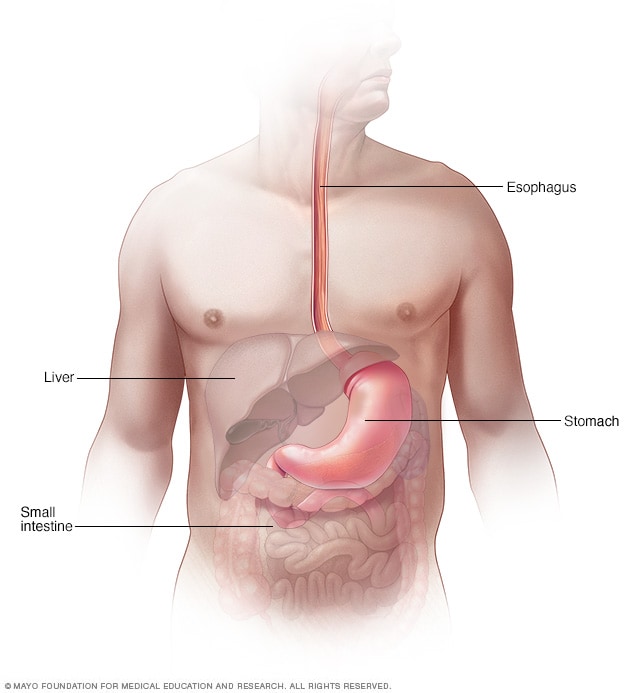
Esophagus
The esophagus is a muscular tube that connects the mouth and the stomach. Rings of muscle contract and relax to allow food and liquids to pass through the upper and lower portions.
Esophageal cancer
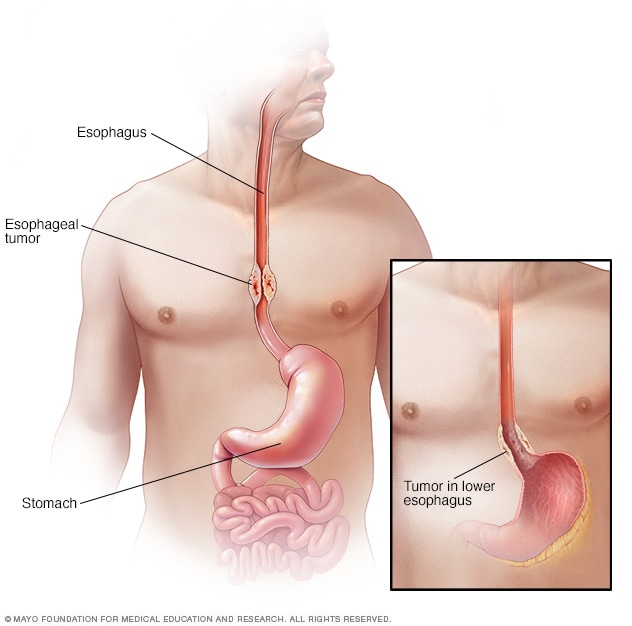
Esophageal cancer
Esophageal cancer is a growth of cells that starts in the esophagus. It can happen anywhere along the esophagus.
Esophageal cancer is a growth of cells that starts in the esophagus. The esophagus is a long, hollow tube that runs from the throat to the stomach. The esophagus helps move swallowed food from the back of the throat to the stomach to be digested.
Esophageal cancer usually begins in the cells that line the inside of the esophagus. This can happen anywhere along the esophagus.
Esophageal cancer is more common in men. Risk factors include drinking alcohol, smoking and long-lasting acid reflux.
Esophageal cancer can be treated, but it is rarely cured. The chance of cure is better when the cancer is found at an early stage and can be completely removed.
Esophageal cancer treatment often involves surgery to remove the cancer. Other treatments may include chemotherapy, radiation or a combination of the two. Biological therapies, such as targeted therapy and immunotherapy, also may be used. If the disease is found at a very early stage, the cancer may be managed with minimally invasive procedures alone.
Products & Services
Types
Esophageal cancer is classified based on the type of cells that are involved. The type of esophageal cancer you have helps determine your treatment options. Types of esophageal cancer include:
- Adenocarcinoma. Adenocarcinoma begins in the cells of the glands in the esophagus. These glands produce mucus. Adenocarcinoma happens most often in the lower part of the esophagus. Adenocarcinoma is the most common form of esophageal cancer in the United States.
- Squamous cell carcinoma. Squamous cell carcinoma begins in the flat, thin cells that line the surface of the esophagus. Squamous cell carcinoma happens most often in the upper and middle parts of the esophagus. Squamous cell carcinoma is the most common esophageal cancer worldwide.
- Other types. Other types of esophageal cancer are rare. These include small cell carcinoma, sarcoma, lymphoma, melanoma and choriocarcinoma.
Symptoms
Esophageal cancer may not cause symptoms early on. Symptoms of esophageal cancer usually happen when the disease is advanced. Symptoms are similar in women and men.
Symptoms of esophageal cancer include:
People with Barrett's esophagus can have the same symptoms that people with esophageal cancer have. Barrett's esophagus is a change in the lining of the lower esophagus, often after long-term acid reflux, and is linked to an increased risk of developing esophageal cancer. Because early esophageal cancer may not cause symptoms, people with Barrett's esophagus need to be checked regularly, often called surveillance.
When to see a doctor
Make an appointment with your doctor or other healthcare professional if you have any symptoms that worry you.
Causes
Most esophageal cancers are not clearly linked to a gene passed down in families. Still, some families have a higher risk of esophageal cancer. Other conditions also can raise the risk of esophageal cancer, including Barrett's esophagus.
Esophageal cancer happens when cells lining the esophagus develop changes in their DNA. A cell's DNA holds the instructions that tell the cell what to do. In healthy cells, the DNA gives instructions to grow and multiply at a set rate. The instructions also tell the cells to die at a set time. In cancer cells, the DNA changes give different instructions. The changes tell the cancer cells to make many more cells quickly. Cancer cells can keep living when healthy cells would die. This causes cells to grow out of control.
The cancer cells might form a mass called a tumor. The tumor can grow to invade and destroy healthy body tissue. In time, cancer cells can break away and spread to other parts of the body. When cancer spreads, it's called metastatic cancer.
Risk factors
Risk factors for esophageal cancer include conditions and habits that cause irritation in the esophagus. Risk factors may include:
- Gastroesophageal reflux disease (GERD). Long-term GERD is linked to a higher risk of esophageal adenocarcinoma.
- Barrett's esophagus, a condition that can develop into adenocarcinoma.
- Difficulty swallowing because a muscle in the esophagus won't relax, a condition called achalasia.
- Not eating enough fruits and vegetables.
- Obesity.
- Radiation treatment to the chest or upper abdomen.
- Drinking alcohol.
- Tobacco use.
- Regularly drinking very hot liquids.
Smoking and drinking alcohol raise the risk of squamous cell carcinoma of the esophagus. The risk is even higher when tobacco and alcohol are used together.
Complications
As esophageal cancer advances, it can cause complications. Complications may include:
- A blockage in the esophagus. Cancer may make it difficult for food and liquid to pass through the esophagus.
- Bleeding in the esophagus. Esophageal cancer can cause bleeding. Though bleeding is usually gradual, it can be sudden and severe at times.
- Pain. Advanced esophageal cancer can cause pain.
Prevention
There's no sure way to prevent esophageal cancer, but you can reduce your risk if you:
Ask about esophageal cancer screening
Screening for esophageal cancer may be an option for people at risk of Barrett's esophagus. Barrett's esophagus is caused by long-lasting acid reflux and can lead to esophageal cancer.
If you have Barrett's esophagus, ask your healthcare professional about screening with upper endoscopy. Screening looks for precancerous changes or cancer before symptoms develop.
Drink alcohol in moderation, if at all
If you choose to drink alcohol, limit how often you drink and keep the amount small. For overall health, drink one or fewer drinks a day. Do not drink every day. The less you drink, the better.
Eat more fruits and vegetables
Choose a healthy diet with a variety of fruits and vegetables. Food sources of vitamins and nutrients are best. Avoid taking large doses of vitamins in pill form, as they may be harmful.
Exercise most days of the week
Aim for at least 30 minutes of exercise on most days of the week. If you haven't been active lately, ask your healthcare professional whether it's OK to exercise, and start slowly.
Maintain a healthy weight
If your weight is healthy, work to keep that weight. If you need to lose weight, ask a healthcare professional about healthy ways to lower your weight. Eat fewer calories and slowly increase the amount of exercise.
Stop smoking
Talk to your healthcare team about strategies and aids that can help you quit. Options include nicotine replacement products, medicines and support groups. If you've never smoked, don't start.
Sept. 01, 2026