Overview
Bone cancer is a growth of cells that starts in a bone. It's also called primary bone cancer. Bone cancer can start in any bone. But it most often affects the thighbone, called the femur.
Bone cancer is different from cancer that starts elsewhere in the body and spreads to the bones, called bone metastasis. Bone cancer also is different from cancers that start in the bone marrow, such as multiple myeloma.
Although these conditions all involve bones, they develop from different cells or tissues and may need different treatments.
Cancer that starts in the bones is rare. There are several types of bone cancer. Some types of bone cancer mainly happen in children. Other types happen mostly in adults.
Bone cancer treatments may include surgery, chemotherapy and radiation therapy. The treatment plan depends on the type of bone cancer, its location and stage, and other individual factors.
Products & Services
Types
Bones contain many types of cells. Bone cancers are grouped into separate types, often based on the type of cell where the cancer began.
Osteosarcoma
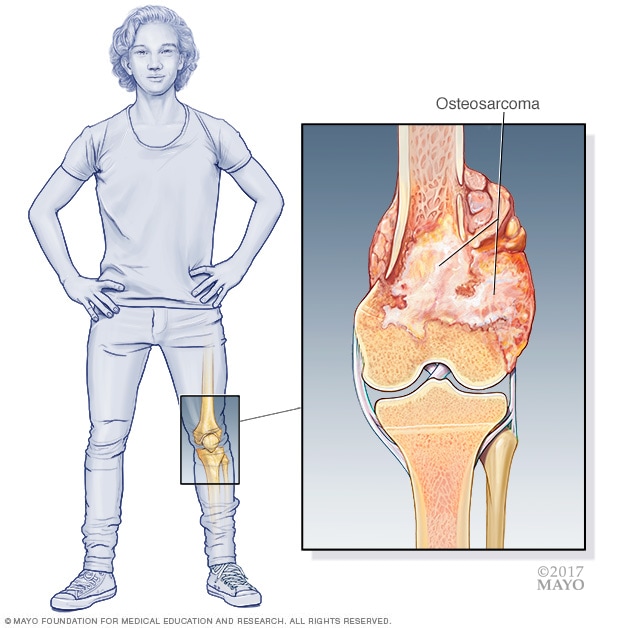
Osteosarcoma
Osteosarcoma is a kind of bone cancer. It most often starts in the long bones of the legs or the arms. But it can happen in any bone.
Primary bone cancers
The most common types of primary bone cancer include:
- Osteosarcoma. Osteosarcoma is a type of bone cancer that begins in the cells that form bones. It's the most common type of primary bone cancer. Osteosarcoma happens most often in teenagers and young adults, but younger children and older adults can get it too. Osteosarcoma is most common in the long bones of the legs. It also can occur in the long bones of the arms. A rare, related tumor called extraskeletal osteosarcoma can happen in soft tissue outside the bone.
- Chondrosarcoma. Chondrosarcoma is a type of bone cancer that usually begins in the cartilage cells but can sometimes occur in the soft tissue. Soft tissues include muscle, fat, blood vessels, nerves, tendons and linings of the joints. Chondrosarcoma happens most often in the pelvis, upper leg and shoulder. It is most common in middle-aged and older adults.
- Ewing sarcoma. Ewing sarcoma is a type of bone cancer that begins either in the bones or the soft tissue around the bones. Ewing sarcoma mostly happens in children and young adults, although it can happen at any age. It most often begins in the leg bones and in the pelvis, but it can happen in any bone.
Other bone tumor types
Bone metastasis occurs when cancer that starts elsewhere in the body, such as breast, prostate or lung cancer, spreads to the bones.
Multiple myeloma is a cancer that begins in plasma cells in the bone marrow rather than in the bone itself.
Bone tumors also may be benign, meaning they are not cancer. Benign bone tumors usually don't spread to other parts of the body, although some may grow and damage nearby bone. Imaging tests can help the healthcare team assess whether a bone tumor is benign or malignant, meaning it could spread. A biopsy may be needed to confirm the diagnosis.
Symptoms
Signs and symptoms of bone cancer may include:
- Bone pain.
- Swelling and tenderness near the affected area.
- Weakened bone, which can lead to a broken bone.
- Feeling very tired.
- Losing weight without trying.
Symptoms can vary depending on which bone is affected. When bone cancer develops in the long bones of the legs or arms, pain around the knee, thigh, shoulder or upper arm is common.
Bone cancer in the pelvis may cause hip or groin pain. Tumors in the spine can cause back pain and, if they press on nerves, numbness or weakness. Bone cancers involving the skull or jaw may cause swelling, pain or difficulty swallowing. These symptoms are more often caused by conditions other than bone cancer, but ongoing pain or swelling should be evaluated by a healthcare professional.
When to seek care
Make an appointment with a doctor or other healthcare professional if you have any symptoms that worry you, such as bone pain or swelling.
Causes
The cause of most bone cancers isn't known. Bone cancer starts when cells in bone or bone-forming tissue develop changes in their DNA. A cell's DNA holds the instructions that tell the cell what to do. In healthy cells, the DNA gives instructions that help control when cells grow, multiply and die. In cancer cells, the DNA changes give different instructions. These changes tell the cancer cells to grow and divide when they shouldn't or to keep living when healthy cells would die. This causes too many irregular cells to accumulate.
The cancer cells might form a mass called a tumor. The tumor can grow to invade and destroy healthy tissue. In time, cancer cells can break away and spread to other parts of the body. When cancer spreads, it's called metastatic cancer. Metastatic cancer is named for the original tumor site. For example, a tumor that initially started in the breast and then spread to the bone is called metastatic breast cancer in the bone.
Most bone cancers are not inherited. But a small number are linked to rare inherited genetic conditions, such as Li-Fraumeni syndrome and hereditary retinoblastoma. Having one of these conditions raises the risk of developing some types of bone cancer. But most people diagnosed with bone cancer do not have an inherited syndrome.
Risk factors
Things that raise the risk of bone cancer include:
- Inherited genetic syndromes. Some rare genetic syndromes passed through families raise the risk of bone cancer. Examples include Li-Fraumeni syndrome and hereditary retinoblastoma.
- Other bone conditions. Some other bone conditions may increase the risk of bone cancer. These include Paget's disease of bone and fibrous dysplasia.
- Cancer treatment. Radiation therapy for cancer and some kinds of chemotherapy medicines used to treat cancer may raise the risk of bone cancer.
Healthcare professionals haven't found any ways to prevent bone cancer.
Aug. 13, 2026