Brain metastases Symptoms and causes
Overview
Brain metastases are cancers that have spread to the brain from another part of the body. They are sometimes called brain mets. They also are known as secondary brain tumors.
Secondary brain tumors are cancers that started somewhere else in the body and then spread to the brain. They keep the name of the original cancer, for example, metastatic breast cancer. Secondary brain tumors are different from primary brain tumors, which begin in the brain itself.
Any cancer can spread to the brain. The most common cancers that spread to the brain include lung, breast, colon, kidney and melanoma.
Brain metastases can form one or multiple tumors in the brain. As the tumors grow, they may cause swelling and put pressure on surrounding brain tissue. This can lead to symptoms such as headache, personality changes, confusion, seizures, vision changes, trouble speaking, numbness, weakness or issues with balance.
Treatment for people whose cancer has spread to the brain depends on many factors, including the type of cancer, the number and location of brain metastases, and overall health. Treatment may include surgery, radiation therapy, immunotherapy, targeted therapy or chemotherapy. Other treatments may be used to help manage symptoms caused by brain metastases.
The outlook for people with brain metastases can be very different from person to person. It depends on things such as where the cancer started, how many brain metastases there are, whether the cancer is controlled elsewhere in the body and overall health.
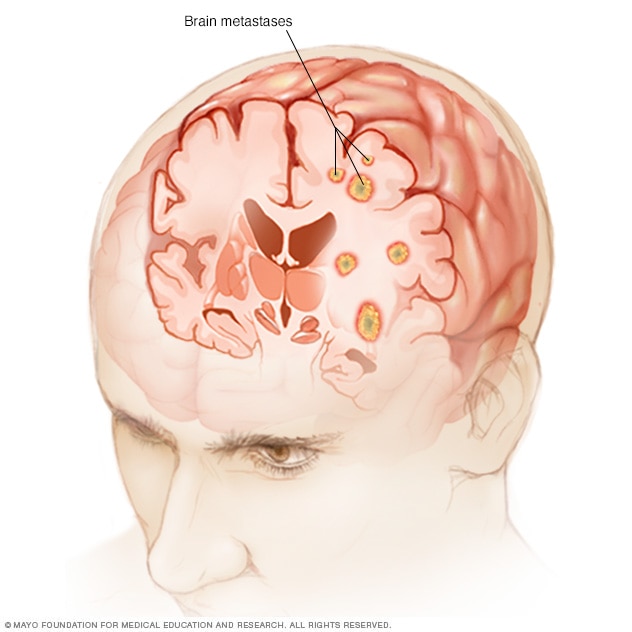
Brain metastases
Brain metastases happen when cancer begins elsewhere in the body and spreads (metastasizes) to the brain.
Mayo Clinic Connect
Types
Brain metastases, also called brain mets or secondary brain tumors, occur when cancer spreads from another part of the body to the brain.
Brain metastases are classified based on where cancer cells spread within the central nervous system. The two main patterns of spread are parenchymal metastases and leptomeningeal metastases. These patterns affect different parts of the brain and spinal cord and may require different approaches to diagnosis and treatment.
Parenchymal metastases
Parenchymal metastases occur when cancer spreads from another part of the body into the brain tissue itself. These form discrete tumors within the brain. A person may have one tumor or several tumors located in different areas.
Parenchymal metastases are the most common form of brain metastasis.
Leptomeningeal metastases, also called leptomeningeal disease
Leptomeningeal metastases, also called leptomeningeal disease (LMD) or neoplastic meningitis, occur when cancer cells spread to the thin layers of tissue and the cerebrospinal fluid that surround the brain and spinal cord.
Instead of forming a single mass, cancer cells spread along the surface of the brain and spinal cord and within the fluid that circulates around them. This pattern of spread can affect multiple areas of the nervous system.
Symptoms
Symptoms of brain metastases depend on where cancer has spread within the brain or surrounding tissues, how large the affected areas are, and how quickly they are growing. Symptoms are not determined by the original cancer type, such as lung or breast cancer. Instead, they relate to which parts of the nervous system are involved.
Some people develop symptoms gradually, while others notice symptoms more quickly.
Symptoms of parenchymal metastases
Parenchymal metastases form tumors within the brain tissue. Symptoms usually relate to the specific area of the brain where the tumor is located.
Symptoms may include: Symptoms may include:
- Headache, which may become more frequent or more severe over time and may occur with nausea or vomiting.
- Changes in thinking or behavior, such as confusion, difficulty concentrating or increasing memory issues.
- Seizures, even in people who have never had seizures before.
- Weakness or numbness, often affecting one side of the body.
- Vision changes, such as blurred vision, double vision or loss of part of the visual field.
- Difficulty speaking or understanding language.
- Balance or coordination issues.
Symptoms of leptomeningeal metastases
Leptomeningeal metastases involve cancer cells spreading within the fluid and thin tissues that surround the brain and spinal cord. Because this spread can affect multiple areas of the nervous system at the same time, symptoms may be more widespread.
Symptoms may include:
- Headaches.
- Nausea and vomiting.
- Vision changes, such as blurred vision or double vision.
- Facial weakness or numbness.
- Hearing loss.
- Difficulty swallowing.
- Confusion or changes in thinking or behavior.
- Weakness or loss of feeling in the arms or legs.
- Back or neck pain that may spread into the arms or legs.
- Difficulty with bowel or bladder control.
- Changes in alertness.
- Seizures.
When to see a doctor
Make an appointment with your healthcare professional if you have new, ongoing or worsening symptoms that concern you, especially symptoms related to headaches, seizures, thinking, vision, balance or weakness.
If you have been treated for cancer in the past, tell your healthcare professional about your cancer history, even if treatment ended years ago. New neurological symptoms in someone with a history of cancer should be checked.
Causes
Brain metastases occur when cancer cells break away from where they first formed in the body and spread to the brain. The cancer cells usually travel through the bloodstream. In some cases, they may travel through the lymphatic system — a network of vessels and lymph nodes that helps drain fluid and support the immune system — before reaching the brain.
Cancer that spreads from its original location keeps the name of the original cancer. This original cancer is called the primary cancer. For example, cancer that spreads from the breast to the brain is called metastatic breast cancer, not brain cancer.
Risk factors
Any type of cancer can spread to the brain. However, some cancers are more likely to spread than others. These include:
Many other cancers also can spread to the brain, although this happens less often. These include cancers of the liver, ovary, thyroid, pancreas, gastroesophageal region and uterus, as well as some blood cancers. While brain metastases are less common with these cancers, they are still possible and may cause similar symptoms.
Some cancers are unlikely to spread to the brain. These include nonmelanoma skin cancers, such as basal cell carcinoma, and most squamous cell carcinomas of the skin. Other rare cancers, such as Merkel cell carcinoma, can spread beyond the skin. But a spread to the brain is not common.
Cancer that has spread to the spine or spinal cord also may spread to other parts of the nervous system, including the brain, depending on the cancer type and how advanced it is.
Get the latest brain tumor advice from Mayo Clinic delivered in your inbox.
Sign up for free and receive the latest on brain tumor treatment, diagnosis and surgery.


CON-20117642
Mayo Clinic does not endorse companies or products. Advertising revenue supports our not-for-profit mission.
Advertising & Sponsorship
Mayo Clinic Press
Check out these best-sellers and special offers on books and newsletters from Mayo Clinic Press.
