Overview
Chambers and valves of the heart
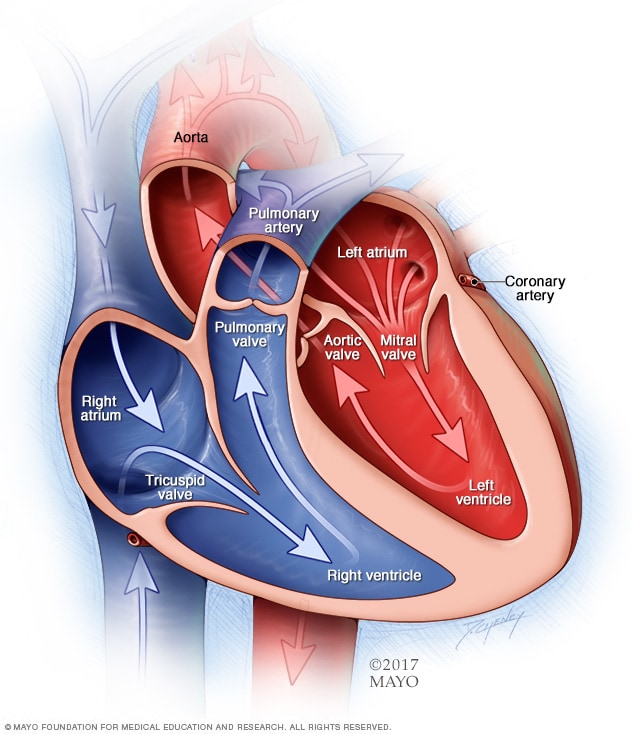
Chambers and valves of the heart
A typical heart has two upper and two lower chambers. The upper chambers, the right and left atria, receive blood as it comes into the heart. The lower chambers, the right and left ventricles, pump blood out of the heart. The heart valves act like gates at the openings of the heart chambers. They keep blood flowing in the right direction.
Aortic valve repair and aortic valve replacement are types of heart valve surgery to fix a damaged or diseased aortic valve.
The aortic valve is one of four valves that control blood flow in the heart. It is between the lower left heart chamber and the body's main artery, called the aorta.
Heart valves help blood move through the heart in the right way. When the heart squeezes, the aortic valve opens. Blood moves from the lower left heart chamber into the aorta. When the heart rests, the aortic valve closes. This stops blood from moving backward.
A diseased or damaged valve can change how blood moves through the heart. The heart must then work harder to send blood to the rest of the body.
Aortic valve repair and aortic valve replacement help blood move better through the heart. These treatments can help people feel better. They also may help people live longer. Aortic valve repair or replacement may be done as an open-heart surgery or as a minimally invasive procedure.
Products & Services
Types
Why it's done
Aortic valve regurgitation
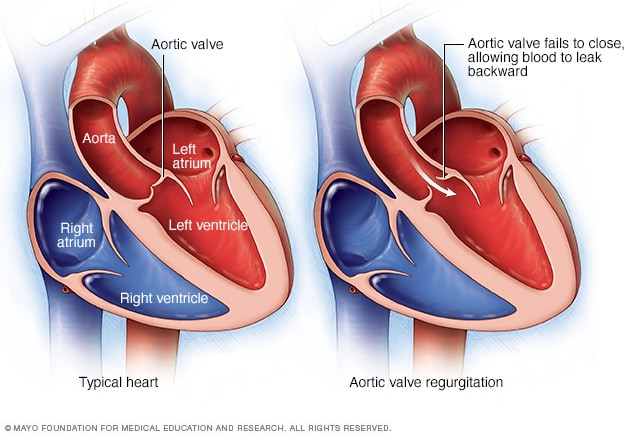
Aortic valve regurgitation
In aortic valve regurgitation, the aortic valve doesn't close properly. This causes blood to flow backward from the body's main artery, called the aorta, into the lower left heart chamber, called the left ventricle.
Aortic valve stenosis
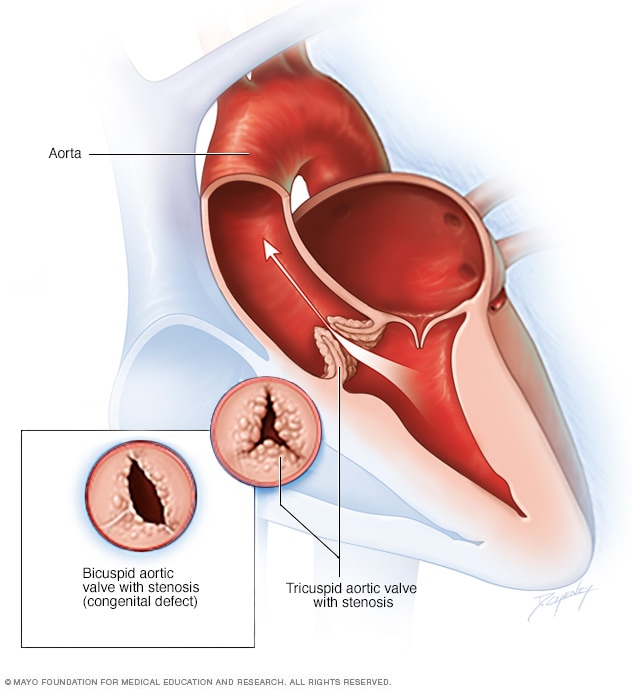
Aortic valve stenosis
Aortic valve stenosis is a type of heart valve disease. The valve between the lower left heart chamber and the body's main artery, called the aorta, gets narrow. The valve does not open fully. This lowers or blocks blood flow from the heart to the aorta and to the rest of the body. Usually the aortic valve has three cusps. It is called a tricuspid aortic valve. But some people are born with an aortic valve that has two cusps. When this happens, it's called a bicuspid aortic valve.
Aortic valve repair and aortic valve replacement are done to treat aortic valve disease. Types of aortic valve disease that may need valve repair or replacement include:
- Aortic valve regurgitation. The aortic valve does not close all the way. This lets blood flow backward into the left lower heart chamber. Any condition that damages the aortic valve can cause regurgitation. Sometimes, a baby is born with an aortic valve that has an unusual shape, which can lead to regurgitation.
- Aortic valve stenosis. The aortic valve flaps, called cusps, become thick and stiff, or they connect together. The valve becomes narrowed or doesn't open all the way. This reduces or blocks blood flow. Aortic valve stenosis may be caused by a heart condition present at birth or by some infections that affect the heart valve.
- An aortic valve condition present at birth, called a congenital heart defect. Some babies may be born with an aortic valve that's missing a valve opening or that has two valve cusps instead of three. A congenital heart defect also can cause the valve to be the wrong size or shape.
You might need aortic valve surgery if your valve disease makes it hard for your heart to pump blood. If you don't have symptoms or if your condition is mild, you may only need regular health checkups, lifestyle changes and medicines. But most aortic valve conditions eventually need surgery. Surgery can help reduce symptoms and lower the risk of complications such as heart failure.
The decision to repair or replace a damaged aortic valve depends on many things, including:
- How severe aortic valve disease is, also called the stage of disease.
- Your age and general health.
- Whether surgery is needed to fix another valve or heart condition.
In general, surgeons recommend valve repair when possible. It lowers the risk of infection, saves the heart valve and may help the heart work better. The right choice depends on your type of aortic valve disease. It also depends on the skill and experience of the healthcare team.
Incisions in minimally invasive heart surgery and open-heart surgery
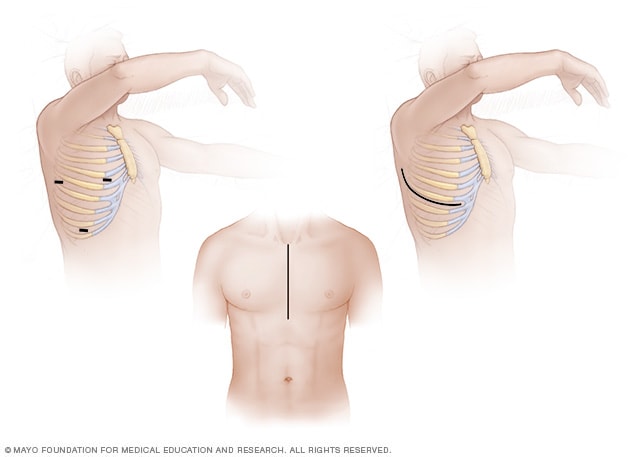
Incisions in minimally invasive heart surgery and open-heart surgery
In minimally invasive heart surgery, surgeons reach the heart through small cuts on the right side of the chest, as shown in the top two images. In open-heart surgery, surgeons make a larger incision in the midline of the chest, as shown in the bottom image.
Related information
Transcatheter aortic valve replacement (TAVR)
The type of aortic valve surgery you have depends on your own health needs. For example, some people with aortic valve disease may not be able to have traditional open-heart surgery. This may be because they have other health conditions, such as lung disease or kidney disease, that could make the surgery too risky. Your healthcare team explains the benefits and risks of each option.
Risks
All surgeries have risks. Risks of aortic valve repair and replacement depend on many things, including:
- Your general health.
- The type of valve surgery.
- The skill of your surgeons and healthcare team.
Possible risks of aortic valve repair and aortic valve replacement surgery may include:
- Bleeding.
- Blood clots.
- Failure of a replacement valve.
- Irregular heartbeats, called arrhythmias.
- Infection.
- Stroke.
To lower the possible risks, aortic valve surgery should generally be done at a center with a multidisciplinary heart team that is skilled in such treatments and that does many aortic valve surgeries.
How you prepare
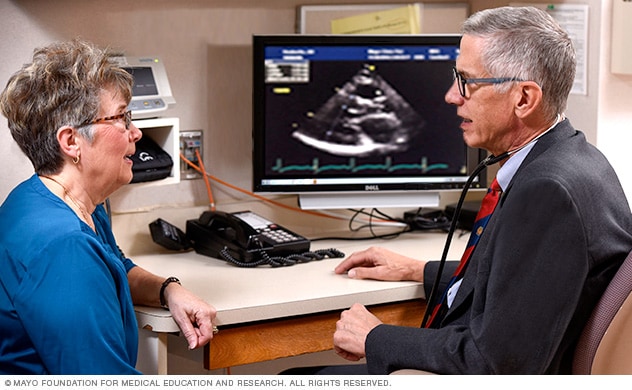 Aortic valve repair and replacement consultation at Mayo Clinic
Your Mayo Clinic healthcare team talks with you about any questions you may have about aortic valve repair or aortic valve replacement.
Before surgery to have your aortic valve repaired or replaced, your healthcare team tells you what to expect before, during and after the surgery. Team members also talk with you about the possible risks of the surgery. You may have tests to check your heart, such as an echocardiogram.
Before your hospital stay for your heart valve surgery, talk with your family and caregivers about any help you may need when you come home.
Food and medications
Before aortic valve repair or replacement, talk with your healthcare team about:
- When or if you can take your regular medicines before surgery.
- Allergies or reactions to medicines.
- When or if you should stop eating or drinking the night before surgery.
Clothing and personal items
Your healthcare team may suggest that you bring some things to the hospital such as:
- A list of the medicines, vitamins and supplements that you take.
- Eyeglasses, hearing aids or dentures.
- Personal care items such as a brush, a comb, a shaving kit and a toothbrush.
- Loose, comfortable clothing.
- A copy of your advance directive. This is a legal paper that says what kinds of treatments you want or don't want if you can't speak for yourself.
- Items that help you relax such as portable music players or books.
During aortic valve repair or replacement surgery, do not wear:
- Contact lenses.
- Dentures.
- Eyeglasses.
- Jewelry.
- Nail polish.
What you can expect
Before the procedure
Your healthcare team may shave some body hair where the surgeon makes cuts. These cuts are called incisions. The team may wash your skin with a special soap to help prevent infection.
During the procedure
Your healthcare team gives you a mix of anesthesia medicines. They put you into a sleep-like state during the surgery. You are connected to a heart-lung bypass machine. This machine keeps your blood moving through your body during the aortic valve surgery.
Aortic valve repair and aortic valve replacement can be done in different ways:
- Open-heart surgery. The surgeon makes a cut down the middle of the chest to reach the heart.
- Minimally invasive heart surgery. The surgeon makes much smaller incisions than in open-heart surgery. This type of surgery usually does not require cutting any major muscle or breaking bones. Transcatheter aortic valve replacement (TAVR) is one type of minimally invasive heart valve surgery.
Minimally invasive heart surgery may lead to a shorter hospital stay, faster recovery and less pain than traditional open-heart surgery.
Aortic valve repair
Aortic valve repair is usually done with open-heart surgery. The surgeon makes a cut down the middle of the chest and opens the breastbone. This is called a sternotomy. After the valve repair is done, the surgeon wires the bone back together.
During aortic valve repair surgery, the heart surgeon might:
- Patch holes or tears in the aortic valve cusps.
- Add support at the base or roots of the valve.
- Separate valve cusps that have grown together.
- Reshape or remove tissue so the valve can close more tightly.
- Tighten or strengthen the ring around the valve, called the annulus.
Minimally invasive aortic valve repair
In some people with a narrowed aortic valve, a minimally invasive treatment called balloon valvuloplasty may be done to fix the valve. This treatment uses much smaller cuts than open-heart surgery.
During balloon valvuloplasty, the heart doctor places a thin, soft tube called a catheter into an artery in the arm or groin. The doctor guides the tube to the diseased or damaged aortic valve. A balloon on the tip of the tube is inflated. This makes the valve opening larger. The balloon is deflated. The catheter and balloon are removed.
Balloon valvuloplasty is often used to treat infants and children with aortic valve stenosis. In adults, the aortic valve often becomes narrow again after this treatment. So balloon valvuloplasty is usually done only in adults who are too sick for surgery or who are waiting for a valve replacement.
Aortic valve replacement
If the aortic valve can't be fixed and other treatments aren't an option, the valve might need to be replaced.
During aortic valve replacement, the surgeon removes the damaged valve. The surgeon replaces it with a mechanical valve or a valve made from cow, pig or human heart tissue. Valves made from living tissue are called biological tissue valves.
Sometimes, the surgeon may use your own lung valve, called the pulmonary valve, to replace the aortic valve. This more complex surgery is called the Ross procedure.
Aortic valve replacement may be done using open-heart surgery or minimally invasive methods. Transcatheter aortic valve replacement (TAVR) is a type of minimally invasive aortic valve replacement. It also is called transcatheter aortic valve implantation (TAVI). During TAVR, a doctor uses long soft tubes called catheters to place a biological valve in the heart. The valve replaces an aortic valve that no longer works as it should.
When minimally invasive aortic valve replacement is done by skilled surgeons at medical centers that do a lot of TAVR treatments, the results are similar to open-heart surgery.
Mechanical valve replacement
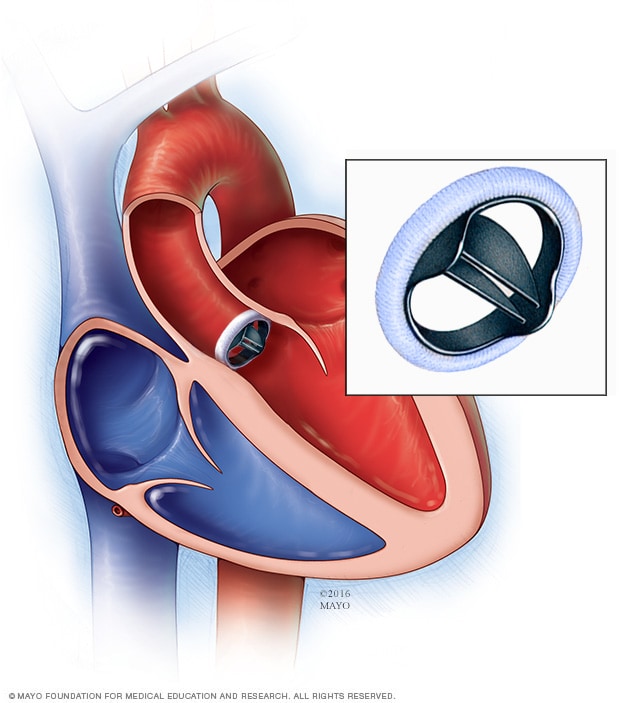
Mechanical valve replacement
In mechanical valve replacement, a mechanical valve replaces the damaged valve.
Biological valve replacement
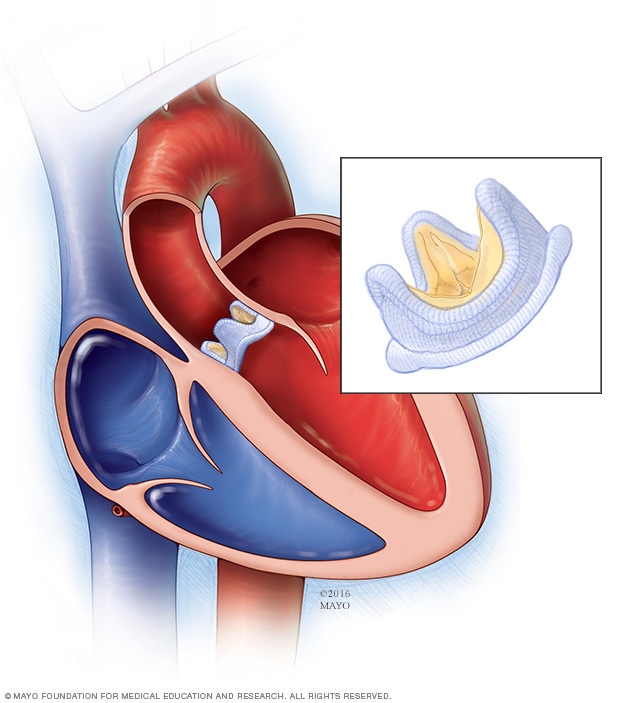
Biological valve replacement
In a biological valve replacement, a valve made from cow, pig or human heart tissue replaces the damaged heart valve.
Transcatheter aortic valve replacement (TAVR)
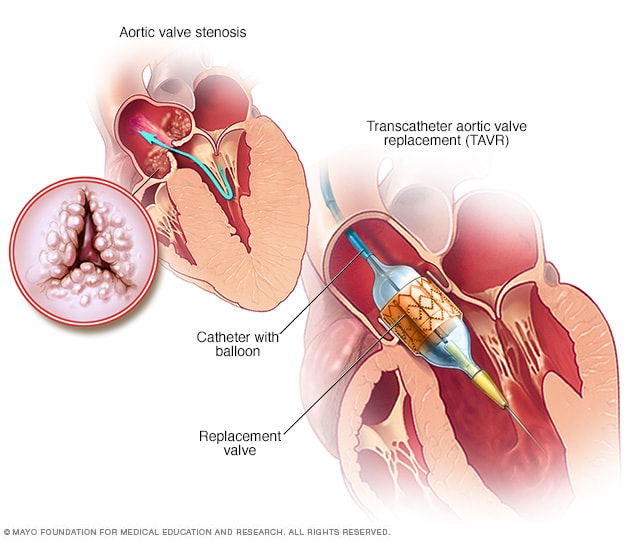
Transcatheter aortic valve replacement (TAVR)
Transcatheter aortic valve replacement (TAVR) is a type of heart valve surgery. It's done to replace a narrowed aortic valve, a condition called aortic valve stenosis. A doctor inserts a soft tube called a catheter into a blood vessel and guides it into the heart. A replacement valve, called a biological valve, goes through the tube to the specific area in the heart. A balloon on the catheter tip inflates to press the new valve into place. Some valves expand on their own.
Aortic valve replacement
If the aortic valve can't be fixed and other treatments aren't an option, the valve might need to be replaced.
During aortic valve replacement, a surgeon removes the valve and replaces it with a mechanical valve or a valve made from cow, pig or human heart tissue. Valves made from living tissue are called biological tissue valves.
A type of biological tissue valve replacement that uses your own lung valve, called the pulmonary valve, is sometimes possible. This more complicated surgery is called the Ross procedure.
Aortic valve replacement may be done using open-heart surgery or minimally invasive methods. Transcatheter aortic valve replacement (TAVR) is a type of minimally invasive aortic valve replacement. It also is called transcatheter aortic valve implantation (TAVI). During TAVR, long flexible tubes called catheters are used to place a biological valve in the heart to replace an aortic valve that is no longer working properly.
When minimally invasive aortic valve replacement is done by experienced surgeons and centers, the results are like those with traditional open-heart surgery.
After the procedure
How long you stay in the hospital after aortic valve surgery depends on your heart condition and type of valve surgery.
While in the hospital, you get fluids and medicines through an IV. Other tubes drain urine from the bladder and fluid and blood from your chest. You might get oxygen through a mask or a small plastic tube under your nose.
During your hospital stay, your healthcare team:
- Tracks your condition and watches for signs of infection.
- Checks your blood pressure, breathing and heart rate.
- Works with you to manage any pain.
The team may ask you to walk on a regular schedule. This helps you slowly become more active. You may be asked to cough and do breathing exercises as you get better.
How long it takes you to recover depends on the type of aortic valve surgery you have.
Results
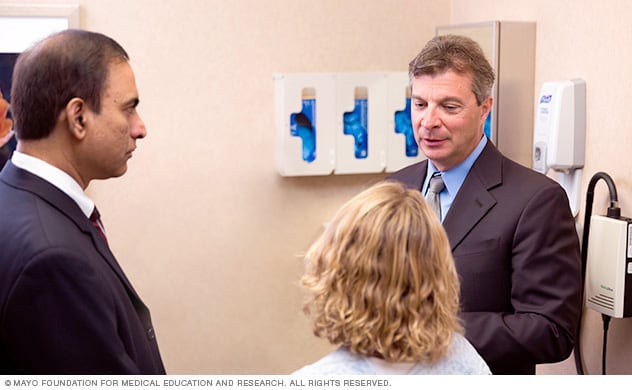 Aortic valve repair and replacement consultation at Mayo Clinic
Your Mayo Clinic healthcare team provides ongoing, coordinated care after aortic valve surgery.
After aortic valve repair or aortic valve replacement, your healthcare team tells you when you can return to your usual activities. The team may tell you not to drive or lift anything heavier than 10 pounds (4.5 kilograms) for several weeks.
You need regular checkups with your healthcare professional after aortic valve surgery. You may have imaging tests to make sure the aortic valve is working as it should.
If you have a mechanical valve, you need to take blood thinners for life to prevent blood clots. Biological valves often need to be replaced eventually because they can wear out. Mechanical valves usually do not wear out over time.
Some replacement heart valves may start to leak or not work as well over time. A doctor may do another surgery or a catheter procedure to repair or plug a leaky replacement valve.
To keep your heart working well, your healthcare team may recommend lifestyle changes. The American Heart Association suggests these lifestyle changes:
- Do not smoke or use tobacco.
- Eat healthy foods.
- Stay active and get regular exercise.
- Manage weight.
- Manage blood pressure, blood sugar and cholesterol.
- Get 7 to 9 hours of sleep daily.
- Manage stress.
Your healthcare team may suggest a personal exercise and education program called cardiac rehabilitation. It teaches you ways to improve your heart health after heart surgery. The program focuses on exercise, a heart-healthy diet, stress management and a slow return to your usual activities.
Clinical trials
Explore Mayo Clinic studies of tests and procedures to help prevent, detect, treat or manage conditions.
Oct. 20, 2026