Chemotherapy for colon cancer
Find out how to prepare for your treatment and how to handle possible side effects.
Medical review by Mayo Clinic Staff
Updated: September 10, 2026
If you’ve been diagnosed with colon cancer, chemotherapy may be a part of your care plan. Chemotherapy for colon cancer uses strong medicines to destroy fast-growing cancer cells. These medicines also are used alongside other colon cancer treatments, such as targeted therapy and immunotherapy.
Chemotherapy usually is injected directly into a vein through a needle or taken by mouth as pills. It can carry a risk of side effects. Some are temporary and mild. Others are more serious or permanent. Your healthcare team can help you decide whether chemotherapy for colon cancer is a good choice for you.
At Mayo Clinic, specialists across disciplines work together to coordinate chemotherapy decisions.
Our care teams plan and deliver chemotherapy through a fully coordinated model. Medical oncologists, surgeons, radiologists, pathologists, pharmacists, and supportive-care teams collaborate to decide when chemotherapy fits into treatment, how it works alongside other therapies, and how it supports each person’s goals. This teamwork helps us streamline decisions and reduce delays in care.
Why chemotherapy is used for colon cancer
The stage of your colon cancer helps your team know if chemotherapy is right for you.
- Stage 2 colon cancer. Chemotherapy may be considered if the cancer has a high risk of recurrence.
- Stage 3 colon cancer. Chemotherapy is commonly used after surgery to destroy any remaining cancer cells and reduce recurrence.
- Stage 4 colon cancer. Chemotherapy may help control the cancer, improve survival, and support quality of life.
Chemotherapy can fit into your care plan in a variety of ways. Care plans that are personalized to each patient tend to have the best outcomes.
After surgery for colon cancer (adjuvant chemotherapy)
After you have surgery to remove colon cancer, chemotherapy may be used to destroy microscopic cancer cells that remain and reduce the risk of recurrence. This is known as adjuvant chemotherapy. Adjuvant chemotherapy typically starts within eight weeks after colon cancer surgery.
Even if tests show no remaining cancer, adjuvant chemotherapy may be recommended if your risk of recurrence or metastasis is high:
- Cancer cells in the lymph nodes
- Perforation of the colon
- High-grade or poorly differentiated tumors
- Obstruction of the intestine
- Circulating tumor DNA (ctDNA) detected in blood
Mayo Clinic researchers helped establish today’s standards for adjuvant chemotherapy.
Our researchers led the first clinical trial showing that adjuvant chemotherapy reduces recurrence risk and co-led the landmark International Duration Evaluation of Adjuvant Chemotherapy (IDEA) collaboration study, demonstrating that 3 months of therapy can be equally effective as 6 months for many stage III cancers, reducing neuropathy. Together, this work is shaping worldwide standards of care and continuing to guide how clinicians choose and time treatment today.
Before surgery for colon cancer (neoadjuvant therapy)
Chemotherapy given before surgery is known as neoadjuvant therapy, or preoperative chemotherapy. This approach is used more commonly for locally advanced rectal cancer. The goal is to shrink tumors and make them easier to remove surgically and reduce the risk of recurrence and spreading.
If you have colon cancer, neoadjuvant chemotherapy may be done in certain situations to:
- Improve chances of complete tumor removal
- Preserve healthy tissue
- Shrink tumors to reduce surgical complications
- Lower recurrence risk
- Understand how your cancer responds to treatment
At Mayo Clinic, advances in neoadjuvant therapy may expand treatment options for select colon cancers.
We use chemotherapy before surgery, known as neoadjuvant therapy, to shrink tumors and improve surgical outcomes in specific situations. Our teams study new approaches that may give people more options when tumors once appeared difficult or impossible to remove, especially when paired with experienced surgical care.
“We often see patients who have been told their cancer cannot be removed. But if we provide chemotherapy and then a long course of radiation with chemotherapy, we have surgeons here who can remove the tumor.”

Michael G. Haddock, M.D.
Mayo Clinic radiation oncologist
Combined with surgery for colon cancer
In select cases, chemotherapy can be delivered during or in combination with surgery.
- Hyperthermic intraperitoneal chemotherapy (HIPEC). A heated chemotherapy solution is circulated in the abdominal cavity after cytoreductive surgery.
- Pressurized intraperitoneal aerosol chemotherapy (PIPAC). Chemotherapy is delivered as an aerosol using minimally invasive surgery.
- Hepatic artery infusion pump (HAIP) chemotherapy. A small pump delivers high-dose chemotherapy directly to the liver.
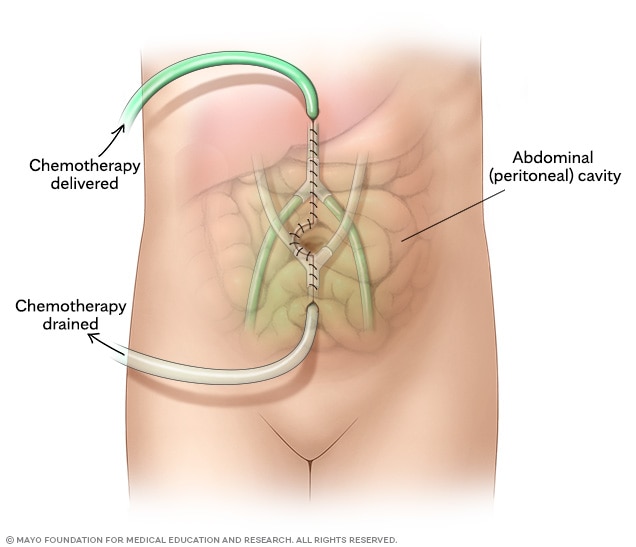
In hyperthermic intraperitoneal chemotherapy (HIPEC), visible cancer is first surgically removed from the lining of the abdominal cavity, called the peritoneum. Heated chemotherapy medicine is then circulated through the cavity to destroy any remaining cancer cells.
Mayo Clinic specialists combine chemotherapy with surgery using techniques available at only a few centers.
In select cases, we deliver chemotherapy during or in close coordination with surgery. Our teams use approaches such as hyperthermic intraperitoneal chemotherapy (HIPEC), pressurized intraperitoneal aerosol chemotherapy (PIPAC), and hepatic artery infusion pump therapy. These techniques allow us to target cancer cells more directly while limiting side effects elsewhere in the body.
As the main treatment for advanced colon cancer
If colon cancer has spread to other parts of your body and surgery isn’t an option, chemotherapy can be used as the main treatment. It may be used in combination with targeted therapy, which uses medicines that attack specific molecules in the cancer cells. By blocking these molecules, targeted treatments can cause cancer cells to die.
If you have advanced cancer, the main goal of chemotherapy generally is to improve quality and length of life rather than to cure the disease.
What you can expect
It can be overwhelming to navigate all the parts of your colon cancer treatment plan. Colon cancer treatment is life-changing. Knowing what to expect can help you approach treatment with confidence and know when to seek the support and resources you need along the way.
Chemotherapy cycles
Chemotherapy for colon cancer is given in cycles. A cycle includes a phase of chemotherapy treatment followed by a rest period. Typically, each cycle lasts 2 to 3 weeks. The schedule can differ based on the specific medicines that are part of your care plan.
Both adjuvant and neoadjuvant chemotherapy often are given for about 3 to 6 months, depending on the medicines used and whether your cancer is considered high risk. Higher risk cancers may benefit from a longer chemotherapy treatment plan.
The length of chemotherapy for advanced cancer depends on the side effects and how your body and your cancer respond to the medicine.
Common chemotherapy medicines for colon cancer
There are a few chemotherapy medicines available to treat colon cancer. Because each person is different, your healthcare team will tailor the type and dose of your medicines to your unique needs. This is called a regimen. A regimen often includes a combination of two or three chemotherapy medicines depending on your type of colon cancer and medical history. Sometimes, targeted therapy medicines are given along with chemotherapy medicines.
Chemotherapy medicines commonly used to treat colon cancer include:
- 5-fluorouracil (5-FU). This is a widely used chemotherapy medicine that’s often combined with leucovorin to enhance effectiveness.
- Capecitabine (Xeloda). Capecitabine is known as a prodrug. A prodrug is a type of medicine that isn’t active until it gets inside the body. Once there, it changes into an active form through natural processes, such as enzyme or chemical reactions.
- Irinotecan (Camptosar). This medicine is often used for advanced colon cancer.
- Oxaliplatin (Eloxatin). Oxaliplatin is a platinum-based medicine commonly used in combination with other medicines.
- Trifluridine and Tipiracil (Lonsurf). This is a combination chemotherapy medicine used to treat cancer that has spread beyond the colon, called metastatic cancer.
Common chemotherapy medicine combinations for colon cancer include:
- FOLFOX. 5-FU, leucovorin and oxaliplatin.
- FOLFIRI. 5-FU, leucovorin and irinotecan.
- XELOX, also called CAPOX. Capecitabine and oxaliplatin.
Mayo Clinic researchers study circulating tumor DNA to help personalize chemotherapy decisions.
We tailor chemotherapy because treatment does not affect everyone the same way. Our research into circulating tumor DNA (ctDNA) helps us better understand recurrence risk and adjust treatment plans. This work supports more precise decisions about who benefits most from chemotherapy and when clinicians can safely change or limit treatment.
Where chemotherapy is given
Colon cancer chemotherapy sessions can take place at your doctor’s office, at an outpatient unit in a hospital or clinic, or sometimes, at home. You do not have to get chemotherapy at the same place where you had surgery.
Mayo Clinic teams coordinate chemotherapy care with local providers when appropriate.
We do not require all chemotherapy to take place at a major medical center. When possible, our teams coordinate with providers closer to home so patients can receive chemotherapy locally while still benefiting from specialized treatment planning, surgical care, and follow-up.
How chemotherapy is given
Chemotherapy medicines for colon cancer can be given in a variety of ways, including:
- Pills. A few colon cancer chemotherapy medicines are taken by mouth in pill form.
- Catheters. An IV needle and tube, called a catheter, is placed in your hand or wrist.
- Ports. A port is a small device that is placed under your skin. A catheter connects the port to a vein. This port stays in place for the duration of your chemotherapy treatment and eliminates the need to find a suitable vein at each treatment session.
- Pumps. A pump is often small and portable, enabling you to wear it while continuing your daily activities during treatment. Pumps may be used when a continuous infusion of chemotherapy medicines is needed, such as with FOLFOX and FOLFIRI regimens for colon cancer.
Based on the location and stage of your colon cancer, chemotherapy drugs can either be distributed throughout your entire body or targeted to a specific area:
- Systemic chemotherapy. This method uses an IV or pills to put chemotherapy into your bloodstream to treat colon cancer. This way, the medicine reaches all areas of your body.
- Regional chemotherapy. This method focuses on a specific area of the body. Chemotherapy is delivered directly to the cancer site with specialized methods such as the hepatic artery infusion pump. This helps concentrate the treatment on cancer cells in that area and reduces side effects elsewhere.

A typical chemotherapy session
Not all chemotherapy sessions for colon cancer are alike. Your sessions will depend on your diagnosis and your regimen. A chemotherapy session typically follows this order:
- You have a blood sample drawn for a blood count and other blood tests.
- You meet with your doctor to review your blood test results and assess your overall health.
- Your doctor orders chemotherapy medicine.
- You meet with the member of your healthcare team who’s giving your chemotherapy.
- You have a brief physical exam to check your temperature, pulse and blood pressure.
- You have the IV catheter inserted.
- You receive medicines to prevent side effects such as nausea, anxiety or inflammation.
- You receive chemotherapy medicine. This may take up to several hours.
Following a chemotherapy session for colon cancer, you may:
- Have your temporary IV catheter removed.
- Have your vital signs checked.
- Review side effects with your healthcare team.
- Receive prescriptions for medicines you can take at home to help with side effects.
- Be advised on what to eat and drink.
- Receive instructions on proper handling of bodily fluids, such as urine, stool, vomit, semen and vaginal secretions, as these may contain some of the chemotherapy medicine for the next 48 hours. This may simply involve flushing the toilet twice after use.
Some people feel fine after a chemotherapy session and can return to their usual schedules and activities. Others may feel side effects more quickly. You may want to arrange for someone to drive you home afterward, at least for the first few sessions, until you see how you feel.
During the course of chemotherapy
After a few sessions, you may be able to predict more accurately when you’ll feel fine and when you may need to cut back on activities. Marking your calendar or keeping a journal may help you track your general response to chemotherapy sessions and plan events accordingly.
Following your colon cancer treatment plan closely is the best way to get the most benefit from chemotherapy. If side effects become too bothersome, discuss them with your healthcare team. It may be possible to adjust the dose or type of chemotherapy medicine you’re receiving or prescribe other medicines to help relieve some side effects such as nausea. If the number of white cells in your blood drops, your care team may stop your chemotherapy until your white cells return to a safe level.
At Mayo Clinic, supportive services help address side effects and quality of life during chemotherapy.
We support people through chemotherapy by addressing both physical and emotional needs. Our teams provide integrative oncology, nutrition support, mind-body therapies, and oncology psychology services. These services work alongside cancer treatment to help manage side effects and support the whole person throughout care.
Results
After you complete chemotherapy treatment for your colon cancer, your healthcare team schedules follow-up visits to monitor for long-term side effects and check for colon cancer recurrence. Expect appointments every few months and then less frequently the longer you remain cancer-free.
How you prepare
Preparing for chemotherapy can help you have a smoother treatment experience. Take the time you need to understand your treatment plan and work with your healthcare team for any specific preparations you may need.
Take steps to improve your overall health
Make healthy choices before cancer treatment so you'll feel strong as your treatment begins. Continuing healthy choices during treatment may help minimize side effects.
Your healthcare team may recommend that you:
- Get plenty of rest. Try to sleep at least eight hours a night. And add a nap or two during the day, if needed.
- Stay active and make the time to exercise. Exercise can ease fatigue and help you sleep better at night. Try to do at least 15 minutes of light exercise a day, such as walking, yoga or riding an exercise bike.
- Eat a balanced diet rich in fruits, vegetables and whole grains. A well-balanced diet can help you keep up your weight and repair tissues harmed by chemotherapy treatment. Talk with your care team about putting together a nutrition plan.
- Minimize stress. Find a relaxing activity to help reduce stress. Prayer, meditation, yoga or light exercise are all possible ways to relax.
- Avoid infections, such as the common cold and the flu. Talk with your care team about recommended vaccinations, including annual flu vaccines. Also engage in behavior to reduce the risk of infection while on active chemotherapy, such as washing hands or using hand sanitizer before eating and using gloves while doing yardwork.
- See your dentist. The dentist can look for any signs of infection in your teeth or gums.
- Have a blood test. Your healthcare team may do a blood test to check your levels of infection-fighting white blood cells. If the count is low, you may get medicine to raise your white blood cell count and lower the risk of infection during chemotherapy.
Plan ahead for side effects
Ask your healthcare team what side effects you can expect during and after chemotherapy. If you know what to expect, you can prepare. For example, if your chemotherapy treatment will likely cause severe nausea, you may be prescribed antinausea medicines to take before and after each treatment session. Acupuncture also may help with nausea.
Plan for help at home and at work
Many people can keep working and doing their usual activities during chemotherapy. Your healthcare team can give you an idea of how much the chemotherapy is likely to affect your usual activities. But it’s difficult to predict just how you’ll feel.
Prepare by asking for time off work or help at home for the first few days after treatment. If you’ll be in the hospital during chemotherapy treatment, arrange to take time off work and find someone to take care of your usual responsibilities at home.
Tell your healthcare team about any medicines or supplements you're taking
Medicines or supplements you're taking, including any herbal supplements, vitamins or medicines you buy without a prescription, may affect the way the chemotherapy medicines work. Your care team may suggest alternative medicines. Or the team may tell you not to take the medicines or supplements for a period before or after a chemotherapy session.
The day of treatment
Your healthcare team lets you know what you can or can’t eat or drink on the day of your chemotherapy session. It may help to take a family member or friend with you to the treatment session for support and companionship.
Risks of chemotherapy for colon cancer
Side effects and quality of life may be major concerns if you are being treated for colon cancer. Here, your care team will spend a lot of time helping you understand the risks of your chemotherapy treatment. The team also works with you to understand your goals, so you can make treatment decisions that help you have the best outcome.
Most chemotherapy medicines travel throughout your body. Side effects depend on the medicines you receive and your reaction to them. Some combination medicine therapies cause more-severe side effects. Most side effects are temporary and go away once treatment is finished. However, some side effects may last for a long time.
Side effects of colon cancer chemotherapy typically happen during treatment and may include:
- Nausea and vomiting. These symptoms are often managed with antinausea medicines.
- Diarrhea. This is a common issue with many chemotherapy medicines but especially with irinotecan (Camptosar).
- Increased risk of infections. This is due to a decrease in white blood cells.
- Fatigue. Being tired is a common side effect due to the impact on red blood cells.
- Hair loss. Not all chemotherapy medicines cause this, but hair thinning or total hair loss can happen.
- Mouth sores. The lining of the mouth may become sore or develop ulcers.
- Easy bruising or bleeding. This can be caused by low blood platelets.
Some side effects are caused by specific chemotherapy medicines, such as:
- Nerve damage, also called neuropathy. Tingling or numbness in the hands and feet may happen, particularly with medicines like oxaliplatin.
- Hand-foot syndrome. Redness, pain or peeling of the skin on the palms and soles can develop during treatment, especially with medicines like capecitabine or 5-fluorouracil (5-FU).
- Allergies or sensitivities. Reactions may happen in people taking the medicine oxaliplatin, including symptoms such as skin rash, dizziness, trouble breathing and back pain.
It’s important to note that not everyone has these side effects, and their severity can vary. Discussing possible risks with your healthcare team before chemotherapy treatment may help manage these effects.
“Quality of life issues are one of the number one questions patients have, and we spend a lot of time educating patients and trying to determine what their goals of quality of life are.”

David W. Larson, M.D., M.B.A.
Mayo Clinic colon and rectal surgeon
Psychological side effects
Feelings of fear, sadness and isolation can compound the physical side effects of chemotherapy, both during and after treatment. During chemotherapy, you have regular contact with and support from doctors who specialize in cancer, called oncologists, and nurses. Everyone involved is working toward the same goal — completion of treatment with the best possible outcome. When it’s over, you can feel as if you’re alone, with no one to help you return to the life you had before treatment or deal with fears of colon cancer coming back.
Consider talking with a mental health professional or other healthcare professional who works with people who have cancer. It also may help to talk with someone who has been in the same situation. Connect with others through a hotline, support group or online community for people who have been treated for cancer.
Support group discussions
From Mayo Clinic Connect, our online patient community.
Find more discussions:
Clinical trials
Explore Mayo Clinic studies of tests and procedures to help prevent, detect, treat or manage conditions.
Mayo Clinic’s approach to chemotherapy for colon cancer
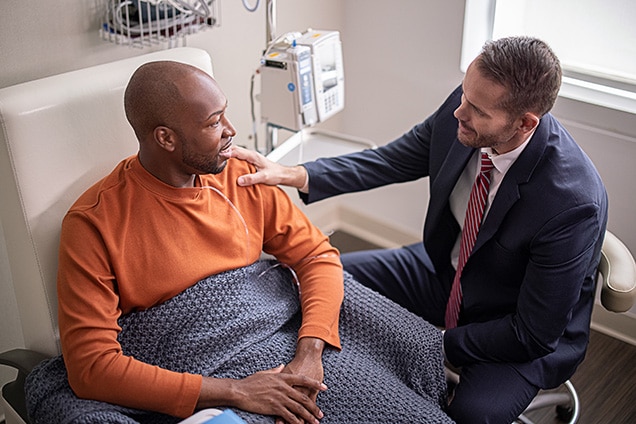
Researchers at Mayo Clinic have been studying the best ways to use chemotherapy for decades — leading the first clinical trial of adjuvant therapy, finding the best medicine combinations and adjusting treatments to reduce side effects. Through research like this, our teams are helping improve chemotherapy options for all people with colon cancer.
At Mayo Clinic, chemotherapy experts work alongside all the other members of your care team to make a treatment plan that meets all your needs. We work to understand what matters most to you, so you can make treatment decisions with confidence.
You can also contact our helpful scheduling teams by calling: