Marfan syndrome Symptoms and causes
Overview
Marfan syndrome is a genetic condition that affects the connective tissue in the body. Connective tissue helps support structures in the body, including organs, bones and blood vessels. Marfan syndrome most commonly affects the heart, eyes, blood vessels and bones
People with Marfan syndrome are often tall and thin. They may have long arms, legs, fingers and toes. Some people have only mild damage caused by Marfan syndrome, but others can have serious health issues. The most serious risk is damage to the aorta, the large blood vessel that carries blood from your heart to the rest of your body. If the aorta becomes weak or tears, the condition can become life-threatening.
Treatment usually includes medicines to keep your blood pressure low. This helps reduce the strain on your aorta. Regular checkups are important to keep track of whether the condition is worsening. Many people with Marfan syndrome eventually require preventive surgery to repair the aorta.
Symptoms
The symptoms of Marfan syndrome can be quite different from person to person, even among members of the same family. Changes in the chest wall and spine can cause shortness of breath and back pain. Severe nearsightedness is common. Changes to the heart and the aorta usually do not produce symptoms until they are advanced or until an emergency occurs.
Marfan syndrome features may include:
- Tall, thin body.
- Long arms, legs, fingers or toes.
- A chest that sticks out or sinks in.
- Crowded teeth and a high, arched roof of the mouth.
- Heart murmurs.
- Very poor eyesight or nearsightedness.
- A curved spine.
- Flat feet.
When to see a doctor
If you think that you or your child may have Marfan syndrome, talk with your healthcare professional or pediatrician. If your healthcare professional suspects the condition, you'll likely be referred to a specialist for further evaluation.
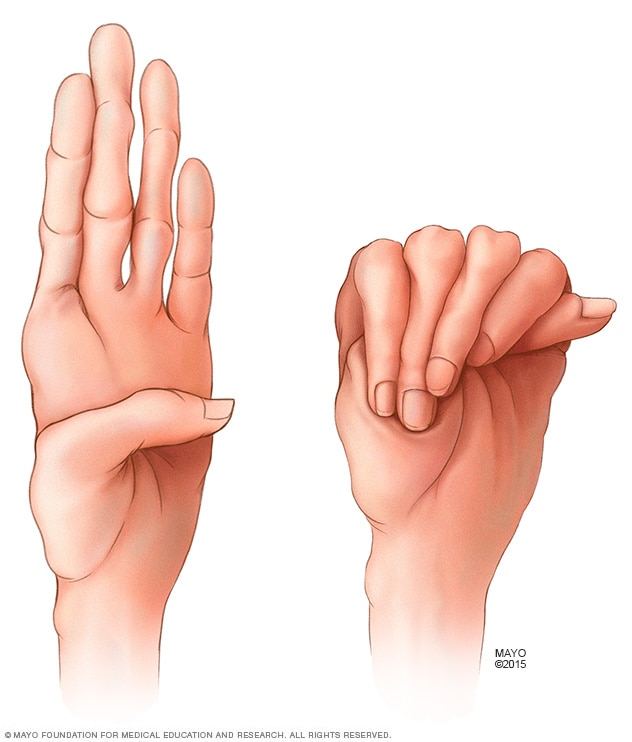
Finger length in Marfan syndrome
People who have Marfan syndrome typically have especially long fingers. It's common for their thumbs to extend far beyond the edge of their hands when they make a fist.
Causes
Marfan syndrome is a hereditary condition. This means it is passed from a parent to a child via an altered gene, also called a gene mutation. Marfan syndrome is caused by a change in the gene that affects how the body makes the protein fibrillin. This protein helps connective tissue stay strong and flexible.
Biological children of a parent with the altered gene have a 50-50 chance of inheriting the gene mutation. About 3 out of every 4 people with Marfan syndrome inherited it. Sometimes people are the first in their families to have the condition.
Risk factors
The biggest risk factor for Marfan syndrome is having a parent with the condition. Marfan syndrome affects people of all races, ethnicities and genders equally.
From Mayo Clinic to your inbox
Sign up for free and stay up to date on research advancements, health tips, current health topics, and expertise on managing health. Click here for an email preview.
Complications
Because Marfan syndrome can affect almost any part of your body, it may cause a wide variety of complications.
Cardiovascular complications
The most dangerous complications of Marfan syndrome involve the heart and blood vessels. Faulty connective tissue can weaken the large artery that arises from the heart and supplies blood to the body, called the aorta. Issues related to the heart and blood vessels may include:
- Aortic aneurysm. The pressure of blood leaving your heart can cause the wall of your aorta to bulge, like a weak spot in a tire. If you have Marfan syndrome, this weak spot is most likely to be at the aortic root, where the artery leaves your heart.
- Aortic dissection. The wall of the aorta is made up of layers. Dissection happens when a small tear in the innermost layer of the wall allows blood to squeeze between the inner and outer layers. This can cause severe pain in the chest or back. An aortic dissection weakens the vessel's structure and can result in a rupture, which may be fatal.
- Changes in valve structure. People who have Marfan syndrome can have weak tissue in their heart valves. This can stretch the valve tissue and change valve function. When heart valves don't work properly, the heart often must work harder to pump the blood the body needs. This can eventually lead to heart failure.
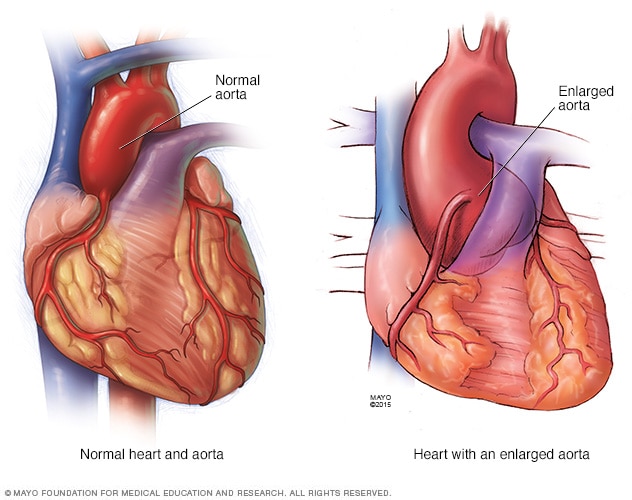
Aneurysm at aortic root
The pressure of blood leaving your heart can cause the wall of your aorta to bulge, like a weak spot in a tire. If you have Marfan syndrome, this is most likely to happen at the aortic root — where the artery leaves your heart.
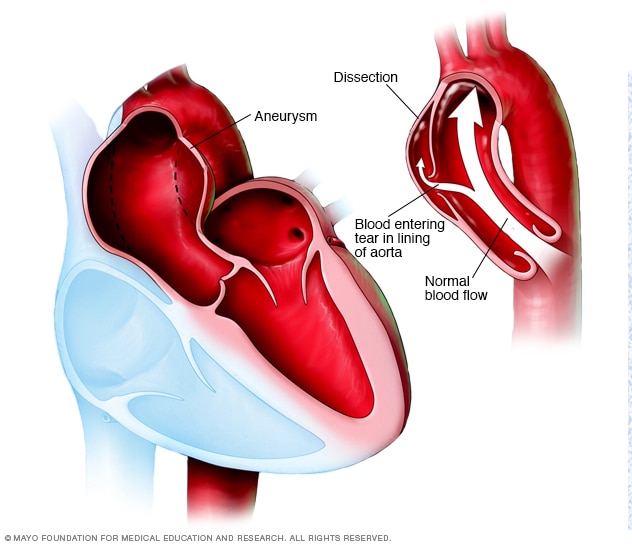
Aortic aneurysm and aortic dissection
An aortic aneurysm occurs when a weak spot in the wall of your aorta begins to bulge (left). This can occur anywhere in your aorta. Having an aneurysm increases the risk of an aortic dissection — a tear in the lining of the aorta, shown in the image on the right.
Eye complications
Eye complications may include:
- Lens dislocation. The focusing lens within your eye can move out of place if its supporting structures weaken. The medical term for this condition is ectopia lentis. It happens in more than half of the people who have Marfan syndrome.
- Retinal conditions. Marfan syndrome also increases the risk of a detachment or tear in the retina, the light-sensitive tissue that lines the back walls of your eyes.
- Early-onset glaucoma or cataracts. People who have Marfan syndrome tend to develop these eye conditions at a younger age. Glaucoma increases the pressure within the eye, which can damage the optic nerve. Cataracts are cloudy areas in the eye's lens. The lens is usually clear.
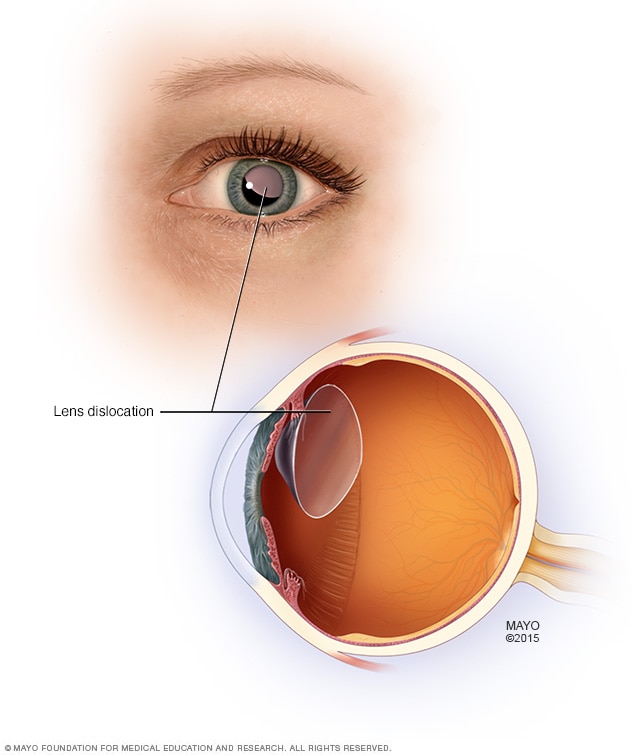
Lens dislocation
Some people who have Marfan syndrome may have dislocation of the lens of the eye.
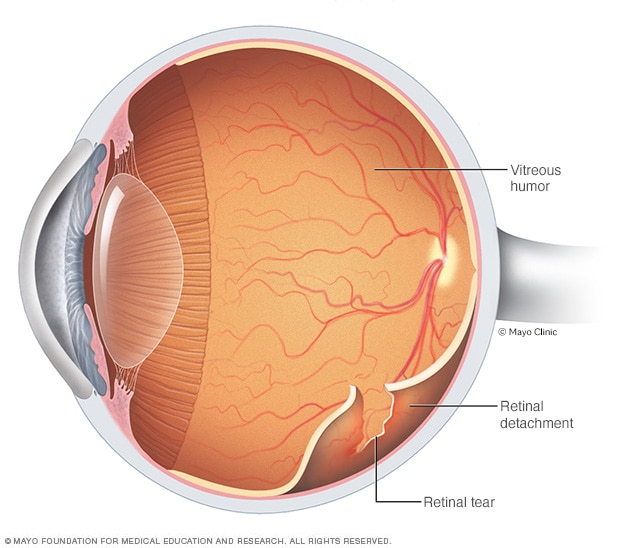
Retinal detachment
Retinal detachment describes an emergency in which a critical layer of eye tissue called the retina pulls away from the layer of blood vessels that provide it with oxygen and nutrients. The retina is at the back of the eye. Retinal detachment often comes with flashes and floaters in your vision.
Skeletal complications
Marfan syndrome increases the risk of curves in the spine that are not typical, such as scoliosis. Marfan syndrome also can interfere with the typical growth of the ribs. The breastbone can either protrude or appear sunken into the chest. Foot pain and low back pain also are common with Marfan syndrome.
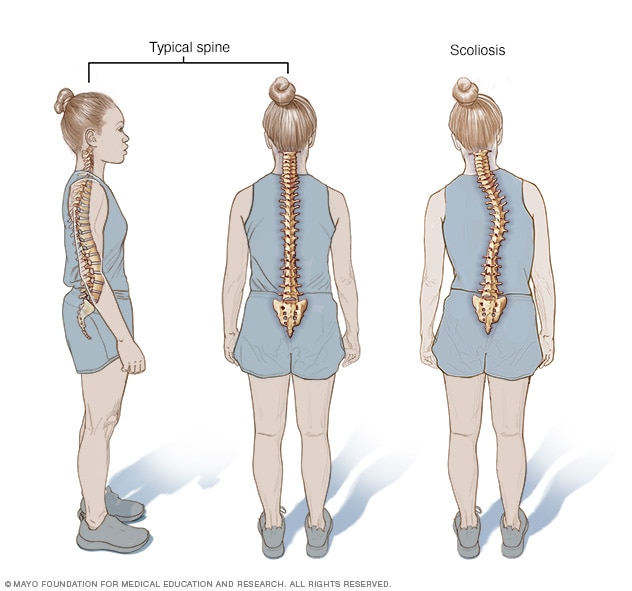
Scoliosis
Scoliosis is a sideways curvature of the spine. Viewed from behind, the spine should appear as a straight line from the base of the neck to the tailbone.
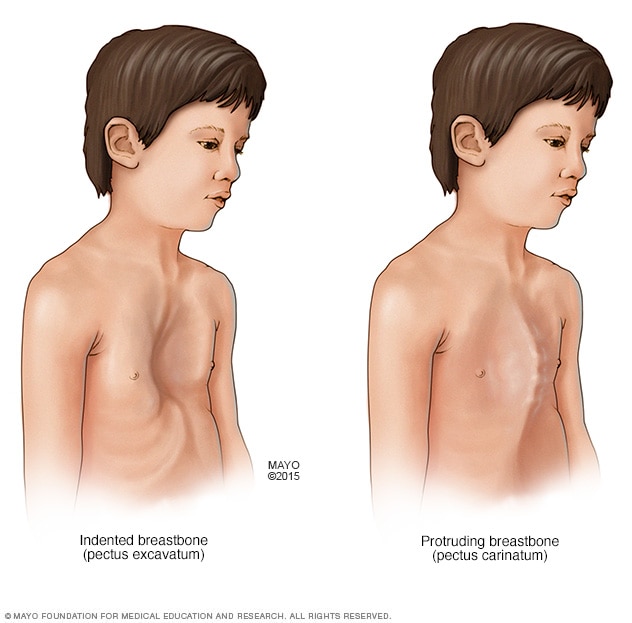
Chest changes
Marfan syndrome can interfere with the usual growth of the ribs. The breastbone can either protrude or appear sunken into the chest.
Complications of pregnancy
Marfan syndrome can weaken the walls of the aorta, the main artery that leaves the heart. During pregnancy, the heart pumps more blood than usual. This can put extra stress on the aorta, which increases the risk of a dissection or rupture, which can be fatal.
Top ranked in the U.S.
Mayo Clinic in Rochester, Minnesota, has been recognized as one of the top Cardiology & Heart Surgery hospitals in the nation by U.S. News & World Report.
CON-20155270
Mayo Clinic does not endorse companies or products. Advertising revenue supports our not-for-profit mission.
Advertising & Sponsorship
Mayo Clinic Press
Check out these best-sellers and special offers on books and newsletters from Mayo Clinic Press.
