Cervical cancer Symptoms and causes
Overview
Cervical cancer is a growth of cells that starts in the cervix. The cervix is the lower part of the uterus that connects to the vagina.
Various strains of the human papillomavirus, also called HPV, play a role in causing most cervical cancers. HPV is a common infection that's passed through sexual contact. When exposed to HPV, the body's immune system typically prevents the virus from doing harm. In a small percentage of people, however, the virus survives for years. This contributes to the process that causes some cervical cells to become cancer cells.
You can reduce your risk of developing cervical cancer by having screening tests and receiving a vaccine that protects against HPV infection.
When cervical cancer happens, it's often first treated with surgery to remove the cancer. Other treatments may include medicines to kill the cancer cells. Options might include chemotherapy and targeted therapy medicines. Radiation therapy with powerful energy beams also may be used. Sometimes treatment combines radiation with low-dose chemotherapy.
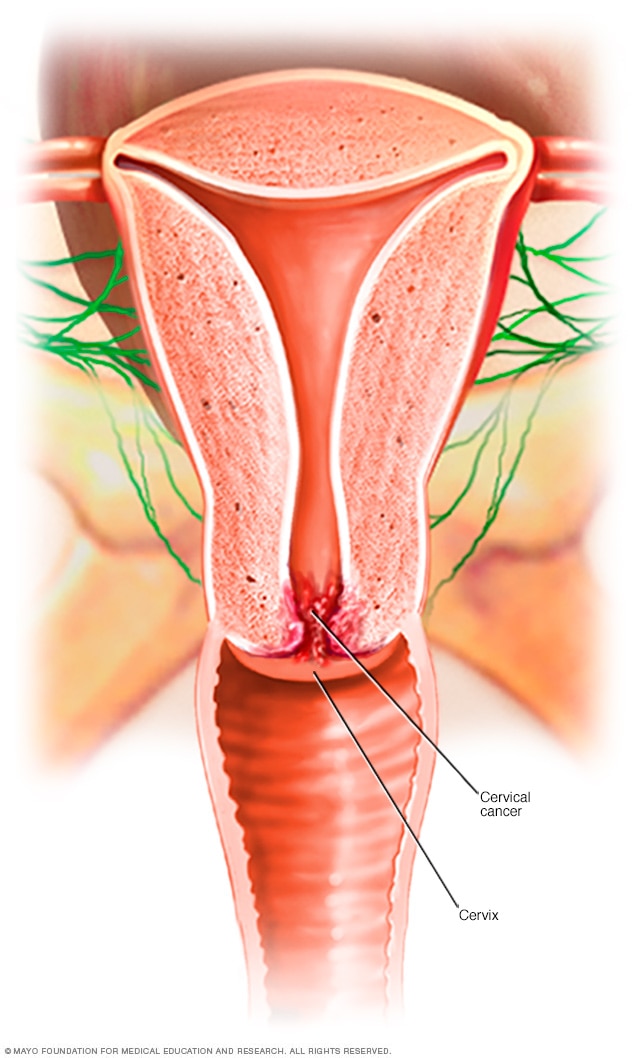
Cervical cancer
Cervical cancer begins in the cells of the cervix.
Symptoms
When it starts, cervical cancer might not cause symptoms. As it grows, cervical cancer might cause signs and symptoms, such as:
- Vaginal bleeding after intercourse, between periods or after menopause.
- Menstrual bleeding that is heavier and lasts longer than usual.
- Watery, bloody vaginal discharge that may be heavy and have a foul odor.
- Pelvic pain or pain during intercourse.
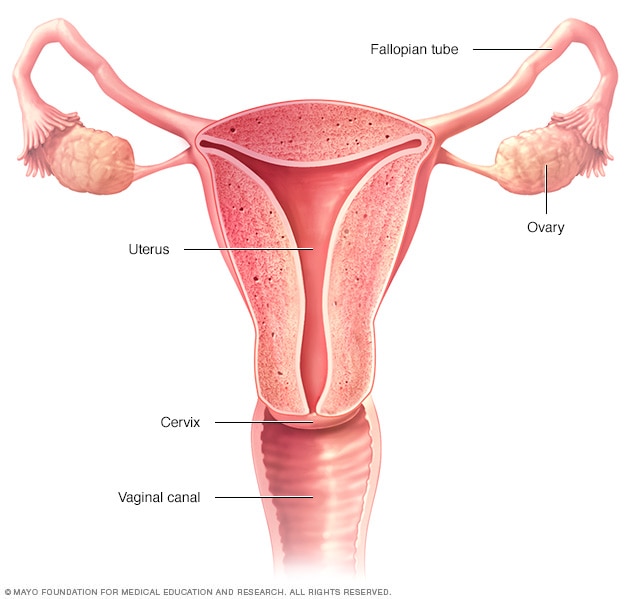
Female reproductive system
The ovaries, fallopian tubes, uterus, cervix and vagina, also called the vaginal canal, make up the female reproductive system.
When to see a doctor
Make an appointment with a doctor or other health care professional if you have any symptoms that worry you.
Causes
Cervical cancer begins when healthy cells in the cervix develop changes in their DNA. A cell's DNA contains the instructions that tell a cell what to do. The changes tell the cells to multiply quickly. The cells continue living when healthy cells would die as part of their natural life cycle. This causes too many cells. The cells might form a mass called a tumor. The cells can invade and destroy healthy body tissue. In time, the cells can break away and spread to other parts of the body.
Most cervical cancers are caused by HPV. HPV is a common virus that's passed through sexual contact. For most people, the virus never causes problems. It usually goes away on its own. For some, though, the virus can cause changes in the cells that may lead to cancer.
Types of cervical cancer
Cervical cancer is divided into types based on the type of cell in which the cancer begins. The main types of cervical cancer are:
- Squamous cell carcinoma. This type of cervical cancer begins in thin, flat cells, called squamous cells. The squamous cells line the outer part of the cervix. Most cervical cancers are squamous cell carcinomas.
- Adenocarcinoma. This type of cervical cancer begins in the column-shaped gland cells that line the cervical canal.
Sometimes, both types of cells are involved in cervical cancer. Very rarely, cancer occurs in other cells in the cervix.
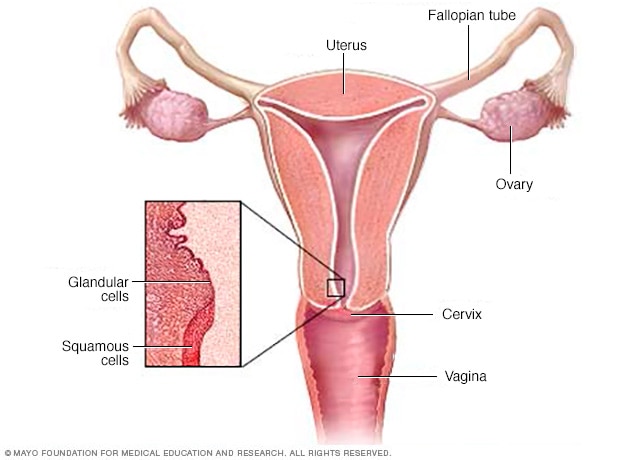
Where cervical cancer begins
Two types of cells line the surface of the cervix, and both can become cancerous. Glandular cells have a column-shaped appearance. Squamous cells are thin and flat. The boundary between the two types of cells is where most cervical cancers start.
Risk factors
Risk factors for cervical cancer include:
- Smoking tobacco. Smoking increases the risk of cervical cancer. When HPV infections happen in people who smoke, the infections tend to last longer and are less likely to go away. HPV causes most cervical cancers.
- Increasing number of sexual partners. The greater your number of sexual partners, and the greater your partner's number of sexual partners, the greater your chance of getting HPV.
- Early sexual activity. Having sex at an early age increases your risk of HPV.
- Other sexually transmitted infections. Having other sexually transmitted infections, also called STIs, increases the risk of HPV, which can lead to cervical cancer. Other STIs that increase the risk include herpes, chlamydia, gonorrhea, syphilis and HIV/AIDS.
- A weakened immune system. You may be more likely to develop cervical cancer if your immune system is weakened by another health condition and you have HPV.
- Exposure to miscarriage prevention medicine. If your parent took a medicine called diethylstilbestrol, also known as DES, while pregnant, your risk of cervical cancer might be increased. This medicine was used in the 1950s to prevent miscarriage. It's linked to a type of cervical cancer called clear cell adenocarcinoma.
From Mayo Clinic to your inbox
Sign up for free and stay up to date on research advancements, health tips, current health topics, and expertise on managing health. Click here for an email preview.
Prevention
To reduce your risk of cervical cancer:
- Ask your doctor about the HPV vaccine. Receiving a vaccination to prevent HPV infection may reduce your risk of cervical cancer and other HPV-related cancers. Ask your health care team if an HPV vaccine is right for you.
- Have routine Pap tests. Pap tests can detect precancerous conditions of the cervix. These conditions can be monitored or treated in order to prevent cervical cancer. Most medical organizations suggest beginning routine Pap tests at age 21 and repeating them every few years.
- Practice safe sex. Reduce your risk of cervical cancer by taking measures to prevent sexually transmitted infections. This may include using a condom every time you have sex and limiting the number of sexual partners you have.
- Don't smoke. If you don't smoke, don't start. If you do smoke, talk to a health care professional about ways to help you quit.






Top ranked in the U.S.
Mayo Clinic in Rochester, Minnesota, has been ranked among the best Obstetrics and Gynecology hospitals in the nation by U.S. News & World Report.
CON-20167638
Mayo Clinic does not endorse companies or products. Advertising revenue supports our not-for-profit mission.
Advertising & Sponsorship
Mayo Clinic Press
Check out these best-sellers and special offers on books and newsletters from Mayo Clinic Press.
