Spontaneous coronary artery dissection (SCAD) Symptoms and causes
Overview
Spontaneous coronary artery dissection is an emergency condition. It happens when a tear forms in a wall of a heart artery. The condition also is called SCAD.
SCAD can slow or block blood flow to the heart. This can lead to a heart attack, irregular heartbeats or sudden death.
SCAD most commonly affects women in their 40s and 50s. But it can happen at any age and can occur in men. People who have SCAD often don't have risk factors for heart disease, such as high blood pressure, high cholesterol or diabetes
SCAD can cause sudden death if it isn't treated right away. Get emergency medical help if you have heart attack symptoms — even if you think you aren't at risk of a heart attack
Symptoms
Symptoms of spontaneous coronary artery dissection, also called SCAD, can include:
- Chest pain or pressure.
- Pain in the arms, shoulders, back or jaw.
- Shortness of breath.
- Unusual sweating.
- Extreme tiredness.
- Upset stomach.
- A rapid heartbeat or fluttery feeling in the chest.
- Feeling dizzy.
When to see a doctor
Call 911 or your local emergency number if you have chest pain or think you might be having a heart attack. If you don't have access to emergency medical services, have someone drive you to the nearest hospital. Do not drive yourself unless you have no other choice.
Causes
The cause of spontaneous coronary artery dissection is not known.
Risk factors
Risk factors for spontaneous coronary artery dissection, also called SCAD, include:
- Being assigned female at birth. SCAD can happen to anyone. But it tends to affect women more than men.
- Childbirth. Some women with SCAD have recently given birth. Changes in hormones and stress on the blood vessels from pregnancy may play a role in SCAD. Usually, the condition seems to happen in the first few weeks after delivery. But SCAD also can occur during pregnancy.
- Extreme stress. SCAD can happen after extreme stress. This includes intense exercise and severe emotional distress.
- Fibromuscular dysplasia, also called FMD. This condition weakens the body's medium-sized arteries. FMD may lead to an aneurysm or rupture of an artery, called a dissection. Women are more likely to have FMD than are men.
- Genetic conditions affecting connective tissue. Ehlers-Danlos and Marfan syndromes have been found to occur in people who have had SCAD.
- Very high blood pressure. Severe high blood pressure can raise the risk of SCAD.
- Illicit drug use. Using cocaine or other illicit drugs might increase the risk of SCAD.
Complications
A possible complication of spontaneous coronary artery dissection, also called SCAD, is a heart attack. SCAD slows or stops blood flow through an artery. This weakens the heart and may lead to a heart attack. A heart attack from SCAD is different from a heart attack caused by clogged arteries, also called atherosclerosis.
In some people with SCAD, the inner and outer layers of the artery may split. Blood can collect between these layers. Pressure from the collection of blood can make SCAD worse.
Even with successful treatment, SCAD can happen more than once. It might happen soon after the first time or years later. People who have SCAD also may have a higher risk of other heart conditions, such as heart failure due to heart attack damage.
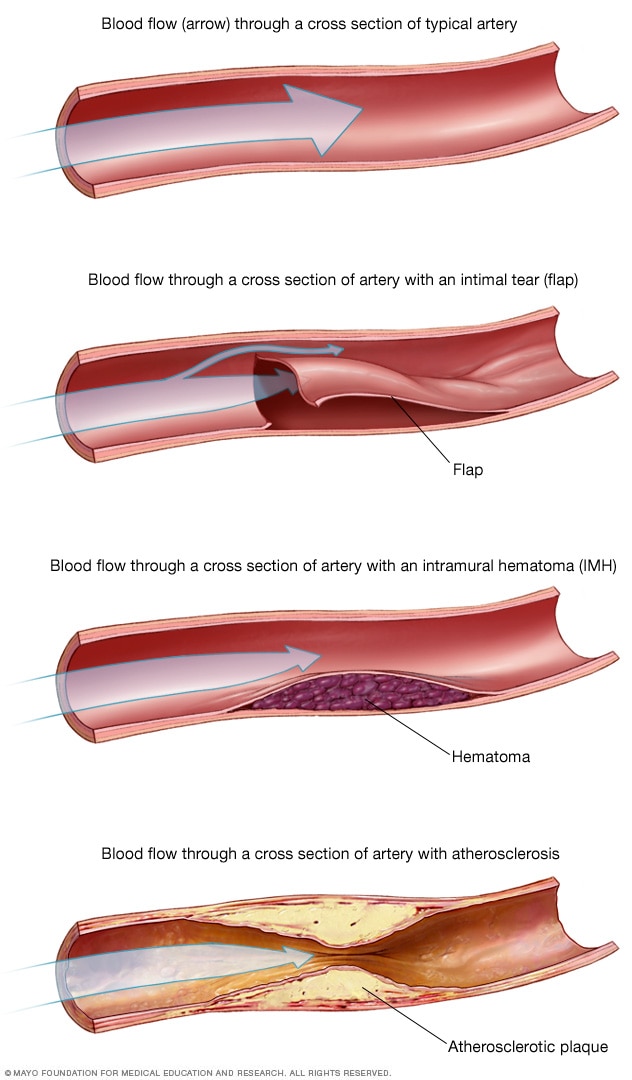
Blood flow in arteries in spontaneous coronary artery dissection (SCAD)
In spontaneous coronary artery dissection, also called SCAD, a tear forms in an artery in the heart. This can cause blood to pool in the area between the layers of the artery. SCAD can reduce or block blood flow through the artery, which can cause a heart attack. A heart attack as a result of SCAD is different from a heart attack caused by atherosclerosis.



Top ranked in the U.S.
Mayo Clinic in Rochester, Minnesota, has been recognized as one of the top Cardiology & Heart Surgery hospitals in the nation by U.S. News & World Report.
CON-20188640
Mayo Clinic does not endorse companies or products. Advertising revenue supports our not-for-profit mission.
Advertising & Sponsorship
Mayo Clinic Press
Check out these best-sellers and special offers on books and newsletters from Mayo Clinic Press.
