Overview
Regular urine color ranges from clear to pale yellow. But certain things can change the color.
Foods such as beets, blackberries and fava beans can turn urine pink or red, for example. And some medicines can give urine vivid tones, such as orange or greenish-blue.
An unusual urine color also can be a sign of a health problem. For instance, some urinary tract infections can turn urine milky white. Kidney stones, some cancers and other diseases sometimes make urine look red due to blood.
Products & Services
Symptoms
The regular color of urine varies. It depends on how much water you drink. Fluids dilute the yellow pigments in urine. So the more you drink, the clearer your urine looks. When you drink less, the yellow color becomes stronger.
But urine can turn colors far beyond what's typical, including:
- Red.
- Blue.
- Green.
- Orange.
- Dark brown.
- Cloudy white.
When to see a doctor
See your health care provider if you have:
- Blood in your urine. This is common in urinary tract infections and kidney stones. Those problems often cause pain. Painless bleeding might be a sign of a more serious problem, such as cancer.
- Dark or orange urine. This can be a sign that the liver isn't working correctly, especially if you also have pale stools and yellow skin and eyes.
Causes
Female urinary system
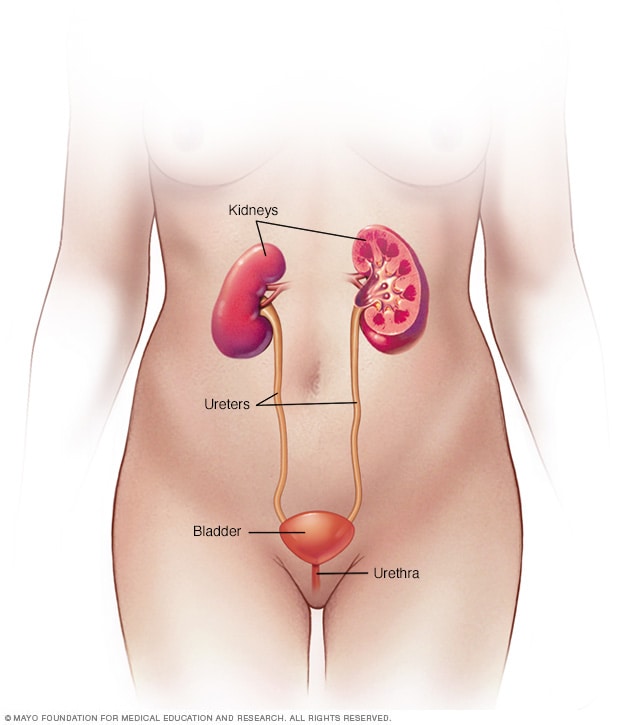
Female urinary system
The urinary system includes the kidneys, ureters, bladder and urethra. The urinary system removes waste from the body through urine. The kidneys sit toward the back of the upper belly. They filter waste and fluid from the blood and make urine. Urine moves from the kidneys to the bladder through narrow tubes called the ureters. The bladder stores urine until it's time to urinate. Urine leaves the body through a small tube called the urethra.
Male urinary system
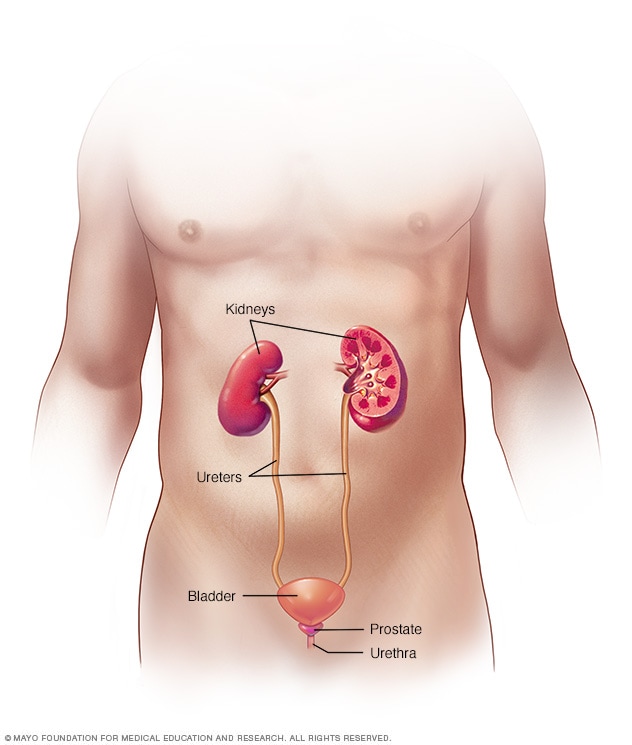
Male urinary system
The urinary system includes the kidneys, ureters, bladder and urethra. The urinary system removes waste from the body through urine. The kidneys sit toward the back of the upper abdomen. They filter waste and fluid from the blood and make urine. Urine moves from the kidneys through narrow tubes to the bladder. These tubes are called the ureters. The bladder stores urine until it's time to urinate. Urine leaves the body through a small tube called the urethra.
A change in urine color is often caused by certain medicines, foods or food dyes. Sometimes it's caused by a health problem.
Here are some unusual urine colors along with things that can cause them. Keep in mind that colors can look slightly different to different people. For instance, what looks red to you might look orange to someone else.
Red or pink urine
Red urine isn't always a sign of a serious health problem. Red or pink urine can be caused by:
- Blood. Health problems that can cause blood in the urine include an enlarged prostate, tumors that aren't cancer, and kidney stones and cysts. Some cancers can cause blood in urine too. Hard exercise, such as long-distance running, also can cause this bleeding.
- Foods. Beets, blackberries and rhubarb can turn urine red or pink.
- Medicines. A tuberculosis medicine called rifampin (Rifadin, Rimactane) can turn urine reddish-orange. So can a medicine for urinary tract pain called phenazopyridine (Pyridium). Constipation drugs that contain the medicine senna also can bring on this color change.
Orange urine
Orange urine can be caused by:
- Medicines. Phenazopyridine and some constipation medicines can turn urine orange. So can sulfasalazine (Azulfidine), a medicine that lessens swelling and irritation. Some chemotherapy medicines for cancer also can make urine look orange.
- Vitamins. Some vitamins, such as A and B-12, can turn urine orange or yellow-orange.
- Health problems. Orange urine can be a sign of a problem with the liver or bile duct, mainly if you also have light-colored stools. Dehydration also can make your urine look orange.
Blue or green urine
Blue or green urine can be caused by:
- Dyes. Some brightly colored food dyes can cause green urine. Dyes used for some kidney and bladder tests can turn urine blue.
-
Medicines. A medicine for depression called amitriptyline can make urine look greenish-blue. So can a treatment for ulcers and acid reflux called cimetidine (Tagamet HB). A water pill called triamterene (Dyrenium) also can turn urine greenish-blue.
Urine can turn green due to a medicine for pain and arthritis symptoms called indomethacin (Indocin, Tivorbex). Green urine also can be caused by propofol (Diprivan), a strong medicine that helps people sleep or relax before surgery.
- Health problems. A rare disease called familial benign hypercalcemia can cause children to have blue urine. Urinary tract infections caused by a certain type of bacteria can cause green urine.
Dark brown or cola-colored urine
Brown urine can be caused by:
- Food. Eating lots of fava beans, rhubarb or aloe can cause dark brown urine.
- Medicines. Some medicine that can darken urine are:
- Chloroquine and primaquine, which treat and prevent malaria.
- The antibiotics metronidazole (Flagyl, Metrocream, others) and nitrofurantoin (Furadantin, Macrobid, others).
- Constipation medicines that contain senna (Senokot, Ex-Lax, others).
- Methocarbamol (Robaxin), a muscle relaxer.
- The seizure medicine phenytoin (Dilantin, Phenytek).
- Medicines called statins that lower cholesterol.
- Health problems. Some liver and kidney disorders and some urinary tract infections can turn urine dark brown. So can bleeding inside the body called a hemorrhage. A group of illnesses that mainly affect the skin or the nervous system, called porphyria, also can cause brown urine.
- Extreme exercise. A muscle injury from extreme exercise can cause tea- or cola-colored urine. The injury can lead to kidney damage.
Cloudy or murky urine
Urinary tract infections and kidney stones can cause urine to look cloudy or murky.
Risk factors
A change in urine color that isn't due to foods or medicine could be caused by a health problem. Some things that put you at risk of health problems that can affect urine color are:
- Age. Tumors of the bladder and kidney, which can cause blood in the urine, are more common in older people. Men older than 50 sometimes have blood in the urine due to an enlarged prostate gland.
- Family history. If any of your blood relatives, such as a parent, sibling or grandparent, have kidney disease or kidney stones, you're more likely to get them too. Both kidney disease and kidney stones can cause blood in the urine.
- Hard exercise. Distance runners are most at risk. But anyone who exercises hard can have blood in the urine.
Oct. 11, 2025