Cutaneous B-cell lymphoma Symptoms and causes
Overview
Cutaneous B-cell lymphoma is a rare type of cancer that begins in the white blood cells. This cancer affects the skin.
Cutaneous B-cell lymphoma refers to B-cell lymphoma that is only in the skin. Cutaneous B-cell lymphoma gets its name from the fact that it affects one type of germ-fighting white blood cells called B cells. These cells also are called B lymphocytes.
Cutaneous B-cell lymphoma is a type of non-Hodgkin lymphoma. Another type of non-Hodgkin lymphoma that affects the skin is called cutaneous T-cell lymphoma. This type starts in cells called T lymphocytes. Cutaneous T-cell lymphoma is more common than cutaneous B-cell lymphoma.
Treatment for cutaneous B-cell lymphoma may include observation, radiation therapy and surgery to remove the cancer. Other treatment options may include skin-directed medicines, chemotherapy and immunotherapy. Cutaneous B-cell lymphoma may be curable. However, it often comes back, known as a relapse.
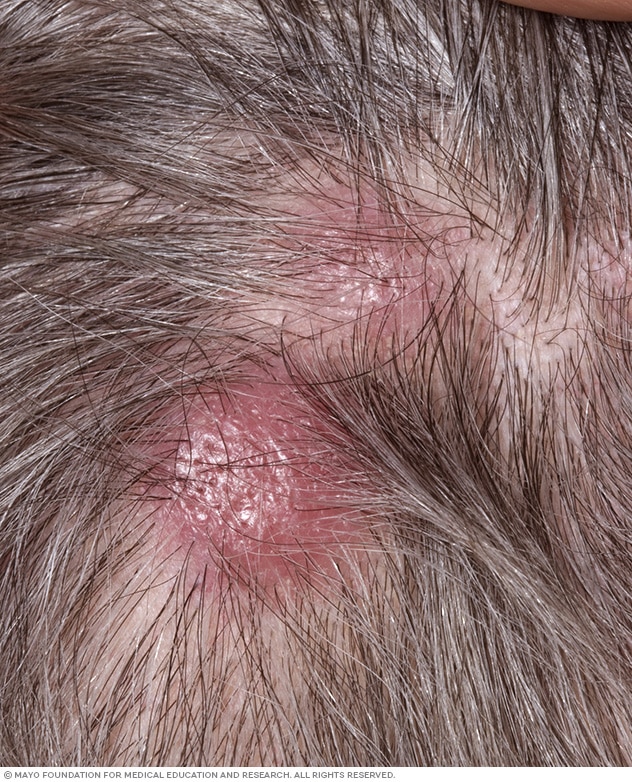
Cutaneous B-cell lymphoma
Cutaneous B-cell lymphoma is a cancer that starts in the white blood cells and attacks the skin. It appears mostly on the scalp, face, forehead and torso.
Types
The types of cutaneous B-cell lymphoma include:
- Primary cutaneous follicle center lymphoma. This is the most common type of cutaneous B-cell lymphoma. It appears mostly on the scalp, face, forehead and torso. Primary cutaneous follicle center lymphoma usually grows slowly and has an excellent prognosis.
- Primary cutaneous marginal zone B-cell lymphoma. This is the second most common type of cutaneous B-cell lymphoma. It appears mostly on the torso, arms and head. Primary cutaneous marginal zone B-cell lymphoma usually grows slowly and has an excellent prognosis. However, this type comes back in about half the people.
- Primary cutaneous diffuse large B-cell lymphoma, leg type. This is the rarest type of cutaneous B-cell lymphoma. It appears mostly on one or both legs but can be found elsewhere. Primary cutaneous diffuse large B-cell lymphoma, leg type usually grows fast and has a poor prognosis. This type has a high relapse rate and may spread beyond the skin when it comes back.
- Intravascular diffuse large B-cell lymphoma. This type is different from the other types of cutaneous B-cell lymphoma. It is not limited to the skin but forms in small blood vessels of the skin and elsewhere in the body. Because of this, it can affect any organ. The skin and central nervous system are the most common sites. When in the skin, it appears most often on the legs or torso. Some people may have a fever or have symptoms in the brain before having skin symptoms. Intravascular diffuse large B-cell lymphoma usually grows fast and has a poor prognosis.
Symptoms
Symptoms of cutaneous B-cell lymphoma depend on the type you have.
Primary cutaneous follicle center lymphoma
Symptoms of primary cutaneous follicle center lymphoma may include firm, painless bumps or lesions. They may appear red, pink or another color depending on your skin color. These bumps or lesions most often happen on the head, especially the scalp, the neck and the upper torso. You may have one bump or lesion or a few grouped together. These often grow slowly.
Primary cutaneous marginal zone B-cell lymphoma
Symptoms of primary cutaneous marginal zone B-cell lymphoma may include bumps or lesions that are often soft. They may appear red, purple or another color depending on your skin color. This type happens most often on the torso or upper arms. It is common to have multiple bumps at once.
Primary cutaneous diffuse large B-cell lymphoma, leg type
Symptoms of primary cutaneous diffuse large B-cell lymphoma, leg type may include nodules or tumors on one or both lower legs. These bumps may appear red, blue or another color depending on your skin color. This type tends to grow quickly and can spread beyond the skin more easily than other types. Symptoms of spread may include swollen lymph nodes, drenching night sweats, fever, fatigue and losing weight without trying.
Intravascular diffuse large B-cell lymphoma
Symptoms of intravascular diffuse large B-cell lymphoma are often different from other types of cutaneous B-cell lymphoma. This type may appear as a bump or patchy area of skin or look similar to spider veins. The skin may be hard. It also may look purple or another color depending on your skin color. This type is often aggressive and can appear on the torso or thighs. It also can involve the brain or other organs and cause symptoms such as confusion, weakness, fever and fatigue.
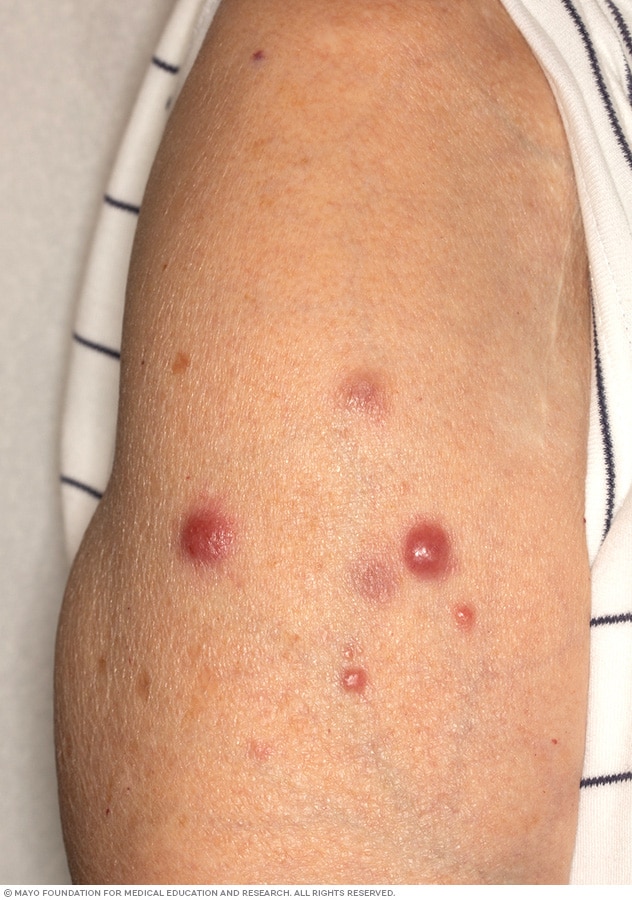
Cutaneous B-cell lymphoma on the arm
Cutaneous B-cell lymphoma often appears as firm, red or purple bumps or nodules on the skin. These spots may be grouped together and can slowly grow over time.
When to see a doctor
Make an appointment with a healthcare professional if you have any symptoms that worry you.
Causes
It's not clear what causes cutaneous B-cell lymphoma. Cancer happens when cells develop changes in their DNA. A cell's DNA holds the instructions that tell the cell what to do. In healthy cells, the DNA gives instructions to grow and multiply at a set rate. The instructions tell the cells to die at a set time. In cancer cells, the DNA changes give different instructions. The changes tell the cancer cells to make many more cells quickly. Cancer cells can keep living when healthy cells would die. This causes too many cells. In cutaneous B-cell lymphoma, the cancer cells build up in the skin. The cancer cells rarely spread to other areas of the body.
Cutaneous B-cell lymphoma gets its name from the kind of cell that makes up this cancer. This cancer starts in germ-fighting white blood cells called lymphocytes. Cutaneous B-cell lymphoma affects specific lymphocytes called B lymphocytes.
Risk factors
Risk factors for cutaneous B-cell lymphoma include:
- Older age. Cutaneous B-cell lymphoma can happen at any age. However, it is most common in adults age 50 and older.
- Weakened immune system. There may be a higher risk of cutaneous B-cell lymphoma if the body's germ-fighting immune system is weakened by medicine or illness. People with weakened immune systems might include those taking medicine to control the immune system, such as after an organ transplant. Certain health conditions also can weaken the immune system, including human immunodeficiency virus (HIV) infection.
- Bacteria transmitted by ticks. Some ticks can transmit bacteria called Borrelia burgdorferi. Primary cutaneous marginal zone B-cell lymphoma has been linked to Borrelia burgdorferi infection in some European countries.
- Exposure to foreign substances in the skin. Primary cutaneous marginal zone B-cell lymphoma has been linked to tattoo ink and certain injections. This may be from the ongoing skin irritation.
There is no way to prevent cutaneous B-cell lymphoma.
Complications
Cutaneous B-cell lymphoma may cause complications such as:
- Relapse. Even after successful treatment, cutaneous B-cell lymphoma may come back. This is called a relapse. The risk of relapse is highest in people with primary cutaneous diffuse large B-cell lymphoma, leg type.
- Spread beyond the skin. Primary cutaneous diffuse large B-cell lymphoma, leg type may spread to areas beyond the skin. It may spread to the lymph nodes, bone marrow, or organs such as the liver or lungs. Cancer that spreads beyond the skin is called systemic lymphoma.
Living with cutaneous b-cell lymphoma?
Blood Cancers & Disorders Discussions
Mon, Oct 26, 2026
Fri, Oct 23, 2026
Thu, Oct 22, 2026
CON-20306945
Mayo Clinic does not endorse companies or products. Advertising revenue supports our not-for-profit mission.
Advertising & Sponsorship
Mayo Clinic Press
Check out these best-sellers and special offers on books and newsletters from Mayo Clinic Press.
