TMJ disorders Symptoms and causes
Overview
The temporomandibular (tem-puh-roe-man-DIB-u-lur) joint, also called TMJ, acts like a sliding hinge. It connects the jawbone to the skull. There is one joint on each side of the jaw. TMJ disorders — a type of temporomandibular disorder or TMD — can cause pain in the jaw joint and in the muscles that control jaw movement.
The exact cause of TMJ disorder is often hard to determine. The pain may be due to a mix of factors, including habits such as teeth clenching, gum chewing and nail biting; stress; and painful conditions that occur along with TMJ disorder such as fibromyalgia, osteoarthritis or jaw injury. The habit of teeth clenching or grinding also is known as bruxism.
Most of the time, the pain and discomfort related to TMJ disorders lasts for only a limited time. Self-managed home care, physical therapy for the jaw and the use of a mouth guard can be effective in treating symptoms of TMJ disorder. Surgery is usually a last resort after conservative measures have failed. But surgical treatments may help some people with TMJ disorders.
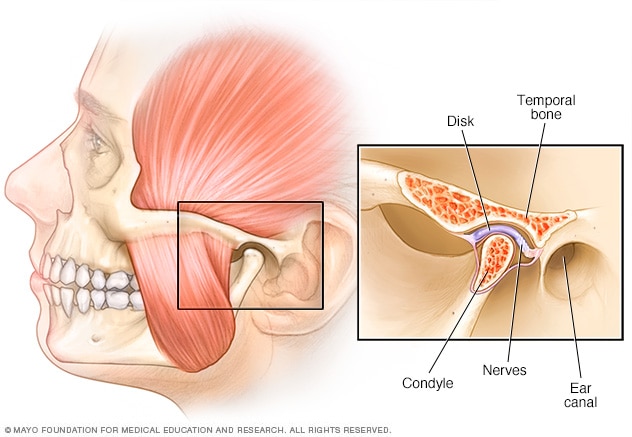
Temporomandibular joint
TMJ disorders affect the temporomandibular joint, located on each side of your head in front of your ears. A soft cartilage disk acts as a cushion between the bones of the joint, so the joint can move smoothly.
Symptoms
Symptoms of TMJ disorders may include:
- Pain or tenderness in the jaw.
- Pain in one or both temporomandibular joints.
- Aching pain in and around the ear.
- Having a hard time chewing or pain while chewing.
- Aching facial pain.
- Locking of the joint, making it hard to open or close your mouth.
- Headache.
- Neck pain.
- Eye pain.
- Tooth pain that occurs along with jaw tenderness.
TMJ disorders also can cause a clicking sound or grating sensation when you open your mouth or chew. But if there's no pain or limitation of movement related to your jaw clicking, it's likely that you won't need treatment.
When to see a doctor
Seek medical attention if you have constant pain or tenderness in your jaw that occurs suddenly or during jaw movements or if you can't open or close your jaw completely. Your dentist, TMJ specialist or other healthcare professional can discuss possible causes and treatments.
Causes
The temporomandibular joint combines a hinge action with sliding motions. The parts of the bones that work together in the joint are covered with cartilage and separated by a small shock-absorbing disk. This disk usually keeps the movement smooth.
Painful TMJ disorders can happen if:
- The disk erodes or moves out of its proper relationship between the ball and socket of the joint.
- Sprain or strain occurs in the ligaments or soft tissues associated with TMJ disorders.
- Arthritis damages the joint's cartilage.
- A blow or another impact damages the joint.
- Jaw muscles are associated with TMJ spasms.
Many times, the cause of TMJ disorder has a variety of causes and is hard to identify.
Risk factors
Factors that may raise the risk of getting TMJ disorders include:
- Different types of arthritis, such as rheumatoid arthritis or osteoarthritis.
- Jaw injury.
- Habits such as gum chewing, nail biting, and grinding or clenching of teeth.
- Certain connective tissue diseases.
- Stress, post-traumatic stress disorder, anxiety or depression.
- Conditions such as fibromyalgia, ankylosing spondylitis and sleep disturbances.
- Smoking.
From Mayo Clinic to your inbox
Sign up for free and stay up to date on research advancements, health tips, current health topics, and expertise on managing health. Click here for an email preview.
CON-20155315
Mayo Clinic does not endorse companies or products. Advertising revenue supports our not-for-profit mission.
Advertising & Sponsorship
Mayo Clinic Press
Check out these best-sellers and special offers on books and newsletters from Mayo Clinic Press.
