概述
Shone syndrome is a rare heart condition that's present at birth. That means it's a congenital heart defect. In this condition, there are changes in shape and structure on the left side of the heart.
The changes to the left side of the heart can cause narrowing that reduces or blocks the flow of blood to the body. For example, congenital changes may affect the aorta, which is the body's main blood vessel. The changes also may affect the valves and chambers on the left side of the heart.
Symptoms of Shone syndrome, such as trouble breathing or shortness of breath, happen when blood flow is reduced. But symptoms can be mild. Some people with Shone syndrome don't know they have the condition until later in life.
Many people with Shone syndrome do well after treatment. But repeat treatments are often needed. Adults with congenital heart disease such as Shone syndrome need regular health checkups for life to watch for changes in the heart's health.
症状
Symptoms of Shone syndrome depend on where the changes occur in the heart and how severe they are. Some babies have serious symptoms soon after birth. Some children have mild symptoms that become more noticeable as they grow. Other people don't notice symptoms until later in life.
Symptoms in babies and young children
Narrowing of structures in the heart makes it hard for the heart to pump enough blood. Signs and symptoms may include:
- Trouble breathing.
- Trouble feeding, especially when trouble breathing makes feeding hard.
- Poor weight gain.
- Heavy sweating.
- Changes in the color of the skin, lips and fingernails. The changes may look blue or gray. They may look different depending on skin color.
A baby's symptoms can sometimes seem to come mainly from one heart condition, such as a narrowing in the aorta called coarctation of the aorta. Other areas of narrowing may become more apparent later or after the first narrowed area is treated.
Symptoms in older children and adults
People who had surgery as children for Shone syndrome can develop symptoms again if a repaired area narrows over time. In some people who have been treated for one area of blockage, another area of narrowing or blockage may become more noticeable. Symptoms in older children and adults may include:
- Shortness of breath.
- Swelling in the legs, ankles and feet.
- Tiredness with even small amounts of activity.
- A fast, pounding or irregular heartbeat.
When to seek care
Serious congenital heart defects are often diagnosed before or soon after a child is born. If you think that your baby has symptoms of a heart condition, call your child's healthcare professional.
Call the care team if a person with Shone syndrome develops:
- New or worsening shortness of breath.
- Reduced physical activity or ability to exercise.
- Racing heartbeat.
- Swelling.
- Changes in usual health.
病因
心腔和瓣膜
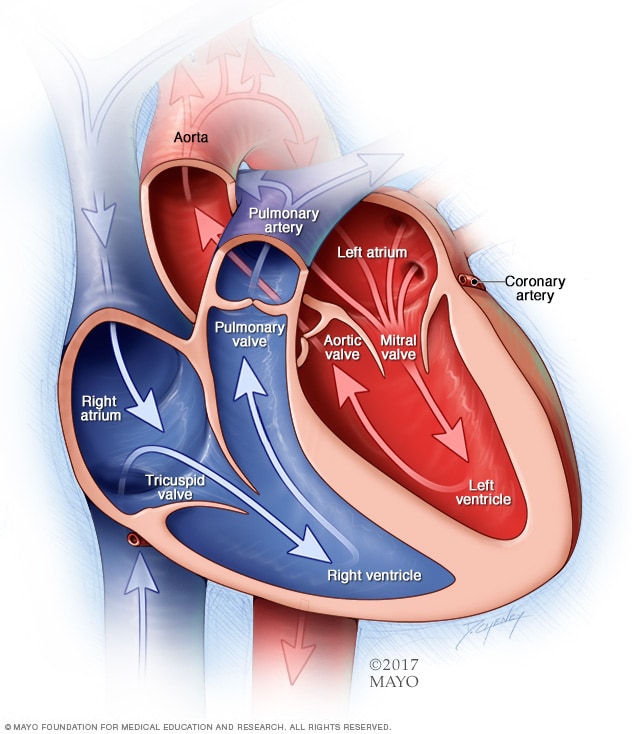
心腔和瓣膜
正常心脏有两个上心腔和两个下心腔。上心腔(即右心房和左心房)用于接收输入的血液。下心腔(即肌肉更多的左右心室)用于将血液泵出心脏。心脏瓣膜使血液流向正确方向,是心腔开口的闸门。
During the first six weeks of pregnancy, the heart begins to form and starts to beat. The major blood vessels that go to and from the heart also begin to form during this critical time.
At this point in development, congenital heart defects may begin to form. Researchers are not clear what causes Shone syndrome or why the heart changes happen. Lower blood flow through the developing left side of the heart may affect the growth of parts of the heart on the same side. But more research is needed.
Shone syndrome may involve:
- The body's main artery, called the aorta.
- The heart valves on the left side of the heart, called the aortic and mitral valves.
- The upper left heart chamber, called the left atrium.
- The lower left heart chamber, called the left ventricle.
In Shone syndrome, changes to parts of the left side of the heart reduce or block the flow of blood through the heart and to the body. These individual changes can happen by themselves. But when a few of them happen together, it is often called Shone syndrome. Several types of changes may occur.
Mitral stenosis
The mitral valve allows blood to flow from the upper left chamber of the heart to the lower left chamber of the heart. Stenosis means that there is narrowing or a blockage that makes it hard for blood to flow across the mitral valve. Stenosis can be above the valve or at the level of the valve. It may be caused by one of the following:
- Supravalvar mitral ring. An extra ring of tissue can narrow the opening above the mitral valve. It can block blood flow into the lower left chamber of the heart.
- Parachute mitral valve. The structures supporting the mitral valve are formed differently. This can make it harder for the valve to open fully and for blood to enter the lower left heart chamber.
Aortic stenosis
The aortic valve allows blood to flow from the lower left chamber of the heart to the aorta. Stenosis means that there is narrowing or blockage that makes it hard for blood to flow across the area around the aortic valve. Narrowing can be above the valve, called supravalvar aortic stenosis. More often, narrowing happens below the valve or at the level of the valve. This is caused by one of the following:
- Subaortic stenosis. There is a narrowing or ridge of tissue below the aortic valve. It blocks blood flow from the lower left heart chamber to the aorta.
- Aortic valve stenosis. The opening between the lower left chamber of the heart and the aorta is smaller than usual. This restricts blood flow through the aortic valve. Sometimes, this happens when the aortic valve has two flaps of tissue, called cusps, instead of the usual three. This condition is called a bicuspid aortic valve.
Coarctation of the aorta
Coarctation of the aorta is a narrowing of part of the aorta. The condition forces the heart to work harder to pump blood. It often raises blood pressure in the arms and head.
A person does not need to have every one of these heart changes to have Shone syndrome.
风险因素
Shone syndrome happens from changes that occur early in pregnancy as the baby's heart develops. But because the condition affects very few people, the risk factors and causes are hard to study. Shone syndrome may run in families.
并发症
Shone syndrome can cause complications throughout life, even after treatment.
Possible complications include:
- Narrowing that comes back or gets worse. This can involve the aorta, the area below the aortic valve, or the mitral valve. Even if one of these narrowed parts was fixed with surgery, it can become narrowed again.
- Heart failure. Depending on how narrow the affected parts of the heart become, the heart may have trouble pumping enough blood to meet the body's needs. When the heart struggles to pump enough blood, it is called heart failure.
- Pulmonary hypertension. High pressure in the left side of the heart can raise pressure in the blood vessels of the lungs, especially when blood flow through the mitral valve is blocked. High pressure in the blood vessels of the lungs is called pulmonary hypertension.
- Irregular heartbeats, called arrhythmias. This may happen because the heart chambers become strained over time. High pressure in the lungs can put extra stress on the heart. Also, scar tissue from heart surgery can disrupt the heart's electrical signals. These changes can cause the heart to beat too fast, too slow or irregularly.
Regular heart care can help find these changes early. People with Shone syndrome need regular health checkups for life.
Oct. 01, 2026