Diagnósticos
Si los profesionales de atención médica creen que puede que tengas un accidente cerebrovascular en el momento, todo se pone en marcha rápidamente una vez que llegues al hospital. El primer objetivo es determinar qué tipo de accidente cerebrovascular tienes. Los profesionales de atención médica también necesitan descartar otras causas posibles de tus síntomas, como un tumor cerebral o una reacción a un medicamento.
Las pruebas que se usan para diagnosticar un accidente cerebrovascular embólico pueden incluir las siguientes:
- Un examen físico y análisis de sangre. Un profesional de atención médica te pregunta cuándo comenzaron los síntomas y hará varios estudios. Pueden incluir escuchar el corazón y revisar la presión arterial. El examen neurológico sirve para ver cómo un posible accidente cerebrovascular puede estar afectando el sistema nervioso. También es probable que deban hacerte análisis para comprobar el tiempo de coagulación sanguínea y si los niveles de glucosa en la sangre son altos o bajos. Pueden realizarte este tipo de pruebas para comprobar si tienes una infección.
- Tomografía computarizada. Una tomografía computarizada usa una serie de radiografías para crear una imagen detallada del cerebro. Una tomografía computarizada puede mostrar sangrado en el cerebro, un accidente cerebrovascular isquémico, un tumor u otras afecciones. Es probable que te inyecten una sustancia de contraste en el torrente sanguíneo para observar los vasos sanguíneos del cuello y el cerebro con más detalle. A este tipo de prueba se la denomina angiografía por tomografía computarizada. Una exploración pulmonar de perfusión por tomografía computarizada es una prueba que mide el flujo sanguíneo en el cerebro.
- Resonancia magnética. Una resonancia magnética usa potentes ondas de radio y un campo magnético para crear una vista detallada del cerebro. La prueba puede detectar tejido cerebral dañado por un accidente cerebrovascular isquémico. En algunos casos, se inyecta una sustancia de contraste en un vaso sanguíneo para visualizar las arterias y las venas, y para resaltar el flujo sanguíneo. A esta prueba se la denomina angiografía por resonancia magnética o venografía por resonancia magnética. Una resonancia magnética con perfusión es una prueba mide el flujo sanguíneo en el cerebro.
- Ecografía de la carótida. En esta prueba, las ondas sonoras crean imágenes detalladas del interior de las arterias carótidas en el cuello. La ecografía de la carótida muestra la acumulación de depósitos de grasa, denominados placas, y el flujo sanguíneo en las arterias carótidas.
- Angiografía cerebral. Esta prueba es poco común, pero proporciona una visión detallada de las arterias del cerebro y del cuello. Se introduce un catéter, que es una sonda fina y flexible, mediante una pequeña incisión que se suele hacer en la ingle. El catéter se introduce a través de las arterias principales hasta llegar a la carótida o arteria vertebral en el cuello. Luego, se inyecta una sustancia de contraste en los vasos sanguíneos para ver las arterias mediante imágenes por rayos X.
- Ecocardiograma. Un ecocardiograma utiliza ondas sonoras para crear imágenes detalladas del corazón. Mediante esta prueba, es posible encontrar una fuente de coágulos en el corazón que puede haberse desplazado hasta el cerebro y haber ocasionado un accidente cerebrovascular.
- Vigilancia del ritmo cardíaco. Un electrocardiograma (o electrocardiografía) puede ayudar a encontrar la fibrilación auricular u otra afección del ritmo cardíaco que pueda haber causado un émbolo. Algunas personas pueden requerir una vigilancia más prolongada del ritmo cardíaco después de la primera evaluación, por ejemplo, si el accidente cerebrovascular parece ser embólico, pero la causa no es clara. Puede incluir usar un monitor Holter, un monitor cardíaco externo u otro dispositivo. O bien, se puede implantar un dispositivo, como un registrador implantable de bucle, debajo de la piel durante un procedimiento quirúrgico menor.
Accidente cerebrovascular embólico de origen indeterminado
A veces, las pruebas sugieren que la causa de un accidente cerebrovascular fue un émbolo, pero el origen no es claro. Puede que escuches un diagnóstico de accidente cerebrovascular embólico de origen indeterminado.
Para que un accidente cerebrovascular se identifique como un accidente cerebrovascular embólico de origen indeterminado, los profesionales de atención médica deben usar imágenes del cerebro y de los vasos sanguíneos, además de pruebas del corazón, para lo siguiente:
- Descartar un tipo pequeño y profundo de accidente cerebrovascular relacionado con los vasos sanguíneos pequeños en el cerebro
- Descartar afecciones cardíacas importantes que puedan causar embolia
- Determinar que la arteria que irriga la zona cerebral afectada no se haya estrechado en un 50 % o más
También puede que escuches el término accidente cerebrovascular criptogénico. Es un término amplio para cualquier accidente cerebrovascular isquémico cuya causa se desconoce incluso después de las pruebas habituales.
Más información
Tratamientos
El tratamiento para un accidente cerebrovascular embólico se debe administrar de inmediato para reducir la posibilidad de daño cerebral y otras complicaciones. El primer objetivo es restaurar el flujo sanguíneo al cerebro lo antes posible. Esto se puede hacer con lo siguiente:
-
Medicamento intravenoso de emergencia para disolver coágulos. Un medicamento intravenoso que pueda disolver un coágulo se debe inyectar dentro de las 4 horas y media desde el momento en que aparecieron los síntomas o desde la última vez que se supo que la persona estaba bien. Cuanto antes se administre el medicamento, mejor. El tratamiento rápido mejora las posibilidades de supervivencia y puede reducir las complicaciones.
Una inyección intravenosa del activador del plasminógeno tisular recombinante es el tratamiento de referencia para un accidente cerebrovascular isquémico. Por lo general, se aplica una inyección del activador del plasminógeno tisular en una vena del brazo dentro de las primeras 4 horas y media después del inicio de los síntomas del accidente cerebrovascular.
Este medicamento restablece el flujo de sangre mediante la disolución del coágulo sanguíneo que causó el accidente cerebrovascular. Eliminar rápidamente la causa del accidente cerebrovascular puede ayudar a que las personas logren una recuperación más completa. El profesional de atención médica considerará ciertos riesgos, como la posibilidad de sangrado cerebral, a fin de determinar si el activador del plasminógeno tisular debe formar parte de tu plan de tratamiento.
-
Trombectomía mecánica, que es quitar el coágulo con un dispositivo de recuperación de coágulos. Un dispositivo conectado a un catéter puede extraer directamente el coágulo del vaso sanguíneo obstruido del cerebro. Este procedimiento es particularmente útil para las personas con coágulos grandes que no se pueden disolver por completo con el activador del plasminógeno tisular. A menudo, se realiza en combinación con la inyección del activador del plasminógeno tisular. Este procedimiento puede ayudar a mejorar los resultados y a reducir la discapacidad a largo plazo. Debe hacerse lo antes posible. En algunas personas, se puede aplicar hasta 24 horas después de la última vez que se supo que la persona estaba bien.
El margen de tiempo en el que se pueden usar estos procedimientos se ha ido ampliando debido a la nueva tecnología de diagnóstico por imágenes. Los estudios por imágenes con perfusión realizados con una tomografía computarizada o una resonancia magnética ayudan a determinar si una persona se beneficiaría con una trombectomía. En algunas personas, se puede aplicar hasta 24 horas después de la última vez que se supo que la persona estaba bien.
Otros tratamientos
Los profesionales de atención médica pueden sugerir otros tratamientos en función de la causa del accidente cerebrovascular embólico. Estos tratamientos pueden ayudar a disminuir el riesgo para otro accidente cerebrovascular.
- Endarterectomía carotídea. Las arterias carótidas son los vasos sanguíneos que corren a cada lado del cuello y que suministran sangre al cerebro. Esta cirugía quita la placa que obstruye una arteria carótida y puede reducir el riesgo para otro accidente cerebrovascular. Una endarterectomía carotídea también implica riesgos, en especial, para las personas con enfermedades cardíacas u otras afecciones médicas.
- Angioplastia y estents. En una angioplastia, el cirujano introduce un catéter en las arterias carótidas a través de una arteria en la ingle. Luego, se infla un globo para expandir la arteria estrechada. A continuación, puede insertarse un estent para mantener la arteria abierta.
- Medicamentos y cambios en el estilo de vida que pueden ayudar a prevenir un accidente cerebrovascular. Después de una fase de emergencia, se pueden recomendar medicamentos y cambios en el estilo de vida para prevenir otro accidente cerebrovascular. Pueden diferir según la causa del accidente cerebrovascular embólico. Algunas personas necesitan medicamentos antiplaquetarios o anticoagulantes y cambios en el estilo de vida que ayuden a reducir el riesgo para coágulos. Otras personas pueden necesitar medicamentos y cambios en el estilo de vida para controlar afecciones, como presión arterial alta, que aumentan el riesgo para un accidente cerebrovascular.
- Cierre del apéndice auricular izquierdo. Este procedimiento puede ser una opción para algunas personas con fibrilación auricular que no pueden tomar anticoagulantes debido a riesgos para sangrado. El procedimiento cierra un saco pequeño en la cavidad superior izquierda del corazón. Este saco o apéndice es el lugar en el que se forman la mayoría de los coágulos relacionados con la fibrilación auricular. Durante el procedimiento, el médico introduce con cuidado un dispositivo de cierre a través de un catéter hasta el saco. Una vez que el dispositivo está en su lugar, se retira el catéter. El dispositivo permanece colocado de manera permanente.
- Cierre del agujero oval persistente. Si tienes un agujero oval persistente, que es una abertura en el corazón, y tuviste un accidente cerebrovascular que se cree que su causa fue dicho agujero, puede que necesites un procedimiento para cerrarlo. El procedimiento se puede hacer mediante la inserción de un dispositivo de cierre en el agujero a través de una sonda delgada y flexible que se inserta en la ingle y se guía hasta el corazón. O bien, se puede cerrar con suturas durante una cirugía que se hace a través de una incisión pequeña, a veces mediante técnicas robóticas. Los agujeros ovales persistentes son comunes. Por lo tanto, en la mayoría de las personas con un agujero oval persistente y un accidente cerebrovascular, se detecta otra causa del accidente cerebrovascular. Dichas personas no requieren el cierre del agujero oval persistente.
En el caso de la embolia grasa, el tratamiento se hace principalmente para reducir los síntomas y ofrecer atención médica de apoyo, como controlar la presión arterial o usar un respirador para poder respirar.
En el caso de la embolia gaseosa, el tratamiento suele incluir oxigenoterapia hiperbárica y de alto flujo a corto plazo. Estos tratamientos pueden mejorar los resultados si se administran poco después de la embolia gaseosa.
Recuperación y rehabilitación tras un accidente cerebrovascular
Conexiones de los hemisferios cerebrales
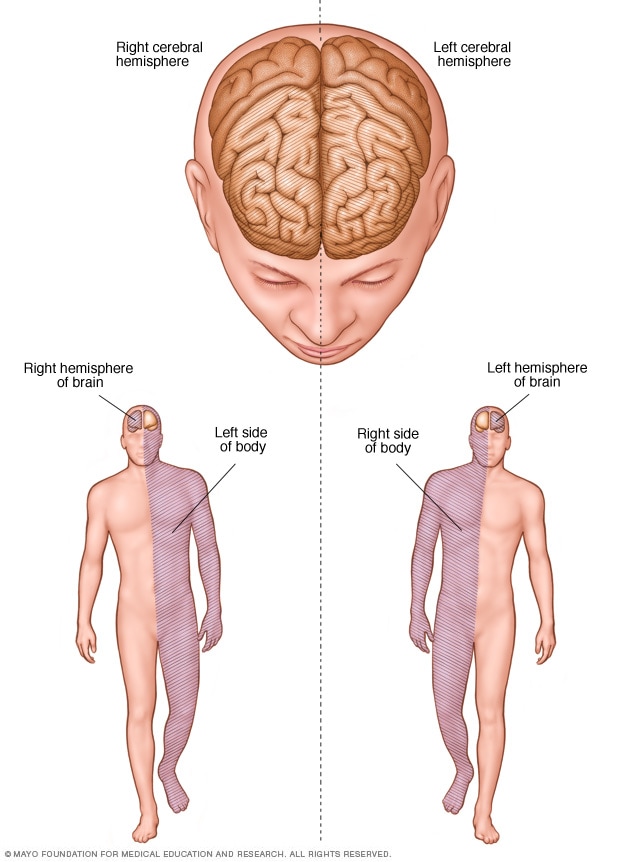
Conexiones de los hemisferios cerebrales
Después del tratamiento de emergencia, te vigilarán de cerca durante al menos un día. Después, la atención médica del accidente cerebrovascular se enfoca en ayudarte a recuperar la mayor cantidad de funciones posibles y volver a la vida independiente. El impacto del accidente cerebrovascular depende de la zona del cerebro afectada y de la cantidad de tejido dañado.
Si dañó el lado derecho del cerebro, es posible que se vean afectados el movimiento y la sensibilidad del lado izquierdo del cuerpo. Si dañó el lado izquierdo del cerebro, es posible que se vean afectados el movimiento y la sensibilidad del lado derecho del cuerpo. El daño en el lado izquierdo del cerebro también puede causar trastornos del habla y del lenguaje.
La mayoría de las personas que tuvieron un accidente cerebrovascular y tienen síntomas que permanecen acuden a programas de rehabilitación. Tu profesional de atención médica puede recomendarte un programa de tratamiento adecuado para ti. El programa se recomienda según tu edad, tu estado de salud en general y el grado de discapacidad por el accidente cerebrovascular. Se tienen en cuenta tu estilo de vida, tus intereses, tus prioridades y si te pueden ayudar tus familiares o cuidadores.
Es posible que la rehabilitación comience antes de que te den el alta hospitalaria. Después del alta, puedes continuar el programa en una unidad de rehabilitación del mismo hospital, ir a otra unidad de rehabilitación o ir a un centro de enfermería especializada como paciente ambulatorio. También puedes hacer rehabilitación en casa.
La recuperación del accidente cerebrovascular es diferente para cada persona. Según tu afección, el equipo del tratamiento puede incluir un neurólogo, que es un médico capacitado en afecciones cerebrales; un fisiatra, que es un médico especializado en rehabilitación; un miembro del personal de enfermería de rehabilitación; un dietista; un fisioterapeuta; un terapeuta ocupacional; un terapeuta de recreación; un patólogo del habla; un trabajador social o administrador del caso; un psicólogo o psiquiatra, o un capellán.
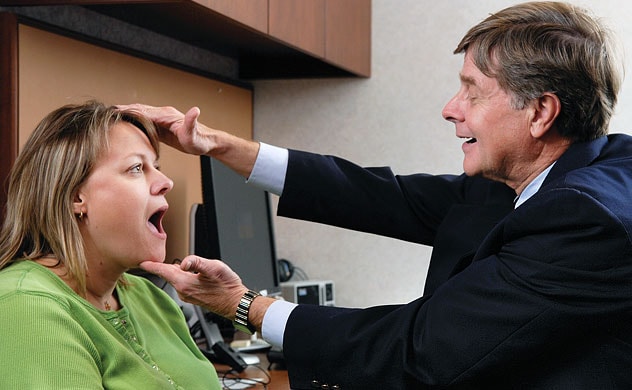
La terapia del habla suele ser parte de la rehabilitación de un accidente cerebrovascular.
Más información
Pronóstico
El accidente cerebrovascular embólico es grave. Puede causar discapacidad y puede ser mortal. El tratamiento rápido mejora las posibilidades de supervivencia y puede reducir las complicaciones. Luego de un accidente cerebrovascular embólico, algunas personas se recuperan bien. Otras quedan con una discapacidad permanente o requieren ayuda para las actividades diarias. La recuperación depende de varios factores, que incluyen los siguientes:
- Cuánto del cerebro está afectado
- Qué parte del cerebro está afectada
- Con qué rapidez comienza el tratamiento
El daño cerebral causado por un accidente cerebrovascular embólico no siempre puede revertirse por completo. La recuperación es posible. Algunas personas recuperan una funcionalidad significativa, pero muchas no vuelven a ser completamente independientes. Aproximadamente la mitad de las personas que sobreviven más de seis meses luego de un accidente cerebrovascular necesitan ayuda con al menos una actividad de la vida diaria.
El riesgo de otro accidente cerebrovascular embólico es una parte relevante del pronóstico. Algunas causas de accidente cerebrovascular embólico implican un riesgo más alto para otro accidente cerebrovascular que otras. Por ejemplo, las principales fuentes de embolia relacionadas con el corazón están vinculadas con un riesgo más alto para recurrencia.
El cuidado continuo tras un accidente cerebrovascular embólico es importante porque el tratamiento y la reducción de riesgos pueden ser útiles para disminuir la probabilidad de otro accidente cerebrovascular y mejorar el pronóstico a largo plazo.
Estrategias de afrontamiento y apoyo
Un accidente cerebrovascular embólico es un evento que cambia la vida y que puede afectar tu bienestar emocional tanto como tu funcionalidad física. Algunas personas pueden sentirse frustradas o deprimidas, o tener cambios en el estado de ánimo. Algunas personas pueden tener menos interés en tener relaciones sexuales luego de un accidente cerebrovascular embólico.
Mantener tu autoestima, tus conexiones con los demás y tu interés en el mundo son partes esenciales de tu recuperación. Varias estrategias pueden ayudarlos a ti y a tus cuidadores, entre ellas las siguientes:
- No te exijas demasiado. La recuperación física y emocional implica un esfuerzo enorme y lleva tiempo. Celebra tu progreso. Date tiempo para descansar.
- Únete a un grupo de apoyo. Reunirse con otras personas que se están recuperando de un accidente cerebrovascular te permite salir y compartir experiencias. También puedes intercambiar información y crear nuevos vínculos.
- Diles a tus amigos y familiares qué necesitas. Las personas pueden querer ayudarte, pero quizá no sepan qué hacer. Hazles saber cómo pueden ayudar. Por ejemplo, pídeles que compartan contigo una comida y una charla, o que te acompañen a eventos sociales o actividades religiosas.
Desafíos de comunicación
Si el accidente cerebrovascular embólico afectó el habla y el lenguaje, los siguientes consejos pueden ayudarlos a ti y tus cuidadores a sobrellevar la situación.
- Practica. Trata de tener una conversación al menos una vez al día. Esto te ayudará a saber qué funciona mejor para ti. También puede ayudarte a sentirte conectado y reconstruir tu confianza.
- Relájate y tómate tu tiempo. Hablar puede ser más fácil y agradable en una situación relajante cuando no se tiene prisa. Algunas personas que han sufrido un accidente cerebrovascular consideran que un buen momento para conversar es después de la cena.
- Dilo a tu manera. Cuando te estés recuperando de un accidente cerebrovascular, puede que necesites usar menos palabras. Usa gestos o tu timbre de voz para comunicarte.
- Usa accesorios y soportes para la comunicación. Tal vez te resulte útil usar fichas para comunicarte. Las fichas pueden incluir palabras de uso frecuente o fotos de amigos íntimos y familiares, un programa favorito de televisión, el cuarto de baño u otros deseos y necesidades.
Preparación para la consulta
Por lo general, un accidente cerebrovascular en curso se diagnostica en un hospital. Si estás teniendo un accidente cerebrovascular, tu atención médica inmediata se enfoca en reducir el daño cerebral. Si no tuviste un accidente cerebrovascular, pero te preocupan los riesgos, habla con tu profesional de atención médica en la próxima cita.
Qué esperar del médico
En la sala de emergencias, puedes ver a un especialista en medicina de emergencia o a un neurólogo, que es un médico capacitado en afecciones cerebrales. Es probable que el personal de enfermería y los técnicos médicos participen en tu atención médica.
La principal prioridad del equipo de emergencia es estabilizar los síntomas y la enfermedad en general. Luego, el equipo determina si estás teniendo un accidente cerebrovascular. Los profesionales de atención médica tratarán de encontrar la causa del accidente cerebrovascular para elegir un plan de tratamiento adecuado.
Si buscas el consejo de un médico durante una cita programada, tu profesional de atención médica evaluará los factores de riesgo para un accidente cerebrovascular y enfermedades cardíacas. Además, el profesional de atención médica puede ofrecerte consejos para reducir los riesgos. Estos consejos pueden incluir aplicar estrategias en tu estilo de vida, dejar de fumar o no consumir drogas ilícitas. Tu profesional de atención médica también puede evaluar si necesitas medicamentos para controlar la presión arterial alta, el colesterol y otros factores de riesgo para accidentes cerebrovasculares.
Aug. 01, 2026