Scoliosis Symptoms and causes
Overview
Scoliosis is a side-to-side curve of the spine. It's most often diagnosed after age 10 or in the early teen years. The spine can curve to either side and in different parts of the back. Experts don't know the cause of most childhood scoliosis.
Most scoliosis is mild. But some curves get worse as children grow. If the curve gets very bad, scoliosis can cause pain and breathing problems. A bad curve of the spine can push on the lungs and make it hard to breathe.
Healthcare professionals watch growing children who have mild scoliosis with follow-up visits a few times a year. This most often involves X-rays and a physical exam to see if the curve is getting worse. Many people with scoliosis don't need treatment.
Some children may need to wear a brace to stop the curve from getting worse. Others may need surgery to correct the curves.
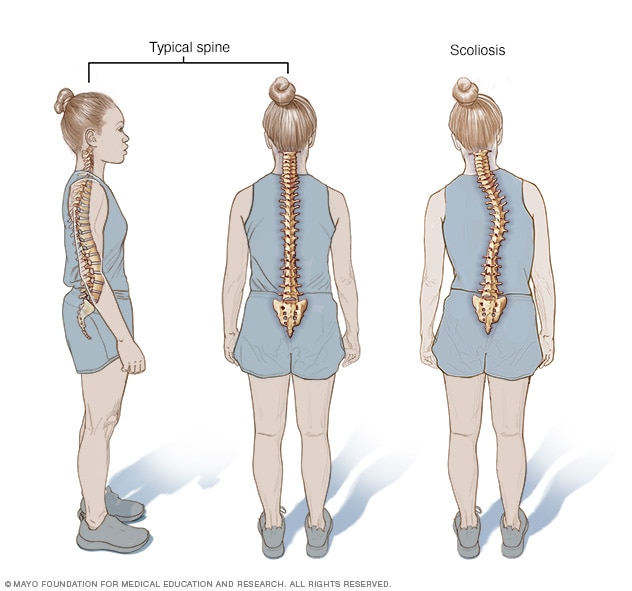
Scoliosis
Scoliosis is a sideways curvature of the spine. Viewed from behind, the spine should appear as a straight line from the base of the neck to the tailbone.
Symptoms
Symptoms of scoliosis may include:
- Change in posture.
- Shoulders that aren't even.
- One shoulder blade that looks bigger than the other.
- Waist that isn't even.
- One hip higher than the other.
- One side of the rib cage pushing forward.
- One side of the back poking out when bending forward.
Most often with scoliosis, the spine rotates or twists as well as curving side to side. This causes the ribs or muscles on one side of the body to stick out farther than those on the other side.
When to see a doctor
See your child's healthcare professional if you see signs of scoliosis in your child. A mild curve might form slowly and not cause pain. You and your child might not know it's there. Sometimes, teachers, friends and sports teammates are the first to notice a child's scoliosis.
Causes
Experts don't know what causes the most common type of scoliosis. But the condition can run in families. The following may cause some types of scoliosis:
- Certain conditions of the muscles and nerves that let the body move, called neuromuscular conditions. Conditions include cerebral palsy or muscular dystrophy.
- Birth conditions that affect how the bones of the spine form.
- Surgery on the chest wall as a baby or surgery to remove bone over the back of the spine.
- Spinal cord conditions.
Risk factors
Risk factors for getting the most common type of scoliosis include:
- Being age 10 or older. Symptoms most often begin in the early teen years.
- Being assigned female at birth. Both sexes get mild scoliosis at about the same rate. But people assigned female at birth have a higher risk of the curve getting worse and needing treatment.
- Having a family history. Scoliosis can run in families. But most children with scoliosis don't have a family history of the condition.
From Mayo Clinic to your inbox
Sign up for free and stay up to date on research advancements, health tips, current health topics, and expertise on managing health. Click here for an email preview.
Complications
Most people with scoliosis have a mild form. In a growing child, scoliosis can get worse. Worse scoliosis sometimes causes complications, including:
- Breathing problems. The spine may press against the lungs. This can make it harder to breathe.
- Back problems. People who get scoliosis as children may be more likely to have chronic back pain as adults. This is more often true for curves that are large and not treated.
- Changes in how the body looks. As scoliosis gets worse, it can cause body changes. These changes may include hips and shoulders that aren't even, ribs that stick out, being short, and a shift of the waist and trunk to the side.
CON-20155224
Mayo Clinic does not endorse companies or products. Advertising revenue supports our not-for-profit mission.
Advertising & Sponsorship
Mayo Clinic Press
Check out these best-sellers and special offers on books and newsletters from Mayo Clinic Press.
