Overview
A sprained ankle happens when you roll, twist or turn your ankle in an awkward way. This can stretch or tear the tough bands of tissue that help hold your ankle bones together. These tough bands of tissue are called ligaments.
Ligaments stabilize joints and prevent harmful movement. A sprained ankle occurs when the ligaments are stretched too far or tear. Most sprained ankles affect the three ligaments on the outer side of the ankle.
The right treatment depends on how serious the sprain is. You can treat many sprains at home with self-care and pain relievers you can buy without a prescription. But it is helpful to see a healthcare professional, especially one specializing in sports medicine, orthopedics, or physical medicine and rehabilitation, to assess the injury. They may find that you need treatment, such as physical therapy or a brace or cast.
After an ankle sprain, it's important to do exercises that strengthen ankle muscles and improve balance. These exercises help with healing and may prevent future sprains. A physical therapist can teach you how to do the right exercises for your injury.
Most ankle sprains involve injuries to the three ligaments on the outside of the ankle. Ligaments are tough bands of tissue that stabilize joints and help prevent excessive movement. An ankle sprain occurs when you roll, twist or turn your ankle in an awkward way. This can stretch or tear the ligaments that help hold your ankle bones together.
Symptoms
Symptoms of a sprained ankle depend on how serious the injury is. They may include:
- Pain, especially when putting weight on the affected foot.
- Tenderness when touching the ankle.
- Swelling.
- Bruising.
- Limited movement in the ankle.
- Feeling unstable or like the ankle might give out.
- A popping feeling or sound at the moment of injury.
When to see a doctor
If you have pain and swelling in your ankle and you think you may have a sprain, contact your healthcare professional. While self-care may be all you need, it's best to check whether a medical exam is needed. Depending on your symptoms, you may have a torn ligament or a broken bone in your ankle or lower leg.
Causes
Sprained ankle
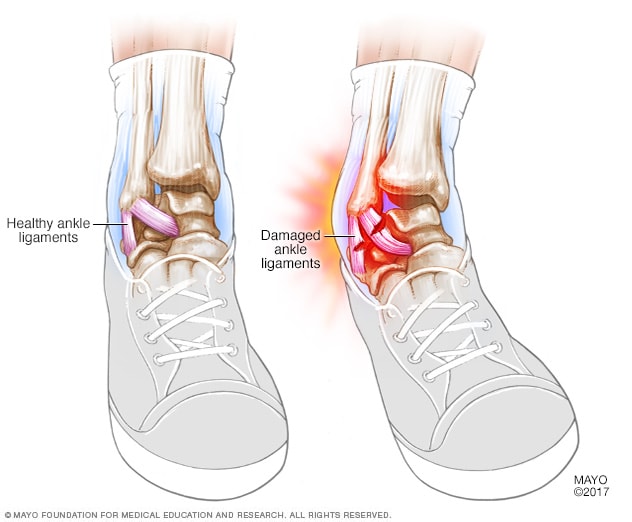
Sprained ankle
A sprained ankle is the stretching or tearing of ankle ligaments that support the joint by connecting bones to each other.
A sprain happens when the ankle is forced out of its typical position, causing one or more of the ligaments to stretch, partially tear or fully tear.
Common causes of a sprained ankle include:
- Twisting your ankle during a fall, especially rolling it inwards.
- Landing awkwardly after jumping or pivoting.
- Walking or exercising on an uneven surface.
- Someone stepping or landing on your foot, often during sports.
Risk factors
Certain things can increase the likelihood of spraining an ankle, including:
- Playing sports. Sports that involve jumping, quick direction changes or twisting motions have a higher risk of causing ankle sprains. Examples include basketball, soccer, football, tennis, pickleball and trail running.
- Uneven surfaces. Walking or running on uneven ground or playing on poor field conditions increases the risk ankle sprains.
- Previous ankle injuries. If you've sprained your ankle before or have had other ankle injuries, you're more likely to injure your ankle again.
- Weak ankles. Poor strength or flexibility in the ankle may increase the risk of a sprain, especially during physical activity.
- Improper footwear. Wearing high heels, shoes that don't fit properly or the wrong shoes for an activity can make your ankles less stable and increase the risk of injury.
Complications
Not treating a sprained ankle properly, returning to activities too soon or repeatedly spraining your ankle can lead to:
- Repeat sprains.
- Ongoing ankle pain.
- Weak or not stable ankles that give out easily.
- Arthritis in the ankle joint.
Prevention
To reduce the risk of a sprained ankle or another ankle injury, follow these guidelines:
- Practice balance exercises to improve stability and ankle strength.
- Warm up before exercising or playing sports.
- Be careful when walking, running or working on uneven surfaces.
- Use an ankle support brace or tape if you have a weak or previously injured ankle.
- Wear shoes that fit well and are made for your activity.
- Limit wearing of high heels to reduce ankle strain.
- Only play sports or do activities that your body is conditioned for.
- Keep your muscles strong and flexible through regular exercise.