Periprosthetic joint infection (PJI) Symptoms and causes
Overview
A periprosthetic joint infection (PJI) happens when bacteria or other microorganisms infect the area in and around a joint implant. This could include infection around a hip, knee, shoulder or elbow replacement. In medical terms, "peri" means around or surrounding.
This kind of infection can happen soon after joint replacement surgery. Or it can happen months or even years later. Some infections are long-lasting. These are called chronic. Others come on more suddenly. These are called acute.
PJI is treatable but often needs a combination of antibiotics and surgery.
Symptoms
Recognizing symptoms of a periprosthetic joint infection (PJI) early is important. It is a serious condition that needs treatment right away. Common symptoms of PJI include:
- Drainage or fluid coming from the incision site.
- Increasing pain.
- Swelling that gets worse around the joint.
- A change in skin color or warmth around the joint.
- Fever and chills.
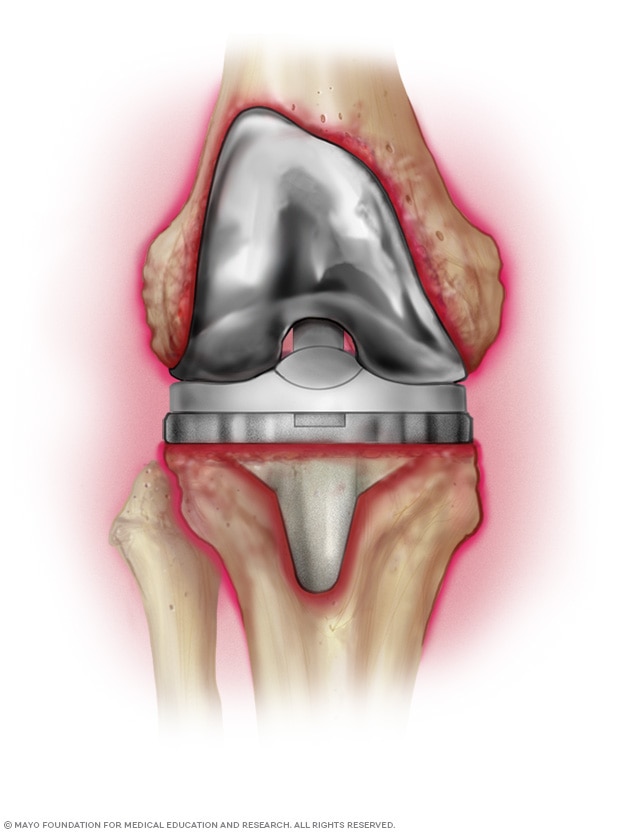
Infected prosthetic knee joint
A periprosthetic joint infection (PJI) happens when bacteria or other microorganisms infect the area in and around a joint implant, such as a knee.
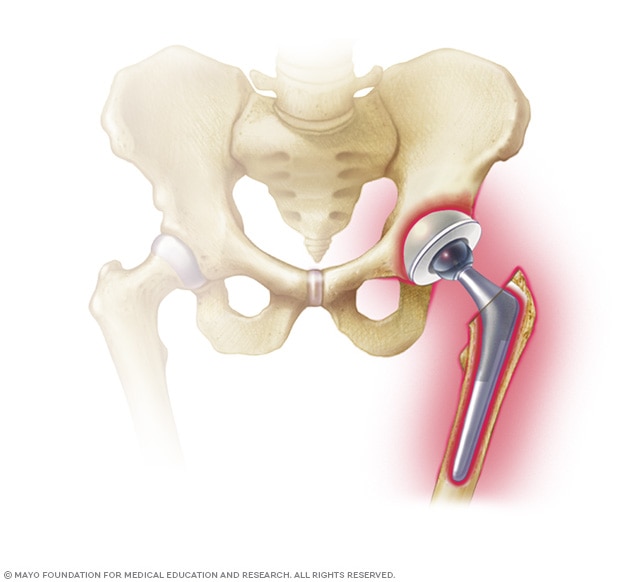
Infected prosthetic hip joint
A periprosthetic joint infection (PJI) happens when bacteria or other microorganisms infect the area in and around a joint implant, such as a hip.
When to see a doctor
Call your surgeon or seek medical care right away if you have had a joint replacement and notice these signs of a serious infection:
- Fever plus joint pain, swelling and warmth.
- Confusion.
- Sudden trouble walking or bearing weight.
- A change in skin color around the joint that spreads or grows.
Causes
Periprosthetic joint infections (PJI) can be caused by:
- Microorganisms that get into your body after your joint replacement surgery. This happens before the surgical wound has completely healed.
- An infection nearby in the body that spreads to the joint.
- Bacteria carried in the bloodstream to the joint from another infection in your body.
The immune system typically fights off microorganisms such as bacteria or fungi when they enter your body. But the immune system can have a harder time when microorganisms stick to metal and plastic parts in your joint implant. These parts do not get blood flow. That means your immune system cannot easily find and fight the bacteria. Many microorganisms can form a coating called a biofilm. It helps them hide from the immune system and antibiotics.
Often, it is hard to know exactly how the infection began.
Risk factors
Some people are at higher risk of developing a periprosthetic joint infection (PJI) after joint replacement. These risk factors make it hard to fight an infection:
- Diabetes.
- Poor circulation.
- Obesity.
- Smoking.
- A weakened immune system from conditions such as cancer.
- Treatments that lower the immune system, such as chemotherapy or corticosteroids.
Prevention
Periprosthetic joint infection (PJI) is uncommon, but you and your healthcare team can take steps to help prevent PJI.
Before joint replacement surgery, try to be as healthy as possible. This may include managing blood sugar if you have diabetes and stopping smoking. Your healthcare team may check for any active infections and treat them before surgery.
During and after surgery, your healthcare team uses strict sterile techniques and may give antibiotics before, during and after the operation to prevent infection.
After surgery, good wound care is important. Watch for warning signs such as increasing pain, fever, swelling, a change in skin color, or drainage from the incision. Treating infections elsewhere in the body quickly also helps protect the new joint. While PJI cannot always be prevented, these steps can lower the risk.
CON-20595182
Mayo Clinic does not endorse companies or products. Advertising revenue supports our not-for-profit mission.
Advertising & Sponsorship
Mayo Clinic Press
Check out these best-sellers and special offers on books and newsletters from Mayo Clinic Press.
