Neck pain Symptoms and causes
Overview
Many people have neck pain. Poor posture, whether from leaning over a computer or hunching over a workbench, strains neck muscles and is a common cause of neck pain. Osteoarthritis, a condition that wears down the joints, also can cause neck pain.
Most of the time, neck pain is not a sign of a serious medical condition. But sometimes it can be a sign of a bigger issue.
Symptoms
Common symptoms of neck pain include:
- Pain that gets worse when you hold your head in the same position for a long time, such as when driving or working at a computer.
- Muscle tightness and muscle spasms.
- Trouble moving your head.
- Headaches.
When to see a doctor
Get emergency medical care if you have severe neck pain after an injury, such as an injury from a motor vehicle accident, a diving accident or a fall.
Contact your healthcare professional if your neck pain:
- Is very painful or intense.
- Doesn't get better after a few days.
- Spreads into your arms or legs.
- Comes with a headache, numbness, weakness or tingling.
Causes
The neck holds up the head and is less protected than the rest of the spine, which makes it easy to injure. Even small injuries can cause stiffness and pain and limit movement.
Common causes of neck pain include:
- Muscle strain. Sitting hunched over a computer, looking down at a smartphone or even reading in bed can pull on your neck muscles and cause pain. A recent study found that people who sit still for more than six hours a day are more likely to have neck pain. The risk is even higher if that time is spent using a computer or smartphone.
- Worn joints. As with other joints in the body, neck joints tend to wear down with age. Arthritis of the neck can cause pain and make it hard to move your neck.
- Pinched nerves, also called nerve compression. Bulging disks or bone spurs in the neck can press on nearby nerves, causing pain that may spread to your arms.
- Injuries. Car accidents, especially ones where the head jerks forward and backward, can hurt the soft tissues in your neck. This injury is called whiplash.
- Diseases.Certain diseases, such as rheumatoid arthritis, meningitis or cancer, can cause neck pain.
Risk factors
Some things make it more likely that you will have neck pain:
- Age. Neck pain is more common after age 40.
- Bad posture. Ideally, your head should rest on the top of your neck like a golf ball on a tee. But when you slouch, lean forward or look down for long periods, such as when using a smartphone or computer, the imbalanced load puts extra pressure on the muscles, joints and disks in the neck. Over time, this strain can lead to neck pain.
- Repeating the same movements. Jobs or activities that make you move your neck the same way over and over can lead to pain.
- Injuries. Falls, sports injuries and car accidents can hurt your neck.
- Stress. Feeling stressed may make your neck muscles tight and painful.
- Other health issues. Illnesses such as arthritis, infections or cancer also can cause neck pain.
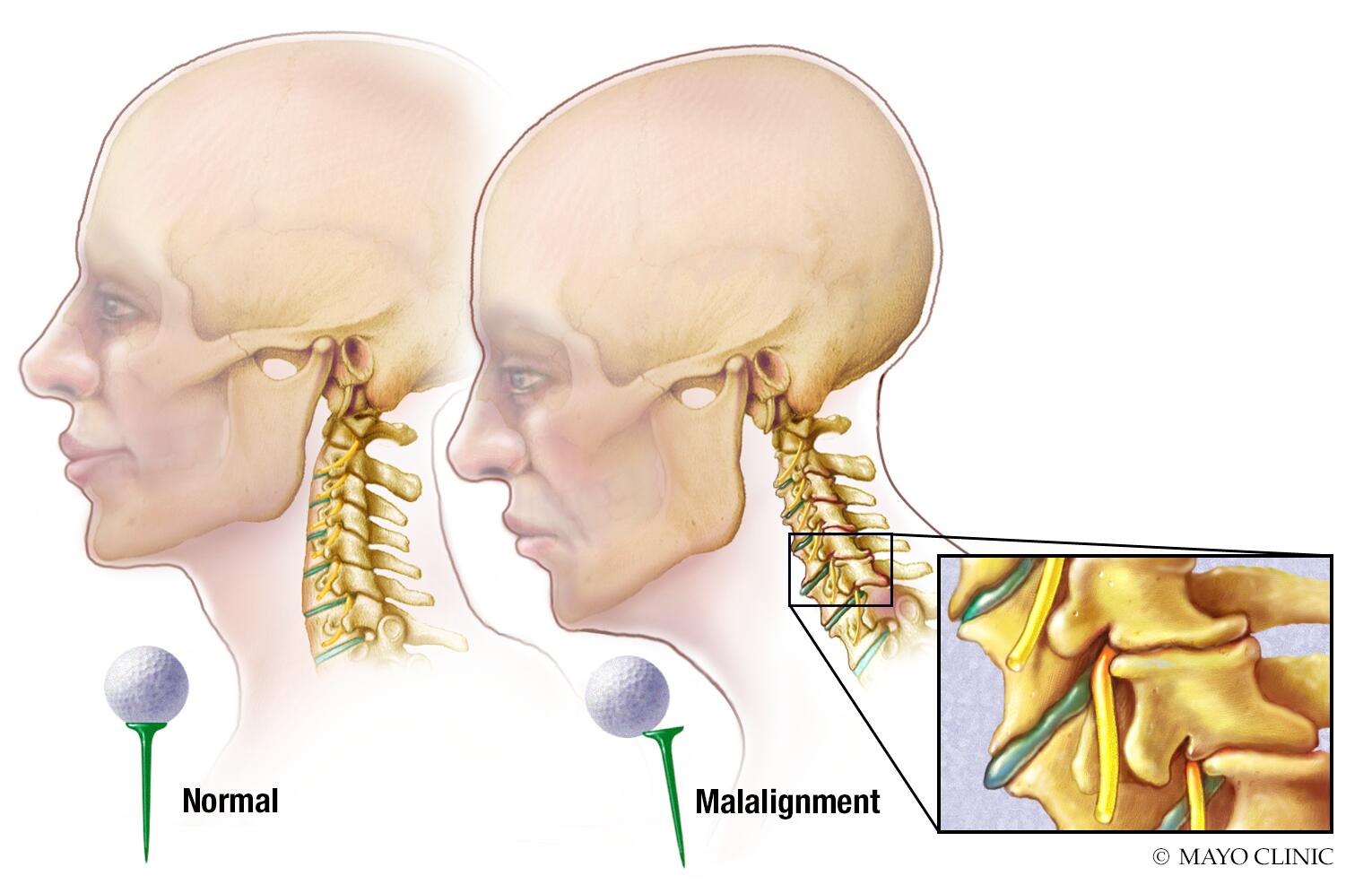
Cervical spine malalignment
Your head should sit on your neck like a golf ball on a tee. But slouching or looking down, especially at a smartphone or computer, adds pressure to your neck and can lead to pain over time.
Prevention
Most neck pain is caused by a mix of poor posture and aging. To help prevent neck pain, keep your head centered over your spine. (5p3-4) Making a few small changes in your daily habits can help protect your neck. Here are some tips to try:
- Practice good posture. When standing or sitting, keep your shoulders in a straight line over your hips. Keep your ears directly over your shoulders. When using a smartphone, tablet or other small screen, hold the device up at eye level rather than bending your neck to look down.
- Take regular breaks. If you work at a computer or travel long distances, get up often to move around and stretch your neck and shoulders.
- Set up your workspace. Adjust your desk, chair and computer so your monitor is at eye level. When sitting, your knees should be slightly lower than your hips. Use the chair's armrests to support your arms.
- If you smoke, quit. Smoking increases the risk of developing neck pain.
- Be careful with heavy bags. Carrying heavy bags over one shoulder can strain your neck. Keep bags light or use a backpack that spreads weight evenly.
- Sleep in a healthy position. Keep your head and neck aligned with your body when you sleep. Use a small pillow to support your neck. Try sleeping on your back with pillows under your knees or thighs, which can help relax your spine.
- Stay active. Moving your body regularly helps keep your neck and back strong. If you sit a lot, try to add more movement to your day.
CON-20375566
Mayo Clinic does not endorse companies or products. Advertising revenue supports our not-for-profit mission.
Advertising & Sponsorship
Mayo Clinic Press
Check out these best-sellers and special offers on books and newsletters from Mayo Clinic Press.
