Overview
End-stage kidney disease happens when the kidneys no longer work well enough to meet the body's needs. End-stage kidney disease is the most advanced stage of chronic kidney disease. It is sometimes called end-stage renal disease or kidney failure.
Kidneys filter waste and excess fluid from the blood and release it in urine. In chronic kidney disease, the kidneys slowly stop working the way they're supposed to. Because of this, excess fluid and waste can build up in the body. When the problem advances to end-stage kidney disease, the buildup can be dangerous.
People with end-stage kidney disease need dialysis or a kidney transplant to stay alive. Some people may opt for conservative care to manage the symptoms. With conservative care, the goal is to achieve the best quality of life in the time that remains.
One of the important jobs of the kidneys is to clean the blood. As blood moves through the body, it picks up extra fluid, chemicals and waste. The kidneys separate this material from the blood. It's carried out of the body in urine. If the kidneys are unable to do this and the condition is untreated, serious health problems result, with eventual loss of life.
Products & Services
Symptoms
In early stages of kidney disease, you might have no signs or symptoms. As kidney disease gets worse, symptoms may become more clear.
End-stage kidney disease symptoms might include:
- Vomiting or upset stomach.
- Loss of appetite.
- Feeling tired and weak.
- Changes in how much you urinate.
- Chest pain, if fluid builds up around the lining of the heart.
- Shortness of breath, if fluid builds up in the lungs.
- Swelling of feet and ankles.
- High blood pressure that's hard to control.
- Trouble sleeping.
- Reduced mental sharpness.
- Muscle twitches and cramps.
- Constant itching.
Symptoms of kidney disease often are vague. Because the kidneys can make up for lost function, symptoms might not show up until you have kidney damage that can't be reversed.
When to seek care
Make an appointment with a doctor or other healthcare professional if you have symptoms of kidney disease. Catching kidney disease early might keep it from turning into kidney failure.
If you have a medical condition that raises your risk of kidney disease, your healthcare team may want to keep an eye on your kidney function. This may include urine and blood tests and blood pressure checks to see how well the kidneys are working. Ask your doctor or other healthcare professional if this type of monitoring is right for you.
Causes
Kidney cross section
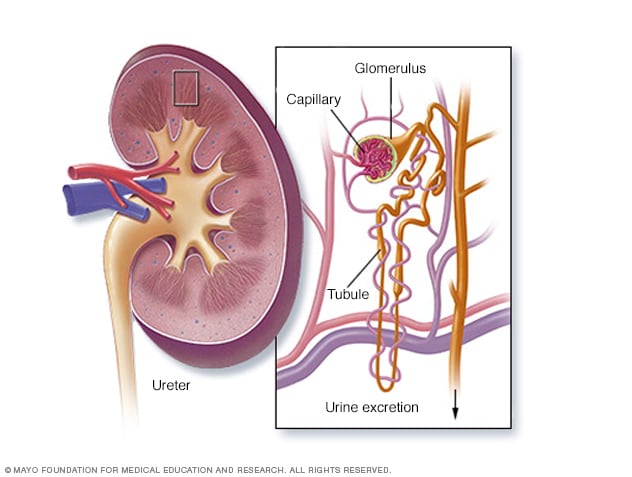
Kidney cross section
The kidneys remove waste and extra fluid from the blood through filtering units called nephrons. Each nephron contains a filter, called a glomerulus. Each filter has tiny blood vessels called capillaries. When blood flows into a glomerulus, tiny bits of water, minerals and nutrients, and waste pass through the walls of a capillary. These bits are called molecules. Larger molecules, such as proteins and red blood cells, do not move through the walls of a capillary. The molecules that are filtered out pass into another part of the nephron called the tubule. The water, nutrients and minerals the body needs are sent back to the bloodstream. The extra water and waste become urine that flows to the bladder.
Kidney disease happens over time. Often, there's a disease or condition that hurts kidney function, causing kidney damage to worsen over several months or years. Sometimes, kidney damage keeps getting worse even after the underlying cause has been treated.
Causes of kidney disease include:
- Type 1 or type 2 diabetes.
- High blood pressure.
- Some autoimmune diseases, such as lupus, sarcoidosis and Sjogren syndrome.
- Polycystic kidney disease or other inherited kidney diseases.
- Prolonged blockage, called an obstruction, of the urinary tract due to conditions such as enlarged prostate or urinary tract tumors.
- Vesicoureteral (ves-ih-koe-yoo-REE-tur-ul) reflux, a condition that causes urine to go backward up into the kidneys.
- Certain medicines, such as lithium and large doses of ibuprofen or other nonsteroidal anti-inflammatory drugs.
Risk factors
Risk factors for end-stage kidney disease include:
- Diabetes.
- High blood pressure.
- Heart disease.
- Polycystic kidney disease.
- Smoking.
- Being overweight.
- Being Black, Native American or Asian American.
- Family history of kidney disease.
- Changes or issues with the shape or size of the kidneys.
- Older age.
- Frequent use of medicines that can damage the kidneys.
These factors may play a part in chronic kidney disease advancing to end-stage kidney disease.
Complications
Once kidney damage happens, it can't be reversed. Potential complications of end-stage kidney disease can affect almost any part of the body and include:
- High blood pressure. Since the kidneys don't work as well to remove extra salt and water from the body, blood pressure starts to rise. High blood pressure can lead to more kidney damage, which in turn raises blood pressure even more.
- Acid buildup. Also called acidosis, acid buildup happens when the kidney can't remove extra acids. These may be acids the body makes or that you take in with the foods you eat. This can lead to issues with bone health and protein breakdown.
- Fluid retention. This could lead to leg swelling, high blood pressure or fluid in the lungs. Also called pulmonary edema, fluid in the lungs causes shortness of breath. Fluid retention usually happens in later stages of kidney disease. A sudden increase in body weight might be a sign of fluid retention.
- High blood potassium levels. Also called hyperkalemia, high blood potassium may happen suddenly. It usually happens in the later stages of kidney disease. It may damage the heart and be life-threatening.
- Anemia. This happens when there aren't enough healthy red blood cells to carry oxygen to the body's tissues.
- Heart disease. With advanced kidney disease, blood vessels called arteries can become stiff and get clogged. This makes blood pressure go up and could lead to heart disease.
- Bone weakness. Weak bones and a higher risk of bone fractures can happen.
- Sexual health conditions. Lower sex drive, erectile dysfunction or reduced fertility can happen.
- Damage to the central nervous system. This could lead to trouble concentrating or personality changes. This complication usually happens in the very last stages of kidney disease.
- Immune system changes. You may have a lowered immune response, which puts you at risk of infection.
- Pericarditis. This inflammation of the membrane that covers the heart can happen in people with advanced kidney disease.
- Pregnancy complications. Both you and your unborn baby may be at risk.
Prevention
If you have kidney disease, you may be able to slow its progress by making healthy lifestyle choices:
- Achieve and keep a healthy weight.
- Be active most days.
- Eat a balanced diet of nutritious, low-sodium foods. Limit how much protein you have.
- Control high blood pressure.
- Take your medicines as prescribed.
- Have your cholesterol levels checked every year.
- Control your blood sugar level if you have diabetes.
- Don't smoke or use tobacco products.
- Get regular checkups.