Overview
Dermatofibrosarcoma protuberans (DFSP) is a rare type of skin cancer. It starts in the connective tissue cells of the middle layer of the skin. This layer of skin is called the dermis.
The cancer might look like a pimple or feel like a firm patch of skin at first. As it grows, lumps of tissue known as protuberans may form near the surface of the skin. DFSP often forms on the arms, legs and trunk.
Dermatofibrosarcoma protuberans grows slowly and rarely spreads beyond the skin and surrounding tissues. It can look like other skin conditions, so a biopsy is usually needed to diagnose the condition.
DFSP treatment is surgery to completely remove the tumor. The main concern with this cancer is that the tumor can come back in the same place even after it appears to be completely removed. Dermatofibrosarcoma protuberans is rarely fatal.
Dermatofibrosarcoma protuberans
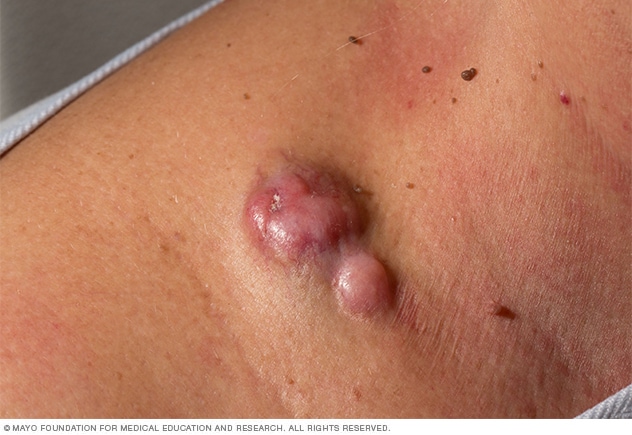
Dermatofibrosarcoma protuberans
As dermatofibrosarcoma protuberans grows, lumps of tissue (protuberans) may form near the surface of the skin.
Skin anatomy
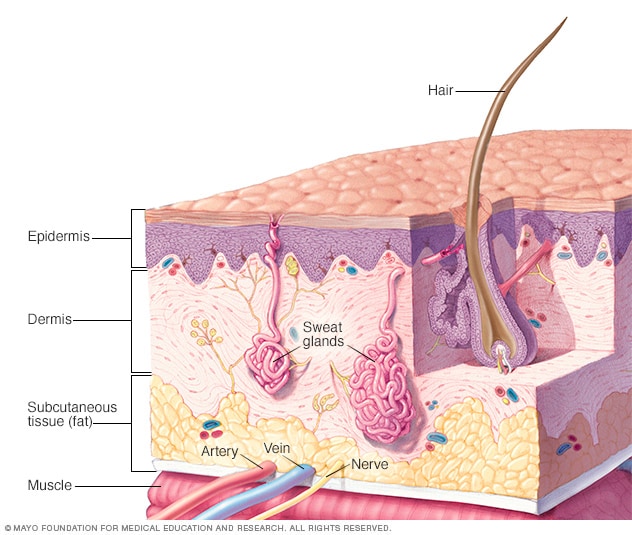
Skin anatomy
Your skin has three layers that house your sweat and oil glands, hair follicles, melanocytes, and blood vessels.
Products & Services
Types
Dermatofibrosarcoma protuberans (DFSP) is a complex name. But each part of the term tells you something about the cancer.
- "Dermato" relates to the skin. DFSP usually starts in the dermis, the middle layer of the skin.
- "Fibro" relates to fibrous connective tissue and cells called fibroblasts.
- "Sarcoma" is the term for a cancer that starts in soft tissue, such as connective tissue.
- "Protuberans" relates to the lumps of tissue that can form under the skin as the tumor grows.
There are different types of DFSP. Some are identified by how the tumor cells and surrounding tissue look under a microscope. These include pigmented DFSP, also called Bednar tumor. This type of tumor contains cells that produce the pigment melanin. Other types include myxoid DFSP, myoid DFSP, granular-cell DFSP, sclerotic or sclerosing DFSP, and atrophic DFSP.
On the skin, atrophic DFSP may be flatter and look more like a scar. This appearance can occur in DFSP that is present from birth or that develops during childhood. Another rare form of DFSP in young children is giant-cell fibroblastoma. It mainly appears on the neck, trunk or the groin as a raised lump. The lump, called a nodule, is the same color as the skin around it.
Sometimes part of a DFSP can change into a more aggressive form. This change is called fibrosarcomatous transformation. The tumor may be called a high-grade DFSP or fibrosarcomatous DFSP. It isn't clear if high-grade DFSP is more likely to come back in the same place after surgery. High-grade DFSP is more likely than other types of DFSP to spread to distant parts of the body. This spread is called metastasis.
Symptoms
Symptoms of dermatofibrosarcoma protuberans (DFSP) include:
- A lump or lumps on the skin that look like pimples, scars or birthmarks.
- A lump or lumps on the skin that may feel hard to the touch or rubberlike.
- A patch of skin that feels firm to the touch.
The lumps typically appear on the arms, legs or trunk. They rarely form on the head or neck, but these growths have been found on the scalp and inside the mouth.
DFSP can look like other skin conditions. Usually a biopsy is needed to diagnose this type of cancer and guide treatment.
When to see a doctor
Make an appointment with a doctor or other healthcare professional if you have ongoing symptoms that worry you. If an area of skin changes or becomes raised, have it checked out.
Causes
The cause of dermatofibrosarcoma protuberans (DFSP) often isn't known.
This skin cancer happens when cells in the skin develop changes. The changes happen in the cells' chromosomes. Chromosomes are threadlike structures inside cells that contain DNA and proteins. The changes in the chromosomes cause the cells to grow and divide quickly. The cancer cells form a growth that starts underneath the skin and may push up to create a lump over time. Other lumps may appear as well.
DFSP is not considered an inherited cancer. It doesn't seem to be passed down in families.
Risk factors
Risk factors for dermatofibrosarcoma protuberans (DFSP) include:
- Age. This cancer can happen at any age. Some tumors can be present at birth or develop early in childhood. But it happens most often in adults ages 20 to 50.
- Race. This cancer happens more often in Black people than it does in people of other races.
- Prior skin injury. People with skin that has been burned, treated with radiation or scarred from surgery may be more likely to have this cancer.
- History of DFSP. People who have had this cancer are at risk of it coming back in the same area after surgery.
There is no way to prevent dermatofibrosarcoma protuberans.
Sept. 11, 2026