Overview
Hand and wrist bones
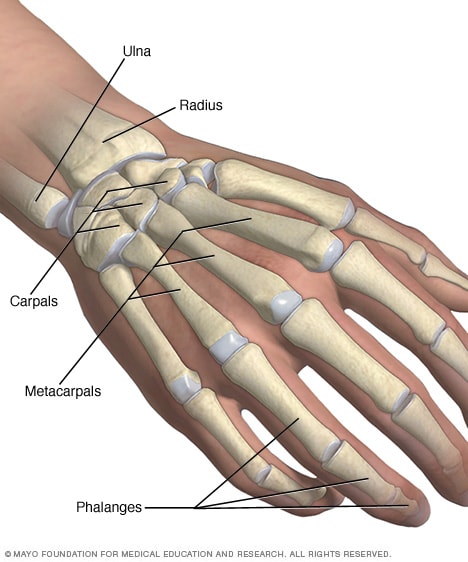
Hand and wrist bones
Your wrist is made up of eight small bones, called carpal bones, plus two long bones in your forearm — the radius and the ulna. Each finger consists of one hand bone (metacarpal) and three finger bones (phalanges), while each thumb consists of one metacarpal bone and two phalanges.
Wrist bones
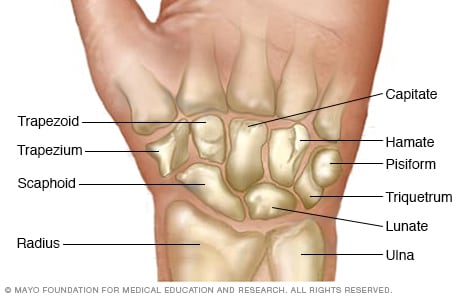
Wrist bones
Your wrist is made up of eight small bones, called carpal bones, plus two long bones in your forearm — the radius and the ulna. The most commonly injured carpal bone is the scaphoid bone, located near the base of your thumb.
Colles fracture
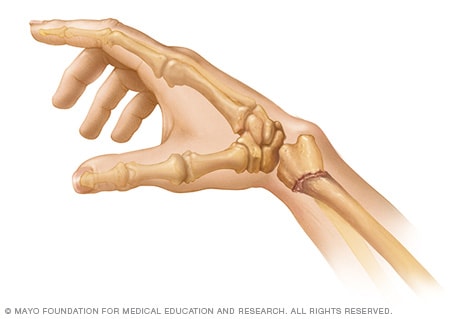
Colles fracture
The distal radius fracture is one of the most common fractures of the wrist. It usually occurs when people fall on an outstretched hand.
A broken wrist occurs when one or more bones of the wrist break or crack, often because of a fall. When falling, people instinctively reach out their hands to catch themselves. This can lead to a break or crack, also called a fracture.
Breaking a wrist is more likely if you play certain sports, such as snowboarding, skateboarding, in-line skating or pickleball. It also is more likely if you have osteoporosis, a condition that makes bones weaker and easier to break.
One common wrist fracture is called a scaphoid fracture. It happens when you break or crack one of the eight bones in your wrist, called the carpal bones. Another common wrist fracture is a distal radius fracture. This is a break or crack in the radius bone at the wrist. The radius bone is one of the long bones in the forearm.
It's important to treat a broken wrist right away. If not treated, the bones may not heal correctly. This makes everyday tasks, such as writing or buttoning a shirt, very hard. Early treatment also helps lessen pain and stiffness.
Products & Services
Symptoms
Common symptoms of a broken wrist include:
- Serious pain that may worsen when gripping or squeezing or moving your hand or wrist.
- Swelling.
- Tenderness.
- Bruising.
- Obvious physical changes, such as a bent wrist or crooked finger.
- Stiffness or inability to move your fingers or thumb.
- Numbness in your hand or fingers.
When to see a doctor
If you think you might have a broken wrist, see a doctor right away. If you have numbness, swelling or trouble moving your fingers, seek medical care right away. Delaying diagnosis and treatment can lead to poor healing, reduced range of motion and weaker grip strength.
Causes
A strong impact or crushing injury can break any of the bones in your wrists. Common causes include:
- Falls. Falling onto an outstretched hand is one of the most common causes of a broken wrist.
- Sports injuries. Fractures often occur during contact sports or activities where falling on an outstretched hand is likely. These include activities such as pickleball, snowboarding and in-line skating.
- Motor vehicle crashes. Car crashes can cause serious fractures, sometimes breaking bones into multiple pieces and requiring surgery to repair.
Risk factors
Participating in certain sports increases the risk of breaking a wrist. Having osteoporosis, a condition that weakens bones, also makes fractures more likely.
Sports activities
Contact sports and activities that increase the risk of falls can raise the risk of breaking bones in the wrist. These include:
- Football or soccer, especially on artificial turf.
- Rugby.
- Hockey.
- Pickleball.
- Skiing.
- Snowboarding.
- In-line skating.
- Jumping on a trampoline.
- Horseback riding.
Complications
Complications of a broken wrist are rare, but they include:
- Ongoing stiffness, aching or limited movement. While discomfort typically improves after a cast is removed or surgery is completed, some people have lasting pain or stiffness. Be patient with your recovery. Talk to your healthcare professional about exercises or a referral to physical or occupational therapy.
- Osteoarthritis. Fractures that extend into the joint can cause arthritis years later. If your wrist starts to hurt or swells long after a break, contact your healthcare professional.
- Nerve or blood vessel damage. A wrist injury can affect nearby nerves and blood vessels. If you have numbness, swelling or a change in the color of your skin, seek emergency medical care.
Prevention
You can't always prevent unexpected events that lead to a broken wrist, but these tips may help reduce the risk.
Build bone strength
Build strong bones by:
- Eating a nutritious diet with enough calcium and vitamin D.
- Getting plenty of weight-bearing exercise, such as brisk walking.
- Quitting smoking if you smoke.
Prevent falls
Most broken wrists occur when people fall forward onto an outstretched hand. To prevent this common injury:
- Participate in a regular exercise program. Exercise makes you stronger. And exercises that improve balance and coordination are the most helpful.
- Wear sensible shoes.
- Remove things you can trip over in your home, such as throw rugs.
- Light up your living space.
- Have your vision checked and, if needed, corrected.
- Install grab bars in your bathroom.
- Install handrails on your stairways.
- Stay away from slippery surfaces, such as pool decks and snow- or ice-covered walkways.
Use protective gear for athletic activities
Wear wrist guards for high-risk activities, such as:
- Pickleball.
- Snowboarding.
- Skating.
- Rugby.
- Football.