概述
放射疗法
放射疗法
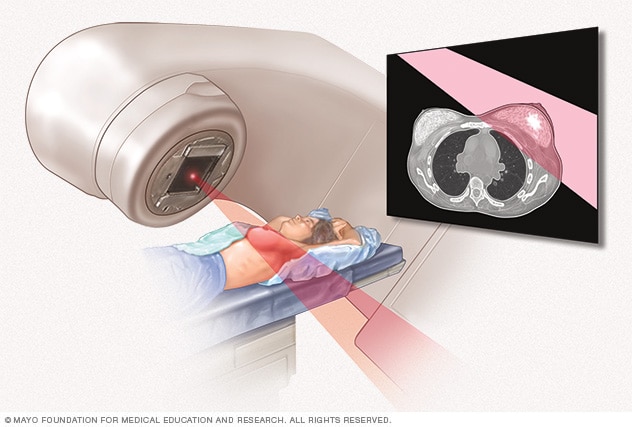
外放射疗法使用高功率能量束来杀死癌细胞。一台围绕您移动的机器,将射束精准地瞄准癌症部位。
乳腺癌放射治疗使用高能 X 线、质子或其他粒子杀死癌细胞。快速生长的细胞(例如癌细胞)比正常细胞更易受到放射疗法的影响。
X 线或粒子无痛且不可见。治疗后您没有放射性,因此对您身边的人(包括儿童)来说很安全。
乳腺癌放射治疗可通过以下方式进行:
- 外部放射。机器将放射线从身体外部传递至乳房。这是乳腺癌最常见的放疗方式。
- 内部放射(近距离治疗)。手术切除肿瘤后,医生会在乳房中肿瘤曾在的部位附近临时放置一个放射线传输装置。在治疗过程中,将一个放射源短时间置于该装置中。
放射疗法可用于治疗几乎每个阶段的乳腺癌。放射疗法是降低外科手术后乳腺癌复发风险的有效方法。此外,放射疗法通常用于缓解已经扩散至身体其他部位的癌症所导致的症状(转移性乳腺癌)。
目的
放射疗法可杀死癌细胞。它常用于在手术后降低癌症复发的风险,也可用于缓解疼痛和晚期乳腺癌的其他症状。
肿块切除术后的放疗
如果您接受乳腺癌切除手术,并完整保留剩余的乳房组织(肿块切除术或保乳手术),医生可能会建议在术后进行放疗,以杀死可能残留的癌细胞。在肿块切除术后进行放疗可降低患侧乳房癌症复发的风险。
肿块切除术联合放射疗法通常被称为保乳治疗。这种治疗方法与切除所有乳腺组织(乳房切除术)的效果一样。在特殊情况下,如果复发风险非常低,医生也会讨论在肿块切除术后不做放射治疗的方案。
肿块切除术后的放疗方案可能包括:
- 全胸放疗。外照射全乳放疗(全乳放疗)是肿块切除术后最常用的放疗类型之一。
- 部分乳房放疗。对于某些早期乳腺癌,部分乳房放疗(部分乳房照射)不失为一种选择。这种治疗将内部或外部辐射导向肿瘤切除位置周围的区域。
乳房切除术后进行放射治疗
也可在乳房切除术之后进行放射治疗。在这种情况下,放射治疗可以杀死任何可能残留的癌细胞,降低胸壁剩余组织或淋巴结中癌症复发的风险。
在确定是否应在乳房切除术后接受放射治疗时,医生会考虑您是否存在以下情况:
- 淋巴结有存在乳腺癌细胞的迹象。腋下(腋窝)淋巴结的癌细胞检测结果为阳性,这表明部分乳腺癌细胞已扩散。
- 肿瘤较大。如果乳腺癌尺寸超过约 2 英寸(5 厘米),其复发风险通常高于较小的癌症。
- 组织边缘有存在乳腺癌细胞的迹象。切除乳房组织后,检查组织边缘是否有存在癌细胞的迹象。如果组织边缘极窄或组织边缘的癌细胞检测呈阳性,则存在复发的风险因素。
局部晚期乳腺癌的放射治疗
放射疗法也可用于治疗:
- 无法通过手术切除的乳腺癌。
- 炎性乳腺癌是一种扩散至覆盖乳房的皮肤淋巴管的侵袭性癌症。此类癌症的患者通常在接受乳房切除术前进行化疗,然后进行放疗,以降低复发的可能性。
治疗转移性乳腺癌的放射治疗
如果您的乳腺癌已扩散(转移)至身体的其他部位,医生可能建议通过放射疗法来缩小癌症并帮助控制疼痛等症状。
风险
放射疗法的副作用根据治疗类型和治疗组织的不同存在很大差异。放疗结束时的副作用往往最为明显。副作用可能在治疗结束后几天或几周才会消失。
治疗期间常见的副作用可能包括:
- 轻度至中度疲劳
- 类似于晒伤的皮肤刺激,如发痒、发红、脱皮或起水疱
- 乳房肿胀
根据受影响组织的不同,放射疗法可能引致下列状况或增加其风险:
- 如果治疗手臂下的淋巴结,出现手臂肿胀(淋巴水肿)
- 如果您曾在乳房切除术后使用植入物进行乳房重建,植入物损坏或并发症导致需要将其移除
在极少情况下,放射疗法可能会引致下列状况或增加其风险:
- 肋骨骨折或胸壁压痛
- 肺组织发炎或心脏损伤
- 继发性癌症,如骨癌、肌肉癌(肉瘤)或肺癌
Short-term side effects
Short-term side effects may include::
- Tiredness.
- Skin changes, such as a change in skin color or dryness, in the treated area.
- Swelling of the breast or chest area.
- Hair loss in the treated area, such as the armpit.
Skin changes may look and feel different depending on your skin color. The skin may become pink, red, darker, dry, itchy, sore or swollen. It also may peel. In more-severe situations, the skin may become moist or open up. These changes are sometimes called radiation burns, but the medical term is radiation dermatitis.
The radiation itself does not hurt while it is being delivered. But lying in one position may not be comfortable. The skin and breast also may become sore as treatment continues.
Nausea is not common when radiation is limited to the breast. Radiation is more likely to cause nausea when treatment is directed at the brain, upper abdomen or whole body. Tell your healthcare team if you feel sick during breast radiation so the team can consider other possible causes.
Long-term side effects
Long-term side effects may include:
- Changes in the color or feel of the skin.
- Breast pain or tenderness.
- Changes in breast size, shape or position.
- Swelling of the arm, breast or chest, called lymphedema.
- Lung or heart issues, although modern radiation planning techniques are designed to minimize radiation exposure to these organs.
- A rib fracture, which is rare.
- A second cancer in the treated area, which is rare.
Radiation may make the treated breast look or feel different over time. It may become slightly smaller, firmer or shaped differently from the other breast. The skin also may remain darker or feel thicker. These changes also can be affected by surgery, healing, breast size and the amount of tissue treated.
High blood pressure is not a common direct side effect of radiation therapy to the breast. The healthcare team considers your overall heart health and cardiovascular risk factors, including existing high blood pressure, when planning treatment.
How do side effects compare between five-day and 15-day treatment?
Compared with a 15-day radiation schedule, a five-day schedule uses a larger dose during each treatment. This does not mean that side effects will be more severe. In a large study, an established five-day schedule provided similar cancer control and similar long-term effects on the breast and chest wall compared with a 15-day schedule.
Managing side effects from breast cancer radiation treatment
Your healthcare team checks your skin and asks about other side effects during treatment. Tell the team about symptoms that are new or worse. Early treatment may help keep side effects from becoming more severe.
Skin care during radiation treatment
To help protect the skin in the treated area:
- Wash gently with lukewarm water and a mild cleanser.
- Pat the skin dry instead of rubbing it.
- Avoid scratching or scrubbing the skin.
- Use only creams, lotions, medicines or dressings approved by the radiation therapy team.
- Wear soft, loose clothing that does not rub the treated area.
- Do not place sticky bandages, powders or other products on the treatment area unless the healthcare team says they are safe.
Some products may help prevent or manage radiation-related skin reactions. The best choice depends on the type and severity of the reaction. For example, the healthcare team may recommend a prescription steroid cream, a protective film or a special dressing. Many commonly used products do not work consistently, so check with the radiation therapy team before using them.
Contact the healthcare team if the skin opens up, begins to drain, gets blisters or becomes very painful. Also contact the team if you have a fever or signs of infection.
如何进行准备
在接受放射治疗之前,您将与您的放射治疗团队会面,该团队可能包括:
- 放射肿瘤科医生,专门从事癌症放射治疗的医生。放射肿瘤科医生为您确定合适的治疗方法,跟进您的病情进展并在必要时调整治疗方案。
- 放射肿瘤科医学物理师和剂量学医师,他们对您的放射剂量及其施用进行计算和测量。
- 放射肿瘤科护士、执业护士或医生助理,他们回答有关治疗和副作用的问题,并在治疗过程中帮助管理您的健康。
- 放射治疗师,他们操作放射设备并管理您的治疗。
在开始治疗之前,放射肿瘤科医生将与您一起回顾病史,并对您进行体格检查,以确定放射疗法是否对您有益。医生还将讨论放射疗法的潜在益处和副作用。
接受外部放射疗法之前
在接受第一次治疗前,您将参加一个放射治疗计划会(模拟),期间放射肿瘤科医生会仔细绘制您的乳房区域图,以确定治疗的精确位置。在模拟期间:
- 放射治疗师会帮助您调整到最合适的姿势以瞄准患处,避免对周围正常组织造成损伤。有时会使用垫子或其他设备来帮助您保持姿势。
- 您需要做 CT 扫描,这样放射肿瘤科医生就可以定位治疗区并避开正常组织。当 CT 扫描设备在您身体周围移动时,您会听到它发出的声音。尽量放松并保持静止,以确保治疗连续、准确。
- 放射治疗师可能使用半永久性墨水或微小的永久性文身点在您的身体上做标记。这些标记将指导放射治疗师进行放射治疗。清洗时要小心,以免擦掉这些标记。
- 剂量师、放射物理师和放射肿瘤医生使用计算机软件来规划您将接受的放射治疗。当模拟和规划完成,并进行多项质量保证检查后,即可开始接受治疗。
内部放射疗法前
在开始内部放射疗法(近距离治疗)之前,一个用于放置放射性物质的专用器械会置入已切除癌症的部位。这可以在癌症手术期间完成,也可以在几天后单独进行。
可能出现的情况
放射疗法通常在手术后三到八周开始,除非是计划进行化疗。如果计划进行化疗,则通常在化疗结束后三到四周开始放疗。您很可能会在医院或其他治疗机构的门诊接受放射疗法。
常见的治疗计划(疗程)一般包括每周五天(通常是周一至周五)、每天一次的放射治疗,持续五至六周。这个疗程仍然普遍用于需要接受淋巴结放射治疗的患者。
越来越多的医生建议采用更短的治疗计划(大分割治疗)。全乳放疗的时间通常可以缩短到一到四周。局部乳房放疗可在五天甚至更短的时间内完成。这些大分割治疗方案与疗程较长的方案一样有效,并有助于降低发生某些副作用的风险。放射肿瘤医生可以帮助您决定适合您的疗程。
What to wear during radiation treatment
Wear comfortable clothing made from soft fabric. Choose clothing that is easy to remove because you may need to change into a hospital gown. Avoid tight clothing, jewelry, sticky bandages or powder near the treatment area unless the radiation therapy team tells you otherwise.
Treatment schedules
Radiation therapy may be given on different schedules depending on the type of surgery, the area being treated and other details about the cancer.
-
Five-day radiation treatment. A five-day course delivers one treatment a day for five days, usually over one week. It may be used to treat the whole breast or chest wall after surgery for select early-stage breast cancers. Some partial-breast radiation schedules also use five treatments or fewer.
Compared with a 15-day schedule, a five-day schedule uses a larger radiation dose at each treatment. Long-term research has shown that a five-day schedule provides cancer control and long-term effects on healthy breast or chest wall tissue comparable to those of a 15-day schedule. Results remain reassuring after 10 years of follow-up. This supports the use of shorter treatment courses for some people.
-
Fifteen-day radiation treatment. A 15-day course usually includes one treatment a day, Monday through Friday, for about three weeks. It is commonly used for whole-breast radiation. It also may be used after a mastectomy or when nearby lymph nodes need treatment.
Both five-day and 15-day schedules aim to treat the cancer while limiting effects on healthy tissue. Neither schedule is right for everyone. When choosing a schedule, the healthcare team considers the type of surgery, the area being treated, whether lymph nodes are included and other details about the cancer.
- Longer treatment schedules. Some treatment plans take more than three weeks. Your care team may advise a longer course based on the area that needs radiation, whether nearby lymph nodes are treated or whether additional radiation is given to an area at higher risk of the cancer returning.
外部辐射期间
一次典型的外部放射治疗通常遵循以下流程:
- 您到达医院或治疗机构后,工作人员会将您带至专门用于放射疗法的特殊房间。
- 您可能需要脱下衣服并穿上病号服。
- 在开始治疗前的模拟过程中,放射治疗师会帮助您摆好正确体位。
- 治疗师可能会拍摄图像或 X 线影像,以确保您保持正确体位。
- 之后,治疗师离开房间,然后开启递送辐射的机器(线性加速器)。
- 在治疗期间,治疗师虽然不在该房间内,但可以通过另一个房间的电视屏幕监测您的情况。通常,您与治疗师可以通过对讲机对话。如果您感到难受或不适,请告诉治疗师,必要时治疗师可停止治疗。
辐射递送可能仅持续几分钟,但每次治疗预计需要花费 15 至 45 分钟,因为每天可能都需要花费几分钟的时间才能帮助您摆好完全相同的体位。该步骤可确保精确递送辐射剂量。
放射疗法是无痛的。以要求的体位躺着可能会使您感到不适,但这个过程通常很短暂。
治疗结束后,您可以自由开展日常活动。您可在家里采取医生或护士建议的自我护理措施,例如进行皮肤护理。
在某些情况下,一旦完成主要的放射疗法环节,医生可能会建议您进行加量照射。通常,这表明您需要对病情最严重的部位进行额外定向辐射,或再接受四五天的放射治疗。例如,完成全乳腺照射后,通常会向切除了癌症的区域进行加量照射。
Breast cancer radiotherapy boost
In some situations, the radiation oncologist may recommend a radiation boost. A boost is more radiation directed to the area where the cancer was removed.
A boost usually is given after the main course of whole-breast radiation. Some treatment plans may include it in the treatment schedule. In other plans, a boost may add treatment days. Not everyone needs a boost. The use of a boost may depend on age, the features and surgical margins of the cancer, and the risk that cancer could return in the treated breast.
内部放射治疗期间
内部放射疗法需要每天将放射源插入到植入的放疗递送装置内一至两次,每次几分钟。这种治疗通常在门诊进行,间隔期间可以回家休息。
放疗递送装置将在疗程结束后移除。在这之前,医生可能会给您开具止痛药。在手术和放疗后的组织恢复期间,该部位可能会持续酸痛或触痛数天或数周。
结果
完成放射疗法后,放射肿瘤科医生或其他医务人员将安排复诊,以监测您的疾病进展情况,检查放射疗法后是否出现副作用,以及癌症是否有复发的征兆。列出您想询问医护团队成员的问题。
放射治疗完成后,如果出现以下情况,请告知医务人员:
- 持续疼痛
- 新肿块、瘀伤或皮疹
- 原因不明的体重减轻
- 发热、咳嗽不止
- 其他困扰您的症状
临床试验
探索 Mayo Clinic 的研究 测试新的治疗、干预与检查方法,旨在预防、检测、治疗或控制这种疾病。
Jan. 10, 2025