概述

肿块切除术是指通过手术切除乳房部分组织。该手术最常用于治疗乳腺癌。

肿块切除术的英文 Lumpectomy 发音为 lum-PEK-tuh-me。手术过程中,外科医生将切除癌组织及其周围部分健康组织。这样有助于确保癌组织被完全切除。

肿块切除术亦称部分乳房切除术、局部扩大切除术及保乳手术。这些术语均指仅切除部分乳腺组织的肿块切除术。相反,乳房切除术会切除所有乳房组织。

肿块切除术是早期乳腺癌的治疗方案。当乳房肿块切除术用于治疗癌症时,术后通常需对乳房进行放射治疗。该额外治疗有助于降低癌症复发的风险。

Types

Lumpectomy may be done using a standard approach or an oncoplastic approach. The decision depends on factors such as the size and location of the cancer, the amount of tissue that needs to be removed, breast size, and your preferences.

Standard lumpectomy

During a standard lumpectomy, the surgeon removes the cancer and some healthy tissue around it. The surgeon preserves as much of the natural size and shape of the breast as possible. After removing the cancer, the surgeon reshapes the remaining breast tissue to help reduce dents or other changes in breast appearance.

Oncoplastic surgery

Oncoplastic techniques may be used after a lumpectomy when a large amount of tissue is removed compared with the size of the breast. These techniques combine cancer surgery with plastic surgery. After removing the cancer, the surgeon adjusts the breast tissue to fill the area where tissue was removed and help preserve breast shape.

The surgeon may use tissue within the breast or from another area of the body to replace some of the removed tissue. Sometimes, surgery may be done on the other breast to make the breasts more similar in shape or size.

Excisional biopsy and lumpectomy

An excisional biopsy removes an area of concern, often with some surrounding breast tissue, so it can be examined for a diagnosis. The surgery may resemble a lumpectomy. But an excisional biopsy is done to find out whether the tissue is cancerous. A lumpectomy is used when breast cancer already has been diagnosed.

Excisional biopsy also may be used to take out certain noncancerous breast growths. These may include noncancerous growths called fibroadenomas that are growing, causing symptoms or changing breast appearance. Many fibroadenomas do not need to be removed.

目的

肿块切除术旨在彻底清除乳房内的癌变组织。该手术最常用于治疗乳腺癌。肿块切除术也可用于治疗非癌性乳腺疾病。此类疾病包括某些可能增加乳腺癌风险的病症。

肿块切除术最常用于治疗早期乳腺癌。早期乳腺癌是指癌变仅存在于乳腺内,或可能已扩散至邻近淋巴结的乳腺癌。大多数接受肿块切除术治疗乳腺癌的患者还需接受放射治疗。放射疗法用强大的能量束来治疗癌症。

在乳腺癌治疗开始前,您可能需要与外科医生共同确定乳腺癌手术方案。外科医生可能会告诉您,可选择肿块切除术联合放射治疗,或进行乳房切除术。乳房切除术是切除乳房全部组织的手术。研究表明,上述两种乳腺癌治疗方式在癌症预后方面效果相近。

肿块切除术可能并不适用于所有患者。医护团队可能不建议采用肿块切除术治疗乳腺癌的原因包括:

  • 与您的乳房总体体积相比,癌变范围较大。在做完肿块切除术后,您可能没有足够的健康组织能获得可接受的美容效果。
  • 乳房存在多处癌变。
  • 您患有炎性乳腺癌。
  • 由于怀孕、既往做过放疗或存在其他可能影响放疗耐受性的身体状况,而无法进行放射治疗。

Get the latest breast cancer information from Mayo Clinic delivered to your inbox.

Sign up for free and receive the latest on breast cancer treatment, care and management.

We use the data you provide to deliver you the content you requested. To provide you with the most relevant and helpful information, we may combine your email and website data with other information we have about you. If you are a Mayo Clinic patient, we will only use your protected health information as outlined in our Notice of Privacy Practices. You may opt out of email communications at any time by clicking on the unsubscribe link in the email.

风险

肿块切除术是一项存在并发症和副作用风险的外科类手术。其中可能包括:

  • 出血。
  • 感染。
  • 疼痛。
  • 暂时肿胀。
  • 乳房皮肤留下疤痕。
  • 乳房的形态和外观变化。

如何进行准备

在进行肿块切除术前,您可能需要与外科医生面谈。外科医生可能向您讲解您的乳腺癌状况和治疗方案,医生可能解释不同的乳腺癌手术,并与您共同决定最适合您的手术方式。准备一份问题清单。这将帮助您全面了解您想知道的内容。确保您了解该手术及其风险。

医护团队可能会告知您术前需要了解的事项。该手术通常作为门诊手术进行,这意味着您做完手术当天就能回家。

通常,在进行手术前,建议您:

  • 告诉医生您正在服用的任何药物、维生素或补充剂。 有些物质可能会干扰手术。
  • 请遵循医护团队的具体指导。 医护团队可能会让您在手术前停止服用某些药物,以降低并发症的风险。您可能需要在手术前几个小时内禁食禁饮。
  • 请他人陪同前往。 手术后,需要有人开车送您回家。陪同人员也需要听取医护团队关于手术后注意事项的指导。陪同您前往医院进行手术的人员可以帮助您记住医护团队所说的内容。

可能出现的情况

找到要切除的区域

在肿块切除术前,可能需要进行病灶定位操作。通过病灶定位操作,标记出乳房中的癌变部位。医护团队通常将该定位操作安排在肿块切除术前一天,或安排在手术前几天进行。有时也会安排在手术当天进行。

病灶定位操作通常由专攻影像学检查的医生(放射科医生)实施。放射科医生通过影像学检查(如乳腺 X 线摄影或超声检查)来定位乳房中的癌变部位。放射科医生将细导丝、穿刺针或放射性粒子置入癌变部位。外科医生会以此为引导,在术中精确定位需切除的区域。

如果您的乳房肿块很容易触及或可通过超声检查明确,可能无需进行病灶定位操作。

前哨淋巴结活检

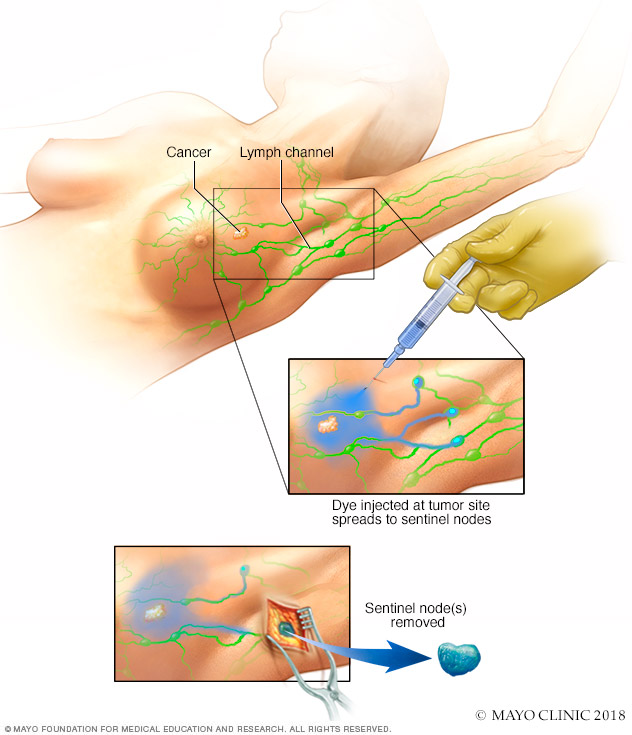
许多接受乳房肿块切除术的患者也会选择进行前哨淋巴结活检。外科医生可能会建议您进行前哨淋巴结活检,即切除靠近腋窝的一些淋巴结,检查其中是否有癌细胞。乳腺癌扩散时,往往首先扩散到淋巴结,而前哨淋巴结可能是癌症最先扩散到的淋巴结。前哨淋巴结活检可以定位并切除这些淋巴结。

为了确定前哨淋巴结的位置,医务人员会向乳房注射放射性示踪剂、蓝色染料或两者兼用。示踪剂和染料流动至前哨淋巴结。外科医生会在您的腋下开一个切口,找到淋巴结,然后切除含有示踪剂和染料的淋巴结。

医务人员会在显微镜下检查淋巴结,如果淋巴结中没有癌细胞,那么在其他淋巴结中发现癌细胞的可能性非常小。通常情况下,不会切除其他淋巴结。

如果任何淋巴结含有癌细胞,外科医生可能会从腋窝切除更多淋巴结,检查是否有癌细胞。切除腋窝多个淋巴结的手术称为腋窝淋巴结清扫术。

有时,前哨淋巴结中仅含有少量癌细胞。在这些情况下,外科医生可能会决定通过放射治疗来处理残留癌细胞。也就是说,可能不需要进行腋窝淋巴结清扫术。

肿块切除

肿块切除术通常在全身麻醉下进行。全身麻醉通过药物使您在手术过程中进入类似睡眠状态。您在手术过程中处于无意识状态,也不会感到疼痛。一个医务人员团队为全身麻醉给药。团队可能包括麻醉师和麻醉护士。他们在手术中全程对您严密监护。

可能给乳房部位具有麻醉作用的药物。该药物即局部麻醉药,可有效缓解乳房部位疼痛。

外科医生在乳房中做一切口。通常选择在肿瘤部位或定位导丝/粒子植入区域作切口。外科医生随后将切除肿瘤组织及周围部分正常组织。

切除组织将送检实验室进行病理学分析。专攻组织分析的病理科医生将在实验室内对乳房组织进行显微病理学评估。有时病理科医生可能建议扩大乳房组织的切除范围以确保肿瘤完全清除。

外科医生可能在肿瘤切除区域留置微型金属标记夹。这些标记夹可为放射疗法治疗提供精准定位参考。标记夹可精确定位放射治疗靶区。

外科医生随后使用缝线闭合手术切口。一般使用无需拆线处理的可吸收缝线。外科医生可能还会使用薄医用胶带或黏合胶来闭合切口直至愈合。医护团队将在术后为患者佩戴医用加压胸罩。加压胸罩通过提供支撑有效缓解术后水肿。医护团队可能建议术后持续佩戴医用加压胸罩一段时间。

术后

手术完成后,医护团队会将您转移至恢复区。在您从麻醉状态苏醒的过程中,医护团队会全程密切监测您的状况。大多数人可以在手术当天出院。医护团队会决定您是否具备出院条件。

您在手术后可能会感到一些不适,医护团队可能建议您使用止痛药来缓解不适。通常情况下,推荐您使用的止痛药为非处方药物。请遵循医护团队的指导。

有时可能需要强效止痛药。如果您感到疼痛,请告知医护团队。在疼痛部位冰敷也可能有帮助。

医护团队应该会针对术后的居家护理给您医嘱。可能会向您以及术后陪您回家者解释这些指导。医疗团队的指导可能包括:

  • 如何护理手术部位。
  • 可使用哪些药物来缓解疼痛。
  • 何时重新开始服用常规药物。
  • 恢复期间的活动限制。
  • 需要警惕的可能提示并发症的预警信号。
  • 如何联系医护团队。
  • 下一次预约诊疗的清单。

结果

请咨询医护团队何时能获知肿块切除术的结果。结果可能于数日内出具。医护团队可能会致电您讨论结果,或在就诊时与您讨论结果。

肿块切除术的结果详见病理检查报告。病理检查报告包含对从您乳房中切除的组织的描述。该报告可提供对该组织进行的实验室检测结果。

有时,肿块切除术的结果表明您可能需接受进一步手术。例如,结果表明并非所有癌组织均被切除,则需进一步手术。若出现此情况,医护团队会解释您的检查结果,并讨论进一步手术的相关预期。

乳腺癌肿块切除术后,医护团队可能会给您安排以下专家会诊:

  • 手术团队,解答疑问、审核您的病理检查报告并检查术后恢复情况。
  • 肿瘤科医生,讨论癌症药物治疗方案,例如化疗及激素疗法(又称内分泌治疗)。
  • 放射肿瘤科医生,讨论放射治疗方案。
  • 咨询师或互助小组,帮助您应对乳腺癌。

临床试验

探索 Mayo Clinic 的研究 测试新的治疗、干预与检查方法,旨在预防、检测、治疗或控制这种疾病。

Aug. 13, 2026
  1. Breast cancer treatment (PDQ) — Health professional version. National Cancer Institute. https://www.cancer.gov/types/breast/hp/breast-treatment-pdq. Accessed Aug. 3, 2026.
  2. Lumpectomy (breast-conserving surgery). National Cancer Institute. https://www.cancer.gov/types/breast/treatment/surgery/lumpectomy. Accessed Aug. 6, 2026.
  3. Moran MS, et al. Society of Surgical Oncology-American Society for Radiation Oncology consensus guideline on margins for breast-conserving surgery with whole-breast irradiation in stages I and II invasive breast cancer. Journal of Clinical Oncology. 2014; doi:10.1200/JCO.2013.53.3935.
  4. Morrow M, et al. Society of Surgical Oncology-American Society for Radiation Oncology–American Society of Clinical Oncology consensus guideline on margins for breast-conserving surgery with whole-breast irradiation in ductal carcinoma in situ. Annals of Surgical Oncology. 2016; doi:10.1245/s10434-016-5449-z.
  5. Park KU, et al. Sentinel lymph node biopsy in early-stage breast cancer: ASCO guideline update. Journal of Clinical Oncology. 2025; doi:10.1200/JCO-25-00099.
  6. Shaitelman SF, et al. Partial breast irradiation for patients with early-stage invasive breast cancer or ductal carcinoma in situ: An ASTRO clinical practice guideline. Practical Radiation Oncology. 2024; doi:10.1016/j.prro.2023.11.001.
  7. ACR practice parameter for the performance of preoperative image-guided localization in the breast. American College of Radiology. https://gravitas.acr.org/PPTS/GetDocumentView?docId=108. Accessed Aug. 6, 2026.
  8. Breast cancer. American Cancer Society. https://www.cancer.org/cancer/types/breast-cancer.html. Accessed Aug. 6, 2026.
  9. Health Education & Content Services. MC5538-05PF. Surgical treatments for breast cancer. Mayo Clinic; 2026.
  10. Salibian AA, et al. Oncoplastic breast reconstruction: Principles, current techniques, and future directions. Journal of Surgical Oncology. 2022; doi:10.1002/jso.26897.
  11. Kwee E, et al. Neuropathic pain following breast-conserving surgery: A systematic review and meta-analysis. JPRAS Open. 2024; doi:10.1016/j.jpra.2024.07.021.
  12. Pathology reports. National Cancer Institute. https://www.cancer.gov/about-cancer/diagnosis-staging/diagnosis/pathology-reports-fact-sheet. Accessed Aug. 6, 2026.
  13. Breast cancer surgery: What you need to know. National Breast Cancer Foundation. https://www.nationalbreastcancer.org/resources/breast-cancer-surgery-ebook/. Accessed Aug. 5, 2026.
  14. Medical review (expert opinion). Mayo Clinic. Aug. 6, 2026.

乳房肿块切除术