诊断
Cardiac amyloidosis can be hard to diagnose. Its early symptoms can be a lot like those of other more common heart conditions.
To diagnose cardiac amyloidosis, a healthcare professional asks about your symptoms, your health history and your family health history. Next, your healthcare professional examines you and listens to your heart.
You also may need tests to check your heart and look for causes of your symptoms.
Electrocardiogram (ECG/EKG)
This quick and painless test can often be done when you first see your healthcare professional. It shows how your heart is beating and how electrical signals move through the heart. Cardiac amyloidosis can cause changes in the heartbeat.
For this test, sticky patches with sensors on them go on your chest and sometimes your arms and legs. Wires connect the sensors to a computer, which prints or shows the results.
Blood and urine tests
Some blood and urine tests can help find signs of cardiac amyloidosis. Results from some of the tests help your care team learn how much the heart and other organs are damaged. But these tests can't diagnose cardiac amyloidosis by themselves.
Blood and urine tests may include:
- Troponin. This is a protein found in heart muscle. Higher levels of the protein in the blood may mean more heart muscle damage.
- N-terminal pro-B-type natriuretic peptide (NT-proBNP) or B-type natriuretic peptide (BNP). The heart releases these substances into the bloodstream when its chambers are stretched or under increased pressure. High levels may be a sign of heart failure. Heart failure is a common complication of cardiac amyloidosis. Changes in NT-proBNP or BNP levels also help your healthcare team know how AL amyloidosis treatment is working.
- Estimated glomerular filtration rate (eGFR). This blood test shows how well the kidneys are working. It checks the level of a waste product made by muscles called creatinine. Then it estimates how much blood the kidneys filter each minute. In cardiac amyloidosis, the eGFR may go down if the kidneys are not doing their job well.
- Immunoglobulin free light chains. This blood test measures two small protein pieces called kappa and lambda free light chains. It also checks whether there is more of one type than the other. A higher level of one type or change in the balance between the two may be a sign of AL amyloidosis or another plasma cell disorder. The difference between the increased light-chain level and the other light-chain level is called the difference in free light chains (dFLC). The dFLC measurement helps your healthcare team assess the condition and track how well treatment is working.
- Electrophoresis and immunofixation. These tests check blood and urine for a protein, called an antibody, made by one group of changed plasma cells. The protein is called a monoclonal protein. These tests are used with the free light chain test to look for signs of a plasma cell disorder. Results that are not in range may suggest AL amyloidosis. But more testing is needed to confirm the diagnosis.
- Other blood tests. Amyloidosis can affect more than the heart. Other blood tests may be done to see how well other parts of the body are working, such as the liver.
Imaging tests
Imaging tests make pictures of the heart. They can show changes caused by amyloid buildup. Imaging tests to help diagnose or monitor cardiac amyloidosis may include:
- Chest X-ray. A chest X-ray shows the condition of the lungs and heart. It can show whether the heart is larger than usual.
- Echocardiogram. This is one of the first tests done to help diagnose cardiac amyloidosis. Sound waves make moving pictures of the beating heart. The test shows the thickness of the heart walls and how well the heart squeezes and pumps blood. It also can show patterns in the heart that suggest amyloid buildup.
- Heart MRI, also called cardiac MRI. This test uses radio waves and a strong magnetic field to make clear pictures of the heart tissue. It shows the structure of the heart. It also can show patterns related to amyloid buildup. This test may be done if the images from an echocardiogram do not give enough information.
- Single-photon emission computerized tomography (SPECT) scan. This is a type of nuclear imaging. It's the main nuclear imaging test used to diagnose ATTR cardiac amyloidosis. The test uses a small amount of a radioactive substance called a tracer. If a lot of the tracer collects in the heart during this test and blood and urine tests do not show signs of AL amyloidosis, ATTR may be diagnosed without a heart biopsy.
- Positron emission tomography (PET) scan. This is another nuclear imaging test. It uses a small amount of a tracer that's made to stick to amyloid. An amyloid PET scan may be used to help diagnose amyloidosis when other test results are not clear. PET scans for cardiac amyloidosis are still investigational. They are not part of routine diagnosis. The test is generally available only at specialized centers or through research studies.
超声心动图
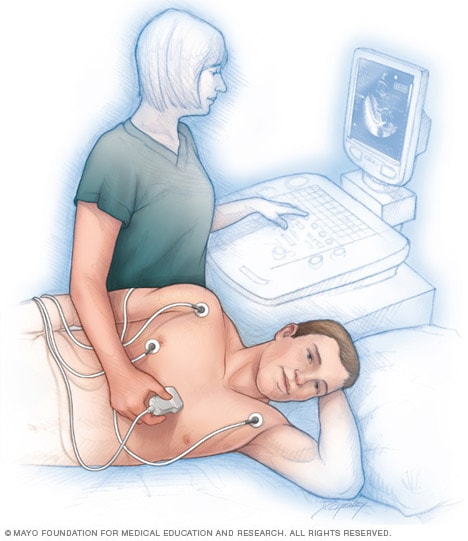
超声心动图
超声心动图使用声波显示血液如何流经心脏及心脏瓣膜。检查时将传感器贴在胸部,有时会贴在腿部,以监测心律。这项检查可以帮助医疗护理专业人员诊断心脏疾病。
Heart biopsy
A biopsy is the removal of a piece of body tissue to be checked under a microscope.
A heart biopsy is usually done in a hospital. A doctor places a thin, flexible tube, called a catheter, through a blood vessel and guides it into the heart. A tiny tool at the end of the tube removes a few small pieces of heart tissue. The tissue goes to a lab where it's checked for amyloid and the type of amyloid.
Your healthcare professional may suggest a heart biopsy when:
- Other tests for cardiac amyloidosis don't give a clear answer.
- Other tests can't tell whether the amyloid is due to AL or ATTR cardiac amyloidosis.
Your care team uses the results of all tests to diagnose cardiac amyloidosis and plan your care.
Genetic testing
Some types of cardiac amyloidosis can be passed down through families. If you have the condition, your healthcare professional may recommend that your family members be checked.
Ask your healthcare professional if genetic testing is right for you. Family screening or genetic testing may include first-degree relatives. This means your parents, siblings and children.
治疗
There's no single treatment that cures cardiac amyloidosis or reverses all the damage in the heart. But newer treatments can help slow or stop more amyloid from forming. Treatments also can help prevent further damage. In some people, treatment may reverse the damage that already happened.
Your healthcare team works with you to create a treatment plan that fits your condition and symptoms. The goals of treatment are to:
- Manage symptoms.
- Keep the condition from getting worse.
- Lower the risk of complications.
Treatment includes medicines that target the cause of amyloidosis. It also includes medicines that help the heart work better. The type of medicine you get depends on the type of cardiac amyloidosis you have. The type of medicine you need may change over time.
Your healthcare team may change your treatment based on:
- How much your heart is affected.
- If other organs are affected.
- Your overall health.
Medicines for AL cardiac amyloidosis
If you have AL cardiac amyloidosis, you usually get medicines to stop the changed plasma blood cells from making harmful light chains. Lowering the amount of harmful light chains slows or stops new amyloid from forming.
These medicines are often given together for people newly diagnosed with AL cardiac amyloidosis:
- Daratumumab-hyaluronidase (Darzalex Faspro).
- Bortezomib (Velcade).
- Cyclophosphamide (Cytoxan).
- Dexamethasone.
If the first medicine is not a good fit or does not work well enough or if the disease comes back, your care team may use other medicines or medicine combinations. A clinical trial also may be an option.
Some people with AL cardiac amyloidosis may get high-dose chemotherapy medicines and then a stem cell transplant.
Medicines for ATTR cardiac amyloidosis
There are two main types of medicines used to treat ATTR cardiac amyloidosis.
- Protein stabilizers. These medicines help stop the transthyretin (TTR) protein from breaking apart. This slows amyloid from forming. Protein stabilizers used to treat ATTR cardiac amyloidosis include tafamidis (Vyndamax) and acoramidis (Attruby). By slowing the disease, these medicines can help people stay active longer. They also can lower the risk of hospital stays for heart concerns.
- Protein silencers. These medicines lower the amount of transthyretin (TTR) protein made by the liver. Vutrisiran (Amvuttra) is one example.
Medicines to treat symptoms and prevent complications
Your healthcare professional also may give you medicines to treat your symptoms and to prevent complications. Medicines can help:
- Control heartbeats that aren't regular.
- Remove extra fluid from the body.
- Prevent blood clots.
Some medicines commonly used for heart failure or high blood pressure may not work well for people with cardiac amyloidosis. They also may cause blood pressure to drop too low. Your healthcare team chooses these medicines carefully.
Surgery or other procedures
Some people with cardiac amyloidosis may need a stem cell transplant or heart transplant.
- Autologous blood stem cell transplant. This may be a treatment for carefully selected people with AL amyloidosis that has not affected the heart too much. Stem cells are very young cells that help make blood cells. Autologous means that the stem cells come from your own body. A healthcare professional places a needle into a vein in your arm and draws some blood. A machine removes the stem cells. The stem cells are frozen and saved. The rest of your blood goes back into your body. Next, you get strong chemotherapy medicines to kill many of the cells that make harmful light chains. Then your saved stem cells go back into your body to help your bone marrow start making new blood cells.
- Heart transplant. If amyloid deposits cause a lot of damage to your heart, you might need a heart transplant. A surgeon removes your heart and replaces it with a healthier heart from a donor. It may be a treatment option for heart failure when medicines and other treatments no longer work.
You may need other procedures to treat complications of cardiac amyloidosis, such as atrial fibrillation (AFib). Some people with AFib may need cardiac ablation to help control the heartbeat.
Heart devices
Some people with cardiac amyloidosis have serious changes in their heartbeat. They may need a heart device to help the heart beat as it should. The device is placed in the chest during a minor surgery. Heart devices may include:
- Pacemaker. If cardiac amyloidosis makes your heart beat too slowly, you may need this device. It helps keep the heart beating regularly.
- Implantable cardioverter-defibrillator (ICD). This device is a treatment for certain dangerous heartbeats. It delivers an electric shock when needed to reset the heart rhythm.
- Cardiac resynchronization device. This is a treatment for some people with moderate to severe heart failure. It helps the heart chambers squeeze in a better and more organized way.
After treatment for cardiac amyloidosis, you need regular health checkups. This may include tests to check your heart and to see how well treatment is working.
Care team
If you have cardiac amyloidosis, different healthcare professionals work together to treat your condition and support your care. You do not have to manage the condition on your own.
Your specific care team depends on your individual needs but may include:
- Doctors trained in heart diseases, called cardiologists.
- Other heart specialists who care for and treat irregular heartbeats and heart failure.
- Doctors trained in blood diseases, called hematologists.
- Genetic counselors.
- A primary care healthcare professional.
临床试验
探索 Mayo Clinic 的研究 测试新的治疗、干预与检查方法,旨在预防、检测、治疗或控制这种疾病。
Self-care
Cardiac amyloidosis can make everyday activities harder because you may feel tired, weak or short of breath. These steps may help you manage symptoms and stay as active as you can.
- Take your medicines as directed.
- Go to your regular health checkups.
- Do not smoke.
- Follow your healthcare team's advice about salt and fluids.
- Talk to your care team before making big changes to your diet or activities.
- Stay active in ways your healthcare team says are safe.
- Rest when you feel tired.
It also is important to manage emotional stress. Learning that you have cardiac amyloidosis may be difficult. Some people find that talking about their concerns with others in similar situations can help. You might connect with friends or family or join a support group.
Prognosis
Prognosis means what may happen with the condition over time. It also means how well you may do after treatment. It also may be called your outlook.
The prognosis for cardiac amyloidosis is different for each person. The condition can be life-threatening. But newer treatments have improved the outlook for many people with cardiac amyloidosis.
Your prognosis depends on several things, including:
- The type of cardiac amyloidosis.
- The stage of the condition.
- Whether other organs are affected.
- How early you start treatment.
- How well treatment works for you.
In general, a better prognosis for both types is linked with:
- Finding cardiac amyloidosis early.
- Starting treatment before there is a lot of heart damage.
If it is not treated, AL cardiac amyloidosis often gets worse faster than ATTR cardiac amyloidosis. The prognosis for AL cardiac amyloidosis is better when treatment lowers harmful light chains quickly and by a large amount.
The prognosis for ATTR amyloidosis depends on the stage of the condition and how well the heart and kidneys work.
For hereditary ATTR amyloidosis, the specific change in the TTR gene may affect when your symptoms start. It also may affect which organs are involved and how your condition changes over time. Your healthcare professional may suggest genetic counseling. A genetic counselor can explain what your gene change may mean for you and your family.
To understand your prognosis, your healthcare team uses results from blood tests and imaging tests, such as echocardiograms and cardiac MRI. No single test can predict exactly what will happen to one person.
准备您的预约
If you have symptoms of cardiac amyloidosis or are worried about your risk of the condition, make an appointment with your healthcare professional. You may be referred to a doctor trained in heart diseases, called a cardiologist. You also may see a doctor trained in blood disorders, called a hematologist. If cardiac amyloidosis is found early, treatment may work better.
Appointments can be brief. Because there's often a lot to talk about, it's a good idea to be prepared for your appointment. Here's some information to help you get ready.
What you can do
When you make your appointment, ask if you need to do anything in advance. For example, you may be told not to eat or drink for a while before some tests.
Other things you can do to prepare:
- Write down any symptoms. Include those that may not seem related to cardiac amyloidosis.
- Write down important personal information. Tell your healthcare team if you have a family history of amyloidosis. Some types can run in families. Knowing as much as you can about your family history can be helpful.
- Make a list of all the medicines, vitamins and supplements that you take. Include the doses.
- Ask someone to go with you to help you remember what your care team says.
Also write down questions to ask your healthcare team. For cardiac amyloidosis, some basic questions include:
- What type of cardiac amyloidosis do I have?
- What other organs are affected?
- What tests do I need?
- What treatments do I need?
- What types of side effects can I expect from treatment?
- What are the possible complications?
- Do I need to change my diet or activities?
- Should I consider genetic testing or genetic counseling?
Don't hesitate to ask other questions during your appointment.
What to expect from your doctor
Your healthcare team usually asks many questions, such as:
- When did your symptoms start?
- How bad are they?
- Do the symptoms come and go, or do you have them all the time?
- Does anything make your symptoms better or worse?
- How is your appetite?
- Have you recently lost weight without trying?
- Have you had any swelling in your legs, feet or ankles?
- Have you felt short of breath?
- Are you able to work and do your usual daily tasks?
- Has anyone in your family ever been diagnosed with amyloidosis?
Aug. 25, 2026