Overview
Nipple-sparing mastectomy is a type of surgery to treat or prevent breast cancer. It is one of several surgical options for breast cancer.
During nipple-sparing mastectomy, the surgeon removes the breast tissue. The skin, nipple and the darker skin around the nipple, called the areola, are kept. They are used to help reconstruct the breast.
For early-stage breast cancer that is not close to the nipple or does not involve the nipple itself, nipple-sparing mastectomy can be an effective way to treat the cancer. Reviews of many studies show low rates of cancer returning after nipple-sparing surgery. This is similar to rates of cancer recurrence after other types of mastectomy. Keeping the nipple and areola means the breast looks more like it did before surgery. This helps many people feel better about how they look.
Nipple-sparing mastectomy also may be done as a preventive procedure for people at higher-than-average risk of breast cancer.
Nipple-sparing mastectomy differs from:
- Total mastectomy, which removes the entire breast, including the nipple and areola.
- Skin-sparing mastectomy, which removes the breast tissue, nipple and areola but keeps most of the breast skin.
Why it's done
Nipple-sparing mastectomy may be done to:
- Treat early-stage invasive breast cancer.
- Treat ductal carcinoma in situ (DCIS).
- Lower the risk of breast cancer in people at higher risk, such as those with a strong family history of breast cancer or with a genetic predisposition to breast cancer. Genes that pose a higher risk of breast cancer include the well-known BRCA1 and BRCA2 genes and others such as the PALB2, TP53 and PTEN genes.
Studies show that preventive nipple-sparing mastectomy can reduce the risk of developing breast cancer in people at higher risk.
Who may be a candidate
You may benefit from a nipple-sparing mastectomy if:
- Your cancer doesn't involve the nipple or skin.
- You don't have bloody discharge from the nipple.
- You don't have inflammatory breast cancer.
- You are interested in risk-reducing mastectomy.
- You want to preserve the nipple.
- You plan to have immediate reconstruction.
- You don't use nicotine, including smoking or vaping.
Situations that may increase risk
In some situations, nipple-sparing mastectomy may increase the risk of complications or the risk of the cancer coming back when compared with other types of mastectomy. Have a careful and thorough discussion with your cancer care team if you have:
- Cancer close to the nipple.
- Recurrent breast cancer.
- Large or sagging breasts.
- Previous radiation therapy.
- Recent nicotine use.
If cancer cells are found during surgery close to the nipple, the nipple is removed. If the nipple is removed, there still may be other reconstructive options. This might include nipple reconstruction from other materials or a 3D nipple tattoo.
Risks
Risks involved in a nipple-sparing mastectomy include:
- Small cancer risk. There's a slight chance that cancer might come back in the nipple tissue that was saved or in other parts of the reconstructed breast.
- Nipple might not survive. Occasionally, the nipple doesn't get enough blood flow after surgery and dies.
- Changed feeling. When the nipple is saved, it often feels different or numb afterward.
How you prepare
Most often, a nipple-sparing mastectomy is performed with immediate breast reconstruction. This typically involves careful coordination between your cancer surgeon and your plastic reconstruction surgeon. You'll meet with both surgeons before the surgery.
Discussion before surgery includes a review of your:
- Imaging and other test results.
- Cancer type and stage, if you have cancer.
- Planned chemotherapy or radiation, if part of your treatment plan.
- Medical history and risk factors.
- Personal preferences.
You and your plastic surgeon typically discuss reconstruction options, such as:
- Implant-based reconstruction. Implants typically contain saline or silicone gel.
- Reconstruction using your own tissue, often from your belly, back or buttocks. This is often preferable if you've had previous radiation therapy.
- A combination of implant and your own tissue.
- Placement of a tissue expander at the time of mastectomy. A tissue expander is a balloonlike device that helps stretch the chest skin and tissue to make room for breast reconstruction. The tissue expander is later exchanged for either an implant or your own tissue at another procedure.
Radiation therapy after reconstruction is especially important to discuss because it increases the risk of implant complications.
What you can expect
Your healthcare team will give you instructions before surgery. In general, you need to:
- Tell your healthcare team about any medicines, vitamins or supplements you're taking and the doses. Some substances could interfere with the surgery.
- Stop nicotine use. Nicotine interferes with the healing process, increases the risk of infection after surgery and is harmful to overall health. Stop any nicotine use for a minimum of six weeks prior to surgery. You also cannot use nicotine in the weeks after surgery. Ask your healthcare team for specific instructions and help with stopping nicotine use.
- Stop taking aspirin or other blood-thinning medicines. If you take blood thinners, your healthcare team will tell you when to stop taking these medicines. Sometimes a different blood-thinning medicine is given around the time of surgery.
- Stop eating before surgery. Follow your healthcare team's instructions about eating. You'll need to stop eating several hours before surgery. You may be able to drink liquids up to a certain time before surgery. Follow the instructions your healthcare team gives you.
- Make a plan for after surgery. Most people go home the same day. Ask your healthcare team if you'll need to stay in the hospital. Plan for a ride if you're told you can go home the same day. If you need to stay in the hospital another day, consider bringing a robe and slippers to help make you more comfortable. Pack a bag with your toiletries and something to help you pass the time.
During the procedure
Nipple-sparing mastectomy
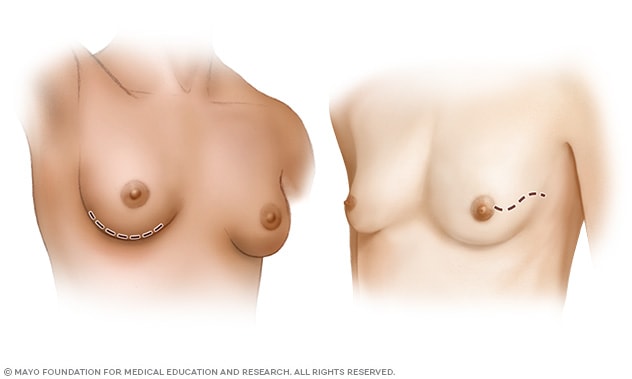
Nipple-sparing mastectomy
Nipple-sparing mastectomy removes tissue from the breast but keeps the skin, nipple and the darker skin around the nipple called the areola. Common incision locations include the fold under the breast or on the side of the breast.
Nipple-sparing mastectomy is performed under general anesthesia.
The surgeon makes an opening in the breast called an incision. Common incision locations include:
- In the fold under the breast.
- On the side of the breast.
The breast tissue is removed while preserving the skin, the nipple and areola if it is safe to do so. Typically, tissue directly underneath the nipple is removed and examined right away under a microscope to see if any cancer cells are present. If cancer cells are there, the nipple is removed.
After the mastectomy is completed, your plastic surgeon places a tissue expander or implant in the area left by the removed tissue. Or your own tissue taken from other parts of your body may be used. Often, a tissue expander is placed at the time of mastectomy and reconstruction using your own tissue occurs at a later procedure.
Robotic approach. Robot-assisted nipple-sparing mastectomy is performed at specialized treatment centers. This approach uses smaller incisions, resulting in less visible scarring.
During robotic surgery, the surgeon sits at a control panel, called a console, and uses it to move surgical tools that are attached to robotic arms. The tools are inserted through a small incision that typically is located on the side of the breast. The operation may take longer than conventional nipple-sparing mastectomy.
After the procedure
You may go home the same day. Or you may stay in the hospital overnight. Most people go home the same day. You'll have temporary drain tubes under your skin to release any fluid buildup.
After your surgery, you can expect to:
- Move to a recovery room where your blood pressure, pulse and breathing are monitored.
- Have a bandage over the surgery site.
- Receive instructions on how to care for yourself at home. Instructions include taking care of your incision and drains, knowing signs of infection, and understanding activity restrictions.
- Talk with your healthcare team about when to wear a bra.
- Have prescriptions for pain medicine and most likely an antibiotic.
Recovery time varies depending on which method of reconstruction was performed.
Results
If you're a good fit for nipple-sparing mastectomy, your chances of the cancer coming back are generally the same whether you keep your nipple or have it removed.
This is true even if you're at a higher risk of breast cancer development. A large study tracked people with BRCA1 and BRCA2 genes who had nipple-sparing mastectomy to treat breast cancer. These people had breast cancers that ranged from stage 0 to stage 3. Some had triple negative breast cancer. In the 5 to 6 years after surgery, there were no instances of cancer coming back in the nipple area. The rate at which cancer came back in other areas was similar to the rate of recurrence after other forms of mastectomy.
Nipple-sparing mastectomy also can reduce the risk of breast cancer in people at higher risk. A multicenter study found the procedure to be very effective in preventing breast cancer in people with BRCA1 and BRCA2 genes. During the 3- to 5-year follow-up, no new cases of cancer were diagnosed in nearly 350 participants.
Most people say they are happy with how their breasts look when they keep their nipples. But keep in mind:
- Your nipple won't feel the same afterward. An emerging area of research is working on ways to restore sensation in the nipple using nerve grafts and other methods.
- You might need more surgeries later to make both breasts look even.
- If you need radiation treatment, it can change how the final result looks.
You typically don't need routine imaging tests, such as mammograms, after mastectomy.
Clinical trials
Explore Mayo Clinic studies of tests and procedures to help prevent, detect, treat or manage conditions.