Overview
Nipple reconstruction is a procedure to recreate the nipple and areola after they have been removed during a mastectomy. The procedure usually is one of the last steps of breast reconstruction. Breast reconstruction is surgery to restore shape to the breast, often after breast cancer treatment.
Nipple reconstruction is different from nipple-sparing mastectomy. During a nipple-sparing mastectomy, the surgeon removes the breast tissue but keeps the skin, nipple and areola. These tissues are used to reconstruct the breast. Nipple reconstruction is typically an option when the nipple and areola are removed.
You do not need nipple reconstruction for medical reasons. But many people choose to have nipple reconstruction to restore a more typical appearance to the breast. The procedure may help them feel more like themselves or improve self-confidence. While nipple reconstruction can significantly improve the appearance of the breast after mastectomy or other nipple loss, it does not typically restore feeling in the area.
Types
Nipple reconstruction can be done in several ways. Some people choose surgery to create a nipple that is raised above the breast. Some choose medical tattooing to create the color and appearance of a nipple and an areola without making the nipple physically raised. Others have a combination of the two — surgical reconstruction of the nipple followed by medical tattooing.
Some of the factors that might affect your choices include the type of breast reconstruction you have, your skin and other tissues, cancer treatments you've had or plan on having, and what you want the reconstructed nipple and areola to look like.
Surgical nipple reconstruction
Surgical nipple reconstruction usually uses skin and tissue already on the reconstructed breast. A plastic surgeon makes small cuts in the skin and then folds or shapes the tissue to create a nipple that rises above the breast. This is called a local flap procedure.
Surgeons use different techniques. You may hear this procedure called by names such as C-V flap, skate flap or star flap. These names describe different ways the surgeon cuts and arranges the nearby skin and tissue. The goal is similar — to make a nipple that is raised and has the planned size and position.
Sometimes, the surgeon can use tissue from the nipple on the other breast. This is called nipple sharing. It is an option only for some people having reconstruction on one breast.
Illustrations of nipple reconstruction
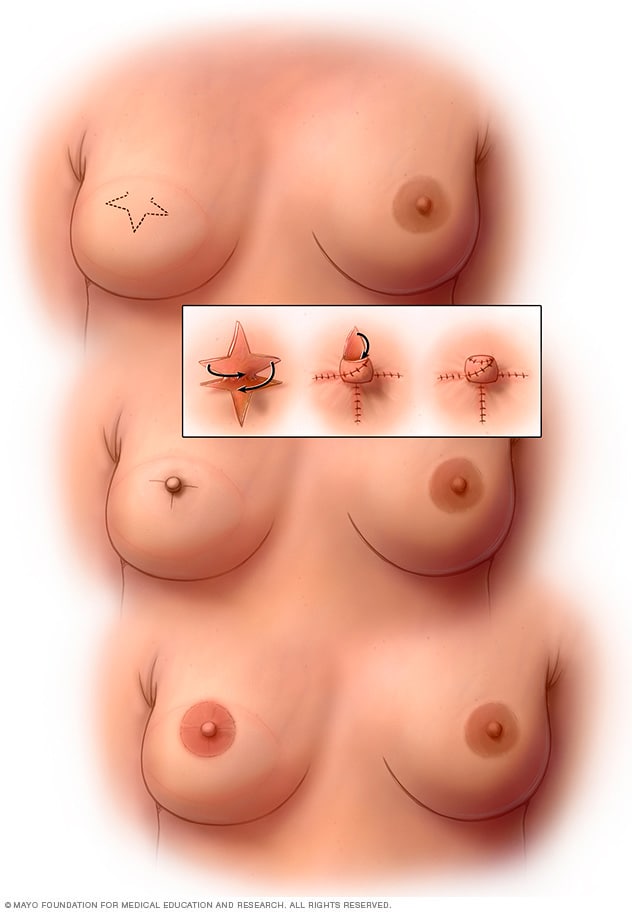
Illustrations of nipple reconstruction
Illustration of nipple reconstruction techniques using local skin flaps to create a raised nipple.
Nipple and areola tattooing
Medical tattooing adds color and shades to the skin to recreate the appearance of a nipple and an areola. Tattooing can be added after surgical nipple reconstruction or used by itself.
A 3D nipple tattoo uses different shades, highlights and shadows to make a flat area look like a raised nipple. The effect is an optical illusion. The tattoo does not make the nipple rise above the skin.
Other options
You also may choose not to reconstruct the nipple and areola. There is no medical need to have nipple reconstruction simply because you have had breast reconstruction.
Some people use prosthetic nipples instead of surgery or tattooing. These may include removable silicone or stick-on nipples that create the appearance of a nipple.
Why it's done
Nipple reconstruction can help give the reconstructed breast a more typical appearance. It also may make your breasts look more alike if you had reconstruction on only one breast.
For some people, recreating the nipple and areola improves satisfaction with the appearance of the reconstructed breast. Research also suggests that nipple reconstruction or tattooing may have positive effects on body image and sexual well-being for some people.
Nipple reconstruction most often is done after the main breast reconstruction has healed and the final shape and position of the breast are clearer. It can be performed after reconstruction with an implant. It also can be done after reconstruction with your own tissue, including a deep inferior epigastric perforator (DIEP) flap.
Risks
Nipple reconstruction is generally a smaller procedure than the surgery used to reconstruct the breast. But it still carries risks.
Possible issues after surgical nipple reconstruction may include:
- Infection.
- Slow or poor wound healing.
- Changes in the shape or position of the reconstructed nipple.
- A nipple that becomes flatter over time.
Tattooing has fewer risks than surgery, but there can be side effects. These may include:
- Changes in skin color and swelling.
- Discomfort.
- Infection.
- An uneven appearance or differences in color.
- Fading over time.
Sometimes, you need another tattoo session to restore color and appearance.
Effects of radiation therapy
If you have radiation therapy as part of breast cancer treatment, it can change the skin and tissues of your breast. This may increase the risks related to surgical reconstruction. Tattooing is generally a safe option after radiation. Your healthcare team can help you understand which options may be safest for you.
Ask your healthcare team about the risks that apply to the procedure you are considering.
How you prepare
Before nipple reconstruction, talk with your plastic surgeon about the appearance you want. You may talk about the nipple's position, size and how raised you want it to be. If you still have a nipple on the other breast, it may be used as a guide. If you're having tattooing, you also can talk about the size of the areola and the colors and shades you prefer.
Your healthcare team also considers how well your breast has healed and whether you have had or still need treatments such as chemotherapy or radiation therapy. The timing of nipple reconstruction varies from person to person.
Your healthcare team may provide instructions about how to get ready for nipple reconstruction surgery. The instructions might include stopping or changing some medicines. The instructions also might say to quit smoking if you smoke. Smoking makes it harder for the body to heal after surgery. Follow your healthcare team's instructions carefully.
What you can expect
What happens depends on whether you have surgical nipple reconstruction, nipple and areola tattooing, or both.
Before the procedure
Your surgeon plans where to place the nipple and how large and raised it will be. If you have the nipple on your other breast, its position and size can help guide the reconstruction. Your preferences also are an important part of planning.
If you choose tattooing, you and the medical tattoo artist can discuss the size, shape and shades of the nipple and areola. The tattoo may be matched to a nipple on the other breast when possible.
During the procedure
For surgical reconstruction, the plastic surgeon usually uses skin and tissue from the reconstructed breast. This is typically done under general anesthesia, which uses medicine to keep you asleep during surgery. The surgeon lifts and folds small sections of tissue and stitches them together to create a raised nipple. Different flap procedures use different patterns, but they have the same basic goal of creating a raised nipple.
Some procedures use a skin graft to help reconstruct the areola. A graft is a section of skin or tissue that may come from another area of the body. Another option for some people is a graft made with part of the nipple from the other breast. Tattooing is commonly used to add color to the areola.
During nipple and areola tattooing, the medical tattoo artist uses a needle to place color into the upper layers of the skin. Different shades can be blended to create a natural-looking transition from the nipple to the areola. For a 3D tattoo, highlights and shadows create the illusion of a raised nipple.
After the procedure
After nipple reconstruction, your care team places a bandage, also called a dressing, over the area. You may receive medicine to manage pain. Sometimes you get antibiotics to prevent infection. Your healthcare team gives you instructions about caring for the area during recovery. Follow those instructions while the area heals.
After tattooing, your healthcare professional gives you instructions for caring for the tattooed skin while it heals. This usually involves keeping a bandage over the area.
Results
Nipple reconstruction can create the appearance of a nipple and an areola. Many people find this helpful for mental, emotional and sexual well-being. But it cannot make the breast exactly the way it was before mastectomy.
After surgical reconstruction, the nipple is raised above the breast. The nipple may look larger than intended at first. Some flattening is common as it heals and over time. Your surgeon may take this expected change into account when creating the nipple.
After tattooing, the area may look darker at first and then become lighter as it heals. The color also can fade with time. Some people choose to have another tattoo session later.
If only one nipple is reconstructed, the goal often is to make its position, size and appearance similar to those of the nipple on the other breast. An exact match may not be possible.
A reconstructed nipple usually does not have the same feeling as a natural nipple. Some feeling in the breast may return after breast reconstruction, but the amount varies. Researchers are studying ways to improve feeling in the reconstructed breast and nipple by repairing or reconnecting nerves during breast reconstruction.
The goal is an appearance that feels right for you. Talk with your healthcare team about what you hope nipple reconstruction will look and feel like and what you can realistically expect.
Clinical trials
Explore Mayo Clinic studies of tests and procedures to help prevent, detect, treat or manage conditions.
Aug. 26, 2026