Overview
Types of hysterectomy surgery
Types of hysterectomy surgery
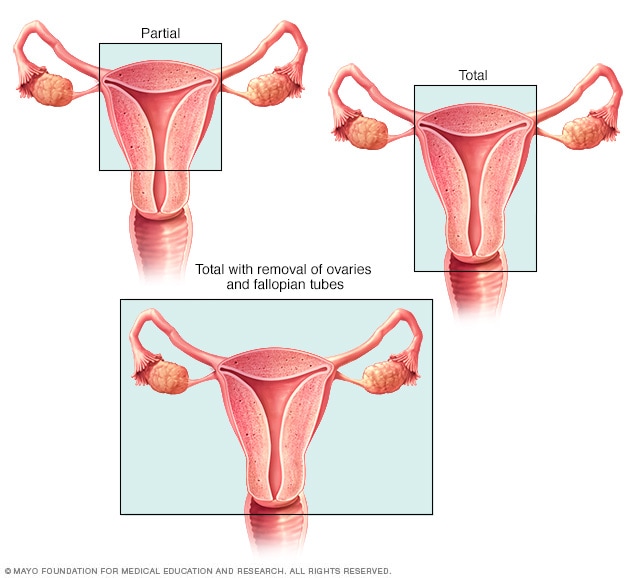
A partial hysterectomy, shown top left, removes the uterus. A total hysterectomy, shown top right, removes the uterus and cervix. The surgeon also may remove the ovaries and fallopian tubes, shown on the bottom.
An abdominal hysterectomy is an operation that removes the uterus through a cut in the lower belly, also called the abdomen. This is known as an open procedure. The uterus, also called the womb, is where a baby grows when someone is pregnant. A partial hysterectomy removes the uterus, leaving the neck of the womb in place. The neck of the womb is called the cervix. A total hysterectomy removes the uterus and the cervix.
A hysterectomy also can be done through a cut in the vagina. This is called a vaginal hysterectomy. Or you may have laparoscopic or robotic surgery, which uses long, thin instruments passed through small cuts in the belly.
You may need an abdominal hysterectomy instead of other types of hysterectomy if:
- You have a large uterus.
- Your healthcare professional wants to check other pelvic organs for signs of disease.
- Your surgeon feels it's in your best interest to do the surgery as an open procedure.
Products & Services
Why it's done
Female reproductive system
Female reproductive system
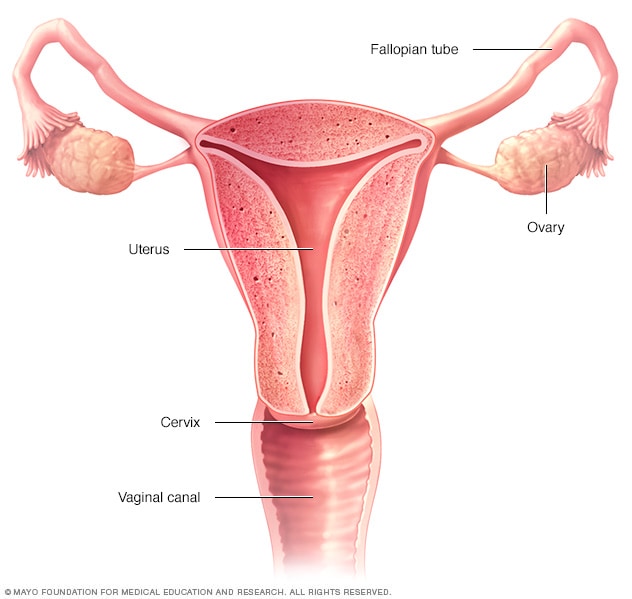
The ovaries, fallopian tubes, uterus, cervix and vagina, also called the vaginal canal, make up the female reproductive system.
Reasons why a hysterectomy might be done include:
- Cancer. If you have cancer of the uterus or cervix, a hysterectomy may be the best treatment. Other treatments might include radiation or chemotherapy. This depends on the type of cancer and how far it has spread.
- Fibroids. Fibroids are tumors that grow in the uterus. They are not cancer. Fibroids can cause heavy bleeding, anemia, pelvic pain and pressure on the bladder. A hysterectomy is the only treatment that fully removes fibroids for good.
- Endometriosis. Endometriosis happens when tissue that's like the lining of the uterus grows outside the uterus. It may grow on the ovaries, fallopian tubes or nearby organs. Endometriosis can cause painful periods, pain during sex and heavy bleeding. When other treatments for endometriosis don't work, a hysterectomy may be needed.
- Uterine prolapse. Uterine prolapse happens when the muscles and ligaments of the pelvic floor weaken. This can cause the uterus to move down into the vagina. Uterine prolapse can lead to urine leakage, pelvic pressure and problems with bowel movements. A hysterectomy is sometimes needed to treat this condition.
- Irregular or heavy vaginal bleeding. If your periods are very heavy, last a long time and come at irregular times, a hysterectomy may bring relief. But this surgery is usually done only after other treatments to manage the bleeding haven't worked.
- Chronic pelvic pain. Surgery may be a last option for ongoing pelvic pain that starts in the uterus. But hysterectomy doesn't treat all types of pelvic pain. Having surgery that you don't need may cause new problems.
- Gender-affirming surgery. Some people who wish to better align their bodies with their gender identities choose to have hysterectomies to remove the uterus and cervix. This type of surgery also might include removing the ovaries and fallopian tubes.
After hysterectomy, you can no longer become pregnant. If you might want to become pregnant in the future, talk with your healthcare professional about other treatment options. If you have cancer, a hysterectomy may be your only choice. For other conditions, such as fibroids, endometriosis and uterine prolapse, other treatments may be available.
During a hysterectomy, you may also have surgery to remove the ovaries and the fallopian tubes. If you still have periods, removing both ovaries causes surgical menopause.
With surgical menopause, symptoms of menopause often start soon after surgery. If it’s safe for you, hormone therapy may help relieve symptoms.
Risks
A hysterectomy is generally safe. Still, like any major surgery, it carries some risks.
Risks of abdominal hysterectomy include:
- Infection. Infection can happen at the surgery site or inside the body. It is usually treated with antibiotics.
- Heavy bleeding during surgery. In rare cases, a blood transfusion may be needed.
- Injury to nearby organs. This may include the urinary tract, bladder, rectum or other pelvic organs. Another surgery may be needed to repair the injury.
- Problems with anesthesia. Some people may have a bad reaction to the medicines used during surgery to keep you asleep and control pain.
- Blood clots. Blood clots can form in the legs or lungs after surgery. Your care team takes steps before and after surgery to lower this risk.
- Earlier menopause. Menopause may begin at a younger age, even if the ovaries aren't removed.
- Adhesions. These are bands of scar tissue that can cause pain or increase the risk of a blocked bowel.
- Rarely, death. Death from hysterectomy is very uncommon.
How you prepare
You may feel anxious about having a hysterectomy. Getting ready ahead of time may help calm your nerves. To prepare for surgery:
- Learn about the surgery. Before surgery, get the information you need to feel comfortable with your decision. Ask your care team questions. Learn what happens during surgery and what to expect during recovery.
- Follow instructions about medicines. Ask if you need to stop or change any medicines before surgery. Tell your care team about all medicines you take, including those you buy without a prescription, vitamins, supplements or herbs.
- Ask about anesthesia. An abdominal hysterectomy usually uses general anesthesia. This means you will be asleep during surgery and will not feel pain.
- Plan for a hospital stay. How long you stay in the hospital depends on the type of hysterectomy you have. For an abdominal hysterectomy, most people stay in the hospital for 1 to 2 days.
- Arrange for help at home. Full recovery may take several weeks. During this time, you may need to limit activities such as driving or lifting anything heavy. Arrange for help at home if you think you'll need it.
- Take steps to be as healthy as possible. If you smoke, consider quitting before surgery. Eat healthy foods, stay active and work toward or stay at a healthy weight.
What you can expect
Before the procedure
Before surgery, you may need tests to check for cancer or other conditions. The results may affect how the surgeon plans your surgery. Tests may include:
- A Pap test. Also called cervical cytology, this test checks for irregular cells or cancer of the cervix.
- Endometrial biopsy. This text takes a small sample of tissue from the lining of the uterus. This test may find irregular cells or cancer in the lining of the uterus.
- Imaging tests. A pelvic ultrasound can show the size of fibroids, polyps or ovarian cysts. In some cases, you may need an MRI or CT scan based on your health history.
- Blood tests. These check for health conditions that could affect surgery.
The day before and the morning of the surgery, you'll shower or bathe with a special soap that lowers the risk of infection.
During the procedure
Abdominal hysterectomy incisions
Abdominal hysterectomy incisions
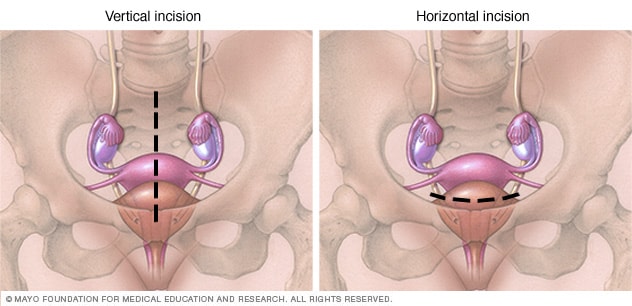
During abdominal hysterectomy, your surgeon makes a vertical or horizontal cut, called an incision, in the lower abdomen. A vertical cut, shown left, gives the surgeon more access to the pelvis. A horizontal cut, shown right, follows the skin's natural lines, usually leaving a thinner scar.
Before surgery begins, you'll receive general anesthesia. This means you will not feel pain and be in a sleeplike state during the surgery.
Surgery usually takes about 1 to 2 hours. It may take longer depending on the reason for the surgery.
A thin tube called a catheter is placed into your bladder through the urethra. This drains urine during surgery and for a short time afterward. Your care team cleans the abdomen and vagina with a sterile solution before surgery. You also will receive antibiotic medicine through a vein in your arm to help prevent infection.
The surgeon then makes a cut in the lower abdomen. This cut is called an incision. You may have:
- A vertical incision. This cut runs from below the belly button to above the pubic bone. In some cases, the cut may extend higher above the belly button if needed.
- A horizontal incision. Also called a bikini-line incision, this cut goes from side to side and is made about an inch above the pubic bone.
The type of incision you have depends on many factors. These include the reason for the surgery, the size of the uterus and whether you have scars from past surgeries.
After the procedure
After surgery, you'll go to a recovery room. Then you will be moved to your hospital room. Your care team will likely:
- Check your pain level.
- Give you medicine to control pain.
- Encourage you to get up and move as soon as it is safe.
- Encourage you to drink fluids and eat small meals.
- Watch for any problems related to surgery.
Most people stay in the hospital for 1 to 2 days. Some may need to stay longer.
You may have light vaginal bleeding or discharge for several days to weeks. Wearing sanitary pad can help. Tell your care team if you have bleeding that is as heavy as a period or bleeding that won't stop.
Your incision will heal over time. You will likely have a scar on your lower abdomen.
Results
It may take several weeks before you feel like yourself again. Most people avoid heavy lifting and vaginal sex for about six weeks, or until their surgeon says it's safe. Light activity, such as walking, is encouraged soon after surgery. This can help prevent blood clots and support healing.
Follow your care team's advice about when to return to your usual activities.
Life after a hysterectomy
A hysterectomy changes some aspects of life. For instance:
- You'll no longer have periods.
- You may feel relief from the symptoms that led to surgery.
- You won't be able to become pregnant.
- If you have not gone through menopause and your ovaries are removed, you will begin menopause after surgery.
- You may reach menopause earlier than expected, even if the ovaries weren't removed.
- You may still need cervical cancer screening, depending the type of hysterectomy you hand and your health history. If your cervix was removed, you likely will not need Pap tests. If your cervix was not removed, or if you have a history of cervical cancer or certain abnormal cells, you may still need screening.
Many parts of your life will likely return to how they were before surgery — or may improve. For example:
- If you had a satisfying sex life before surgery, you will likely continue to have one. Some people report improved sexual comfort after surgery because pain or heavy bleeding is gone.
- Relief from symptoms may improve your quality of life and overall well-being.
At the same time, you may feel a sense of loss after a hysterectomy. People who have surgery before menopause, especially for cancer, may grieve the loss of fertility. If sadness or negative feelings begin to affect your daily life, talk with your healthcare professional.
Sept. 17, 2026