Aortic valve stenosis Symptoms and causes
Overview
Aortic valve stenosis is a type of heart valve disease, also called valvular heart disease. The aortic valve is between the lower left heart chamber and the body's main artery, called the aorta. In aortic valve stenosis, the valve is narrowed and doesn't open fully. This reduces or blocks blood flow from the heart to the aorta and to the rest of the body.
Treatment of aortic stenosis depends on how severe the condition is. Treatment may include surgery to fix or replace the valve. Without treatment, severe aortic valve stenosis can lead to life-threatening complications.
Symptoms
Aortic valve stenosis ranges from mild to severe. Symptoms generally happen when the valve is very narrowed. Some people with aortic valve stenosis may not have symptoms for many years.
Symptoms of aortic valve stenosis may include:
- Chest pain or tightness with activity.
- Feeling faint or dizzy or fainting with activity.
- Shortness of breath, especially with activity.
- Fatigue, especially during times of increased activity.
- Rapid, fluttering heartbeat.
Children with aortic valve stenosis may have other symptoms such as:
- Not eating enough.
- Not gaining enough weight.
Aortic valve stenosis may lead to heart failure. Heart failure symptoms include extreme tiredness, shortness of breath, and swollen ankles and feet.
When to see a doctor
If you have an irregular heartbeat or other symptoms of aortic valve stenosis, make an appointment with your healthcare professional.
Causes
To understand the causes of aortic valve stenosis, it may help to know how the heart and heart valves typically work.
The heart has four valves that keep blood flowing in the correct way:
- Aortic valve.
- Mitral valve.
- Tricuspid valve.
- Pulmonary valve.
Each valve has flaps, also called cusps, that open and close once during each heartbeat. Sometimes, the valves don't open or close properly. If a valve doesn't fully open or close, blood flow is reduced or blocked.
In aortic valve stenosis, the valve between the lower left heart chamber, called the left ventricle, and the body's main artery, called the aorta, is narrowed and doesn't open completely. This narrowing is called stenosis.
When the aortic valve opening is narrowed, the heart must work harder to pump enough blood to the body. The extra work can cause the lower left heart chamber to get thick. Eventually the heart may become weak.
Aortic valve stenosis causes include:
- Heart condition present at birth, called a congenital heart defect. Some children are born with an aortic valve that has only two cusps instead of the usual three. If there are only two cusps, it's called a bicuspid aortic valve. Rarely, an aortic valve may have one or four cusps.
- Calcium buildup on the valve, called aortic valve calcification. Calcium is a mineral found in the blood. As blood moves over the aortic valve, calcium can collect on the valve. The calcium deposits may never cause any problems. Aortic valve stenosis that's related to increasing age and calcium deposit buildup usually doesn't cause symptoms until age 70 or 80. But in some people — particularly those with changes in the aortic valve at birth — calcium deposits might cause the valve to narrow at a younger age.
- Rheumatic fever. This complication of untreated strep throat can damage the heart valves. It may cause scar tissue to form on the aortic valve. Scar tissue can narrow the aortic valve opening. It also may make a rough surface on which calcium deposits can collect.
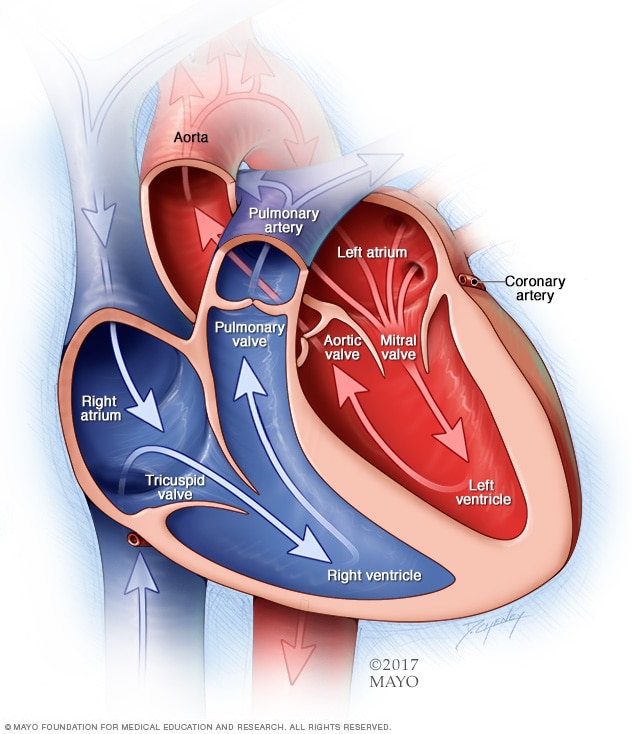
Chambers and valves of the heart
A typical heart has two upper and two lower chambers. The upper chambers, the right and left atria, receive incoming blood. The lower chambers, the more muscular right and left ventricles, pump blood out of the heart. The heart valves, which keep blood flowing in the right direction, are gates at the chamber openings.
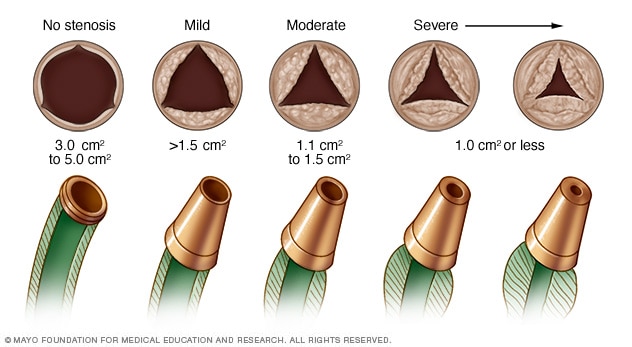
Aortic valve stenosis
In aortic valve stenosis, the aortic valve opening is narrowed, as shown in the top image. The heart must work harder to pump blood across the smaller opening. This increases pressure within the heart. Eventually the strain reduces the heart's ability to pump blood to the body. This is like placing smaller and smaller nozzles on the end of a garden hose, as shown on the bottom image. The narrower the nozzle is, the slower the flow of water. This results in pressure buildup within the garden hose.
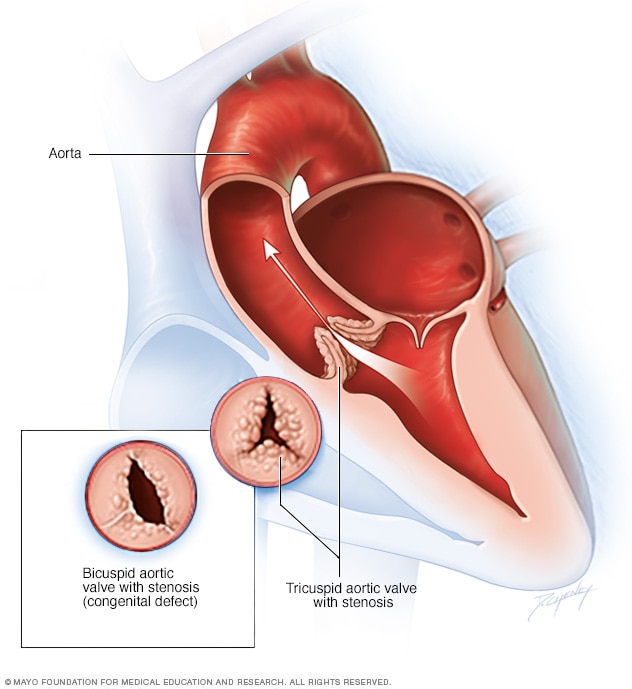
Aortic valve stenosis
Aortic valve stenosis is a type of heart valve disease. The heart's main pumping chamber and the body's main artery, called the aorta, get thick and narrow. The narrowing creates a smaller opening for blood to go through. This reduces or blocks blood flow from the heart to the rest of the body. Typically the aortic valve has three cusps, called a tricuspid aortic valve. But some people are born with an aortic valve that has two cusps, a condition called bicuspid aortic valve.
Risk factors
Risk factors of aortic valve stenosis include:
- Older age.
- Some heart conditions present at birth, called congenital heart defects. An example is a bicuspid aortic valve.
- Long-term kidney disease.
- Heart disease risk factors, such as diabetes, high cholesterol and high blood pressure.
- Infections that can affect the heart, such as rheumatic fever and infective endocarditis.
- Radiation therapy to the chest.
From Mayo Clinic to your inbox
Sign up for free and stay up to date on research advancements, health tips, current health topics, and expertise on managing health. Click here for an email preview.
Complications
Possible complications of aortic valve stenosis are:
- Heart failure.
- Stroke.
- Blood clots.
- Bleeding.
- Irregular heartbeats, called arrhythmias.
- Infections that affect the heart, such as endocarditis.
Prevention
Some possible ways to prevent aortic valve stenosis are:
- Get a health checkup when you have a sore throat. Strep throat that is not treated can lead to rheumatic fever, which can damage heart valves. Strep throat can usually be easily treated with antibiotics. Rheumatic fever is more common in children and young adults.
- Keep the heart healthy. Talk about your risk factors for heart disease with your healthcare team. Ask how to prevent and manage them. Risk factors such as high blood pressure, obesity and high cholesterol may be linked to aortic valve stenosis.
- Take care of the teeth and gums. There may be a link between infected gums, called gingivitis, and a heart infection known as endocarditis. Endocarditis is a risk factor for aortic valve stenosis.


Top ranked in the U.S.
Mayo Clinic in Rochester, Minnesota, has been recognized as one of the top Cardiology & Heart Surgery hospitals in the nation by U.S. News & World Report.
CON-20310185
Mayo Clinic does not endorse companies or products. Advertising revenue supports our not-for-profit mission.
Advertising & Sponsorship
Mayo Clinic Press
Check out these best-sellers and special offers on books and newsletters from Mayo Clinic Press.
