Descripción general
Heart failure with reduced ejection fraction (HFrEF) is a type of left-sided heart failure. It also may be called systolic heart failure. The condition affects the lower left heart chamber, called the left ventricle. That chamber is the heart's main pumping chamber. In HFrEF, the left ventricle doesn't squeeze as strongly as it should. This can make it harder for the heart to pump enough blood to the body.
Ejection fraction is the percentage of blood leaving your heart each time it squeezes. In HFrEF, the ejection fraction is reduced. It's often 40% or lower.
Proper treatment may improve the symptoms of heart failure and may help some people live longer. Lifestyle changes such as not smoking and following a special diet for heart failure may improve quality of life. But heart failure can be life-threatening. Some people with advanced heart failure may need a heart transplant or a device to help the heart pump blood.
Types
There are different types of heart failure. Heart failure usually affects the lower left heart chamber, called the left ventricle. This is the heart's main pumping chamber. This article focuses on a type of left-sided heart failure called heart failure with reduced ejection fraction (HFrEF). It also is called systolic heart failure.
Another type of left-sided heart failure is heart failure with preserved ejection fraction (HFpEF). In HFpEF, the heart still squeezes well but can't relax as it should. The heart has trouble filling with blood. HFpEF also is called diastolic heart failure..
Heart failure also can affect the lower right heart chamber, called the right ventricle. When this happens, it's called right-sided heart failure. Sometimes heart failure affects both sides of the heart.
Síntomas
If you have heart failure with reduced ejection fraction (HFrEF), also called systolic heart failure, your heart may not supply enough blood to meet your body's needs. This is especially true during times of activity or exercise.
Symptoms may develop slowly. But sometimes they start suddenly. HFrEF symptoms may include:
- Shortness of breath with activity or when lying down or bending.
- Not being able to sleep flat.
- Waking up in the middle of the night short of breath.
- Fatigue and weakness.
- Fast or irregular heartbeats.
- Not being able to exercise as much as you used to.
- Wheezing.
- A cough that doesn't go away or a cough that brings up white or pink mucus with spots of blood.
- Stomach fullness or feeling full early while eating.
Heart failure makes the body hold onto extra fluid. This can cause symptoms such as:
- Swelling in the legs, ankles and feet.
- Swelling of the belly area.
- Very fast weight gain.
Other general heart failure symptoms may include:
- Nausea and lack of appetite.
- Trouble concentrating or reduced alertness.
Insuficiencia cardíaca
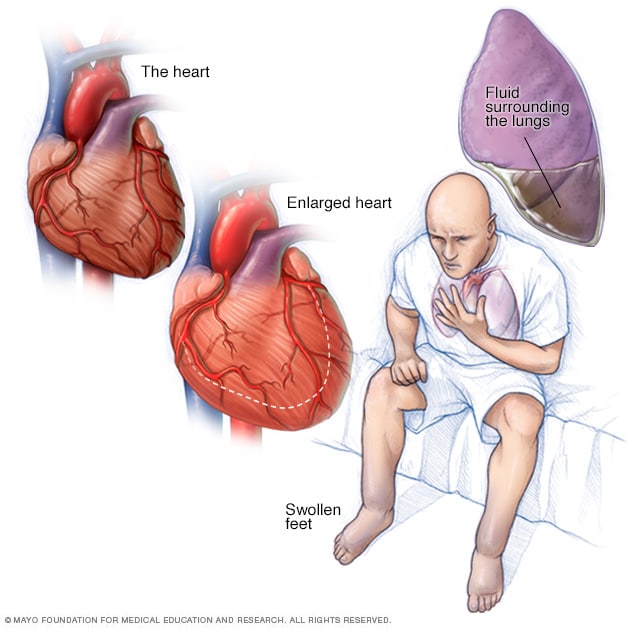
Insuficiencia cardíaca
La insuficiencia cardíaca se produce cuando el músculo cardíaco no bombea sangre como debería. Con frecuencia, la sangre retrocede y hace que se acumule líquido en los pulmones y las piernas. La acumulación de líquidos puede causar falta de aire e hinchazón de las piernas y los pies. Un flujo sanguíneo insuficiente puede hacer que la piel se vea azulada o grisácea. Según el color de tu piel, estos cambios de color pueden ser más difíciles o más fáciles de ver. Algunos tipos de insuficiencia cardíaca pueden llevar a un agrandamiento del corazón.
When to seek care
See your healthcare professional if you think you might have symptoms of heart failure. Call your healthcare professional right away if you have heart failure and:
- Your symptoms suddenly get worse.
- You develop a new symptom of heart failure.
- You gain 5 pounds (2.3 kilograms) or more within a few days.
- You have new or worsening trouble doing exercise or activities.
Such changes could mean that existing heart failure is getting worse or that treatment isn't working.
When to seek emergency care
Call 911 or your local emergency number if you have any of the following:
- Chest pain that is sudden or not explained.
- Fainting or severe weakness.
- Fast or irregular heartbeat with shortness of breath, chest pain or fainting.
- Sudden, severe shortness of breath and coughing up white or pink foamy mucus.
These symptoms may be due to heart failure. But there are many other possible causes. A complete checkup with a healthcare professional is needed for an accurate diagnosis. At the emergency room, healthcare professionals do tests to learn if your symptoms are due to heart failure or something else.
Causas
Cavidades y válvulas del corazón
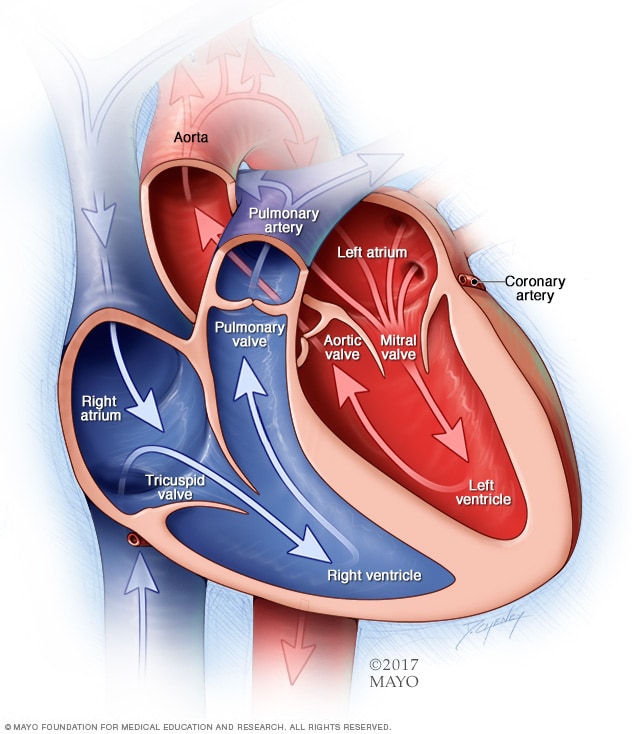
Cavidades y válvulas del corazón
Un corazón normal tiene dos cavidades superiores y dos cavidades inferiores. Las cavidades superiores, las aurículas derecha e izquierda, reciben la sangre entrante. Las cavidades inferiores, los ventrículos derecho e izquierdo más musculares, bombean la sangre desde el corazón hacia fuera. Las válvulas cardíacas, que mantienen el flujo sanguíneo en la dirección adecuada, son puertas en las aberturas de las cavidades.
Damage to the heart muscle can cause heart failure. The damage can make it harder for the heart to pump enough blood to the body. In HFrEF, the lower left heart chamber doesn't squeeze strongly enough. The lower left heart chamber is the heart's main pumping chamber. It also is called the left ventricle.
Many health conditions can damage the heart and lead to heart failure with reduced ejection fraction (HFrEF) over time. They include:
- Coronary artery disease and heart attack. Coronary artery disease can reduce blood flow to the heart muscle. Over time, this may lead to HFrEF. Coronary artery disease results from the buildup of fatty deposits in the arteries. The deposits narrow the arteries. This reduces blood flow and can lead to heart attack. A heart attack can cause heart muscle damage.
- High blood pressure. Also called hypertension, this condition forces the heart to work harder than it should to pump blood through the body. Over time, the extra work can weaken the heart muscle and lead to HFrEF.
- Irregular heartbeats called arrhythmias. Some irregular heartbeats can weaken the heart over time and lead to HFrEF. A common irregular heartbeat in HFrEF is atrial fibrillation (AFib). Treating an irregular heartbeat may improve heart failure in some people.
- Heart valve disease. The valves of the heart keep blood flowing the right way. If a valve isn't working properly, the heart must work harder to pump blood. This may lead to heart failure. Treating some types of heart valve disease may improve heart failure.
- Inflammation of the heart muscle, also called myocarditis. Myocarditis is most commonly caused by a virus, including the coronavirus disease 2019 (COVID-19) virus, and can lead to left-sided heart failure.
- A heart condition that you're born with, also called a congenital heart defect. If the heart and its chambers or valves haven't formed correctly, the other parts of the heart have to work harder to pump blood. This may lead to heart failure.
- Cardiac amyloidosis. This condition happens when proteins called amyloid build up in the heart. The buildup can make the heart thick and stiff and may lead to heart failure. Some types of cardiac amyloidosis are treated with medicines that target the protein buildup.
- Other health conditions. Diabetes, chronic kidney disease and sleep apnea also may lead to heart failure when not treated effectively. A buildup of iron in the blood also can lead to a weak or stiff heart that leads to heart failure.
Things that may trigger sudden heart failure or make heart failure worse are:
- Severe illness that affects the whole body.
- Blood clots in the lungs.
- Severe infections.
- Some medicines.
- Viruses that attack the heart muscle.
Factores de riesgo
Some things may make you more likely to get heart failure with reduced ejection fraction (HFrEF). These are called risk factors.
General risk factors for heart failure include:
- Aging. The risk of HFrEF goes up with age. The heart's ability to work naturally goes down as people get older, even in healthy people.
- Alcohol use. Drinking too much alcohol may weaken the heart muscle and raise the risk of heart failure.
- Smoking or using tobacco. If you smoke, quit. Using tobacco increases the risk of heart disease and heart failure.
- Some medicines. Examples include some chemotherapy medicines, the diabetes medicine pioglitazone (Actos), nonsteroidal anti-inflammatory drugs (NSAIDs), and some medicines used to treat conditions that affect the heart, blood, lungs, nerves or urinary system. Some medicines for mental health conditions and infections also may raise the risk. Talk with your healthcare team about the risks and benefits of all the medicines you take.
Diseases and conditions that raise the risk of HFrEF, also called systolic heart failure, include:
Complicaciones
If you have heart failure with reduced ejection fraction (HFrEF), it's important to have regular health checkups, even if symptoms improve. Your healthcare professional can examine you and run tests to check for complications.
Complications of heart failure depend on your age, overall health and the severity of heart disease. They may include:
- High blood pressure in the lungs and right-sided heart failure. HFrEF can raise pressure in the blood vessels in the lungs. This is called pulmonary hypertension. Over time, pulmonary hypertension can lead to right-sided heart failure.
- Irregular heartbeats. Heart failure can raise the risk of irregular heartbeats. Some irregular heartbeats can make heart failure worse. Some types of irregular heartbeats can lead to a life-threatening condition called sudden cardiac arrest.
- Kidney damage or failure. Heart failure can reduce the blood flow to the kidneys. Untreated, this can cause kidney failure. Kidney damage from heart failure can require dialysis for treatment.
- Heart valve disease. Heart failure can change the size and shape of the heart. These changes can keep the heart valves from working as they should.
- Liver damage. Heart failure can cause fluid buildup that puts too much pressure on the liver. This fluid backup can lead to scarring, which makes it more difficult for the liver to work properly.
Prevención
One way to prevent heart failure with reduced ejection fraction (HFrEF) is to treat and control the conditions that can cause it. These conditions include coronary artery disease, high blood pressure, diabetes and obesity.
Try these heart-healthy tips:
- Eat healthy foods.
- Don't smoke.
- Stay as active as possible.
- Keep a healthy weight.
- Manage stress.
- Manage cholesterol, blood pressure and blood sugar.
- Get 7 to 9 hours of sleep daily.
Sept. 26, 2026