Overview
Central nervous system
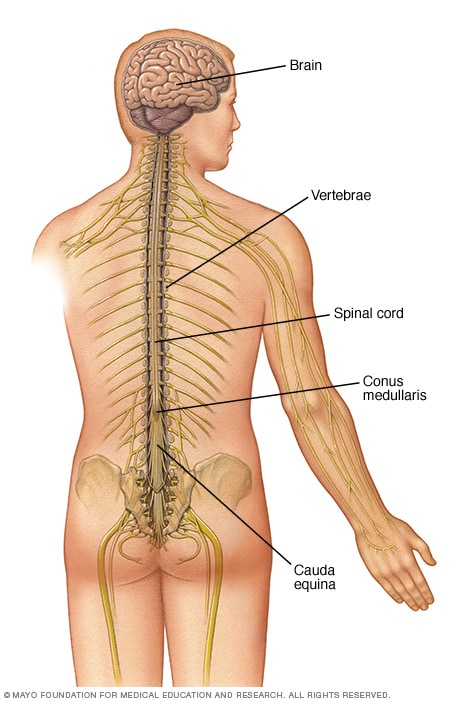
Central nervous system
The spinal cord extends downward from the base of the brain. It's made up of nerve cells and groups of nerves that carry messages between the brain and the rest of the body.
A hemangioma is a benign tumor made of extra blood vessels. Benign means it is not cancerous. Hemangiomas can appear in different parts of the body. When a hemangioma forms in the spaces between the bones of the spine, it is called a spinal or vertebral hemangioma. It also is known as a vertebral body hemangioma, a spinal vertebral hemangioma, a symptomatic vertebral hemangioma or an aggressive vertebral hemangioma.
The bones of the spine are called vertebrae. The spine is made up of many vertebrae. The main parts of the spine include the cervical, thoracic and lumbar areas. The top of the spine, called the cervical spine, runs from the base of the skull down to the base of the neck and upper shoulders. The thoracic spine is in the middle part of the back. The lumbar spine is located below the thoracic spine and above the hip area.
Spinal hemangiomas typically do not cause symptoms. Most spinal hemangiomas are found accidentally on imaging done for another reason.
If a spinal hemangioma does not cause symptoms, treatment is usually not needed. Instead, your healthcare team might carefully monitor it to see whether it grows or whether symptoms start that need to be addressed. Treatment may include surgery or radiation if the spinal hemangioma causes pain or if it grows and presses on the spinal cord and nerves.
Types
There are several types of spinal hemangiomas, including:
- Typical vertebral hemangioma. This type also is called a typical intraosseous hemangioma. An intraosseous hemangioma stays inside the spine bone. It shows more fat, tiny dots and vertical stripes on imaging.
- Atypical vertebral hemangioma. This type of hemangioma can look like cancer on imaging since it has more blood vessel tissue and less fat.
- Aggressive vertebral hemangioma. This type can grow large, weaken the bone and spread into nearby spaces around the spine. It can cause back pain and trouble walking. An extraosseous extension is sometimes seen in aggressive vertebral hemangiomas. Extraosseous means the hemangioma has grown outside the bone. When this happens and the hemangioma grows into the space around the spinal cord, it can press on the spinal cord or nerves.
Spinal hemangiomas also are described by how their blood vessels look under a microscope. These subtypes include:
- Capillary. This subtype has many tiny blood vessels.
- Cavernous. This subtype has larger, blood-filled spaces. This is the most common subtype.
- Arteriovenous (AV). This rare subtype has connections between arteries and veins that look different from usual connections.
- Venous. This subtype is made of veinlike blood vessels.
Symptoms
Spinal hemangiomas usually do not cause symptoms. If symptoms happen, they may include:
- Back or neck pain.
- A feeling of pain traveling down an arm or a leg.
- A feeling of pins and needles or numbness in the arms and legs.
- Weakness in the arms and legs.
- Trouble walking.
- Trouble urinating or urinary leakage, also called urinary incontinence.
- Bowel issues.
When to see a doctor
Spinal hemangiomas sometimes cause back pain. Make an appointment with your healthcare professional if the pain is constant, getting worse and does not seem to be caused by a certain activity.
Seek immediate medical care if you have back pain along with:
Causes
Spinal hemangiomas are benign tumors made of extra blood vessels inside the spaces in the bones of the spine. The bones of the spine are called vertebrae. Experts don't know what causes these growths. Most spinal hemangiomas are found accidentally when a person has spine imaging for another reason.
Risk factors
Risk factors for spinal hemangiomas include older age, cardiovascular disease and prior spinal trauma.
Complications
If a spinal hemangioma grows, it may press on the spinal cord or nearby nerves. It may cause back pain at first. Later, it may cause issues with numbness or feeling, strength, walking, and bladder and bowel function.
Aug. 07, 2026