Meniere's disease Symptoms and causes
Overview
Meniere's disease is a rare condition of the inner ear that causes dizzy spells, called vertigo. The disease also may lead to hearing loss. It often causes ringing, buzzing or roaring in the ear, called tinnitus. And it can cause feelings of fullness or pressure in the ear. Meniere's disease typically affects just one ear.
These symptoms may come and go. They typically start without warning and then go away. This cycle happens over and over. Over time, hearing loss and balance may get worse.
Meniere's disease can start at any age. But typically it begins between ages 40 and 60. It's considered to be a lifelong condition, but treatments can help manage symptoms. The right treatment may lessen how Meniere's disease affects your daily life.
Symptoms
People with Meniere's disease typically have a combination of symptoms that affect hearing and balance. These may include:
- Dizzy spells, called vertigo. You may have a spinning feeling that starts and stops suddenly. Vertigo may start without warning. It usually lasts 20 minutes to 12 hours. Vertigo rarely lasts more than 24 hours. Serious vertigo can cause nausea. After an episode of vertigo, symptoms typically get better and may go away for a while. Over time, the number of vertigo attacks you have may lessen.
- Hearing loss. Hearing loss in Meniere's disease may come and go, especially early on. Over time, hearing loss may not get better, even with treatment.
- Ringing in the ear. Tinnitus is the medical term for when you have a ringing, buzzing, roaring, whistling or hissing sound in your ear.
- Feeling of fullness in the ear. People with Meniere's disease often feel pressure in the ear. This is called aural fullness.
When to see a doctor
See your healthcare professional if you have symptoms of Meniere's disease. Other illnesses can cause the same symptoms. So it's important to find out what's causing your symptoms as soon as possible.
Causes
The exact cause of Meniere's disease isn't known. But researchers think symptoms are related to a buildup of fluid, called endolymph fluid, in the inner ear. The fluid buildup is called endolymphatic hydrops. It's not clear why this fluid builds up.
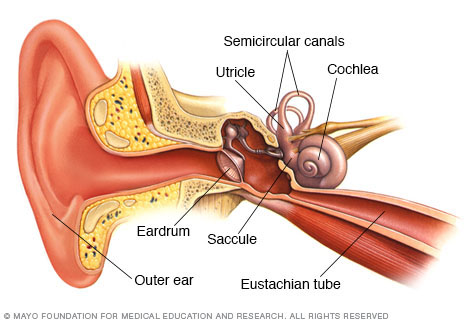
Inner ear and balance
Semicircular canals and otolith organs — called the utricle and saccule — in the inner ear contain fluid and fine, hairlike sensors. These sensory hair cells help you keep your eyes focused on a target when your head is in motion. They also help you keep your balance.
Issues that may cause fluid buildup include:
- Poor fluid drainage. This may be due to a blockage or the shape of the ear.
- Autoimmune diseases, such as rheumatoid arthritis and lupus. These conditions happen when the immune system mistakenly attacks the body's own healthy tissues.
- Viral infections.
- A family history of this condition.
But it’s not clear if a fluid buildup causes symptoms of Meniere's disease or just happens alongside them. It's likely that the disease is caused by a combination of factors.
Risk factors
Meniere's disease is most common in people between the ages of 40 and 60.
Your risk may be higher if:
- You have a close family member with Meniere's disease.
- You have an autoimmune condition.
From Mayo Clinic to your inbox
Sign up for free and stay up to date on research advancements, health tips, current health topics, and expertise on managing health. Click here for an email preview.
Complications
The most challenging complications of Meniere's disease include:
- Sudden and unpredictable vertigo attacks.
- Possible long-term hearing loss.
Because symptoms can happen without warning, the condition may lead to worry, stress and anxiety.
Vertigo also can cause you to lose your balance. This raises your risk of falling and getting injured.
CON-20374895
Mayo Clinic does not endorse companies or products. Advertising revenue supports our not-for-profit mission.
Advertising & Sponsorship
Mayo Clinic Press
Check out these best-sellers and special offers on books and newsletters from Mayo Clinic Press.
