Overview
Lip cancer
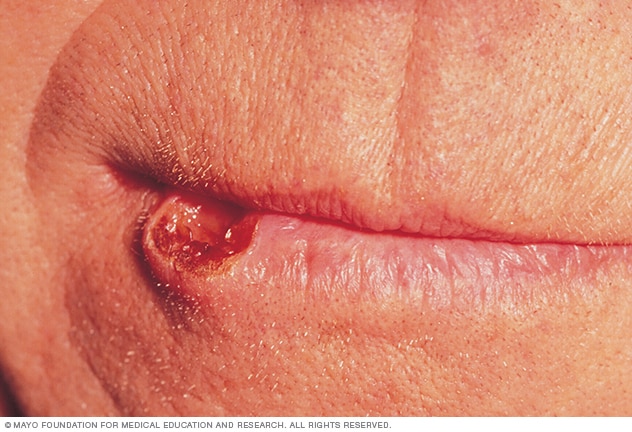
Lip cancer
Lip cancer may appear as a sore on the lip that doesn't heal.
Lip cancer is cancer that affects the skin of the lips. Lip cancer can occur anywhere along the upper or lower lip. It is most common on the lower lip. Lip cancer is a type of mouth cancer, also called oral cancer.
Most lip cancers are squamous cell carcinomas. This means they begin in the thin, flat cells in the middle and outer layers of the skin called squamous cells.
Lip cancer can be caused by too much sun exposure. It also can be caused by tobacco use. You may lower your risk of lip cancer by protecting your face from the sun with a hat or lip balm with sunscreen, and by quitting smoking.
Treatment for lip cancer usually involves surgery to remove the cancer. If the cancer is small, the surgery may be simple and have little effect on the way you look.
If you have a larger lip cancer, you may need more extensive surgery. With careful planning and reconstruction, you can still eat and speak as usual and achieve a good appearance after surgery.
Products & Services
Symptoms
Signs and symptoms of lip cancer include:
- A flat or slightly raised red or whitish discoloration of the lip.
- A sore on the lip that won't heal
- Tingling, pain or numbness of the lips or the skin around the mouth.
When to see a doctor
Make an appointment with a doctor or other healthcare professional if you have any symptoms that worry you.
Causes
Most lip cancers are caused by exposure to light from the sun or from tobacco use. The light that comes from the sun is a kind of ultraviolet light. This kind of light also can come from tanning beds and tanning lamps. Ultraviolet light contains radiation that changes the DNA inside the skin's cells and can lead to lip cancer.
Lip cancer happens when cells in the lips get changes in their DNA. A cell's DNA holds the instructions that tell the cell what to do. In healthy cells, the DNA tells the cells to grow and multiply at a set rate. The DNA also tells the cells to die at a set time.
In cancer cells, the DNA changes give different instructions. The changes tell the cancer cells to grow and multiply quickly. Cancer cells can keep living when healthy cells would die. This causes too many cells.
The cancer cells might form a mass called a tumor. The tumor can grow to invade and destroy healthy body tissue. In time, cancer cells can break away and spread to other parts of the body. When cancer spreads, it's called metastatic cancer.
Risk factors
Factors that can increase the risk of lip cancer include:
- Tobacco use of any kind, including cigarettes, cigars, pipes, chewing tobacco and snuff, among others.
- Skin that sunburns easily.
- Excessive sun exposure to the lips.
- A weakened immune system.
Prevention
To reduce your risk of lip cancer, you can:
- Stop using tobacco or don't start. If you use tobacco, stop. If you don't use tobacco, don't start. Using tobacco, whether smoked or chewed, exposes your lips to harmful chemicals that can cause cancer.
- Stay out of the sun during the middle of the day. For much of North America, the sun's rays are strongest between about 10 a.m. and 3 p.m. Plan outdoor activities at other times of the day. When outside, stay in the shade as much as possible.
- Wear sunscreen year-round. Use a broad-spectrum sunscreen with an SPF of at least 30, even on cloudy days. Apply sunscreen generously. Protect your lips by using a lip balm that contains sunscreen. Apply again every two hours, or more often if you're swimming or sweating.
- Wear protective clothing. Use a wide-brimmed hat to shield your face.
- Don't use tanning beds. The lights in tanning beds give off ultraviolet light. Using tanning beds increases the risk of lip cancer.
- Check your skin often and report changes to your healthcare team. Look at your face often for new growths or sores. Also, note any pain, numbness, or tingling on or near your lips.