Overview
Hydrocephalus is the buildup of cerebrospinal fluid (CSF) in spaces called ventricles deep within the brain. This buildup can make the ventricles larger and put pressure on the brain.
Cerebrospinal fluid usually flows through the brain ventricles and around the brain and spinal column. When there's too much fluid, the pressure can harm brain tissue and lead to changes in thinking, movement and other functions.
There are several types of hydrocephalus:
- Congenital hydrocephalus. This type starts before birth. It can happen because the brain doesn't develop as expected in the womb or due to changes in genes.
- Communicating hydrocephalus. In this type, fluid flows through the brain's ventricles without being blocked. But the body either doesn't absorb it properly or makes too much of it.
- Noncommunicating hydrocephalus. Also called obstructive hydrocephalus, this happens when something blocks the flow of fluid inside the brain. The fluid builds up behind the blockage, causing the nearby ventricles to get bigger and raising pressure inside the skull.
- Normal-pressure hydrocephalus. Most common in older adults, this type causes the brain's ventricles to enlarge, but the pressure of the fluid stays within a typical range. It can affect walking, memory and bladder control.
- Hydrocephalus ex vacuo. This type happens after brain tissue is lost, often due to a stroke, head injury or another condition. As the brain shrinks, extra space is left behind. Fluid fills the space, making the ventricles look larger, but pressure in the brain usually stays in the typical range.
Hydrocephalus can happen at any age, but it occurs more often among infants and among adults 60 and older. Surgery can help drain the extra fluid and control pressure. Therapies can manage symptoms resulting from hydrocephalus.
Products & Services
Symptoms
The symptoms of hydrocephalus can vary by age.
Infants
Common symptoms of hydrocephalus in infants include:
Changes in the head
- A head that is larger than usual.
- A rapid increase in the size of an infant's head.
- A bulge or tense soft spot on the top of the head.
Physical symptoms
- Nausea and vomiting.
- Sleepiness or sluggishness, known as lethargy.
- Irritability.
- Poor eating.
- Seizures.
- Eyes fixed downward, known as sunsetting of the eyes.
- Issues with muscle tone and strength.
Toddlers and older children
Among toddlers and older children, hydrocephalus symptoms might include:
Physical symptoms
- Headache.
- Blurred or double vision.
- Unusual eye movements.
- Enlargement of a toddler's head.
- Sleepiness or sluggishness.
- Nausea or vomiting.
- Trouble with balance.
- Poor coordination.
- Poor appetite.
- Loss of bladder control or urinating often.
Behavioral and cognitive changes
- Irritability.
- Change in personality.
- Decline in school performance.
- Delays or difficulty with earlier gained skills, such as walking or talking.
Young and middle-aged adults
Common hydrocephalus symptoms in young and middle-aged adults include:
- Headache.
- Sluggishness.
- Loss of coordination or balance.
- Loss of bladder control or needing to urinate often.
- Vision problems.
- Decline in memory, concentration and other thinking skills that may affect job performance.
Older adults
Among adults 60 and older, the more common symptoms of hydrocephalus are:
- Loss of bladder control or needing to urinate often.
- Memory loss.
- Progressive loss of other thinking or reasoning skills.
- Trouble walking, often described as shuffling or the feeling of the feet being stuck.
- Poor coordination or balance.
When to see a doctor
Seek emergency medical care for infants and toddlers with these symptoms:
- A high-pitched cry.
- Difficulty with sucking or feeding.
- Vomiting that happens again and again with no clear cause.
- Seizures.
Seek prompt medical attention for other hydrocephalus symptoms in any age group.
More than one condition can cause the symptoms associated with hydrocephalus. It's important to get a timely diagnosis and appropriate care.
Causes
Brain ventricles
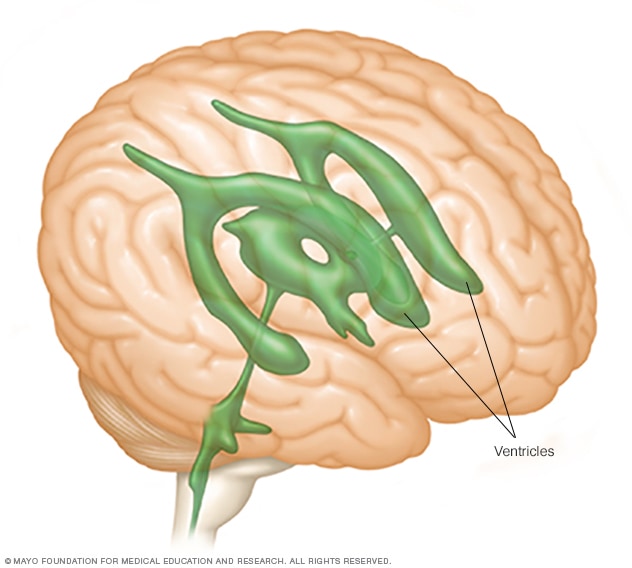
Brain ventricles
Your brain floats in a bath of cerebrospinal fluid. This fluid also fills large open structures, called ventricles, that lie deep inside your brain. The fluid-filled ventricles help keep the brain buoyant and cushioned.
Hydrocephalus happens when there's an issue with how the body makes or absorbs cerebrospinal fluid. Too much fluid builds up because it's either made too quickly or not absorbed fast enough.
Tissues lining the ventricles of the brain produce cerebrospinal fluid (CSF). This fluid flows through the brain's inner spaces and then moves into the areas around the brain and spinal cord. Most of the cerebrospinal fluid is absorbed by blood vessels in the outer layer of the brain.
CSF plays an important role in keeping the brain healthy. It helps by:
- Helping the brain float so it doesn't press too hard on the base of the skull.
- Cushioning the brain to protect it from sudden movements or injury.
- Carrying away waste made by brain cells.
- Moving between the brain and spinal cord to help control pressure inside the skull and adjust to changes in blood flow.
Too much cerebrospinal fluid in the ventricles can occur for one of the following reasons:
- Blocked flow. The most common cause of fluid buildup is a blockage that slows or stops the flow of cerebrospinal fluid. This can happen between the brain's ventricles or between the ventricles and the spaces around the brain.
- Trouble absorbing fluid. Sometimes the body has a hard time absorbing CSF. This is less common and usually happens after swelling or inflammation from an illness or injury.
- Making too much fluid. In rare cases, the brain makes more CSF than the body can absorb. This is usually caused by a tumor in the area that produces the fluid, such as a choroid plexus tumor.
Risk factors
In many cases, the cause of hydrocephalus isn't clear. But it can result from medical conditions or from issues that affect brain development before birth.
Newborns
Hydrocephalus that begins before or shortly after birth is called congenital hydrocephalus. In newborns, it may be caused by:
- Development of the central nervous system in a way that blocks the flow of cerebrospinal fluid.
- Bleeding inside the brain. This is a possible complication of premature birth.
- An infection in the uterus during pregnancy, such as rubella or syphilis. An infection can cause swelling in the brain tissues of an unborn baby.
Other causes at any age
Hydrocephalus also can develop later in life due to health issues or injuries. These may include:
- Brain or spinal cord tumors.
- Infections in the brain or spinal cord, such as meningitis or mumps.
- Bleeding in the brain caused by a stroke or head injury.
- Other types of brain injury that affect how CSF flows or is absorbed.
Complications
Often, hydrocephalus gets worse over time if it's not treated. Lack of treatment can lead to serious issues, such as learning delays, physical or developmental disabilities, or even death. If hydrocephalus is mild and treated early, many people have few or no long-term complications.
Prevention
Hydrocephalus can't always be prevented. In many cases, the cause is unknown or happens before birth. But certain steps may lower the risk, especially for conditions that lead to hydrocephalus later in life.
During pregnancy
- Get regular prenatal care. Routine checkups help catch infections and other issues that may affect brain development. Prenatal care also can help lower the risk of preterm birth, which is linked to bleeding in the brain and a higher chance of hydrocephalus.
- Avoid infections. Rubella, syphilis and other infections during pregnancy can increase hydrocephalus risk. Vaccination and good hygiene can help prevent them.
At any age
- Protect against infections. Vaccines for illnesses such as meningitis can reduce the risk of brain infections.
- Prevent head injuries. Use car seats, helmets and seat belts to protect the brain from trauma.
- Treat brain infections early. Quick treatment for infections such as meningitis or encephalitis can help prevent complications.
- Manage health conditions. Strokes, tumors and certain injuries can lead to hydrocephalus. Taking care of overall health, such as managing blood pressure, may help reduce risk.
Should you be vaccinated against meningitis?
Ask your healthcare professional if you or your child should receive a vaccine against meningitis, once a common cause of hydrocephalus. The Centers for Disease Control and Prevention recommends meningitis vaccination for preteen children and boosters for teenagers.
Vaccination also is recommended for younger children and adults who might be at increased risk of meningitis for any of the following reasons:
- Traveling to countries where meningitis is common.
- Having an immune system disease called terminal complement pathway deficiency.
- Having a damaged spleen or having had the spleen removed.
- Living in a college dormitory.
- Joining the military.