脑积水 症状与病因
概述
脑积水是指脑脊液(CSF)在脑深部被称为脑室的腔隙中积聚。积聚会使脑室扩大,并对脑产生压迫。
脑脊液通常会流经脑室,并环绕脑和脊髓流动。如果脑脊液过多,产生的压力会损伤脑组织,并导致思维、运动及其他功能发生改变。
脑积水有多种类型:
- 先天性脑积水。 此类脑积水在出生前即已存在。这是由于在子宫内脑发育异常或基因改变所致。
- 交通性脑积水。 脑脊液可正常流经脑室,不受阻碍。但身体无法正常吸收脑脊液或生成过量。
- 非交通性脑积水。 又称阻塞性脑积水,这种情况是因脑内液体流动受阻所致。脑脊液在阻塞部位后方积聚,使邻近脑室扩大,颅内压升高。
- 正常压力性脑积水。 多见于老年人,导致脑室扩大,但脑脊液压力维持在正常范围。可影响行走、记忆力及膀胱控制功能。
- 代偿性脑积水。 这种类型发生在脑组织丧失后,通常由卒中、头部受伤或其他状况引起。由于脑萎缩,留下了额外的空间。脑脊液填充其中,使脑室看起来更大,但脑内的压力通常保持在正常范围内。
脑积水可在任何年龄发生,但更常见于婴儿以及 60 岁及以上的成人。手术可以帮助排出多余的液体并控制压力。可以通过治疗控制脑积水引起的症状。
症状
脑积水的症状会因年龄而有所不同。
婴儿
脑积水在婴儿中的常见症状包括:
- 头部异常。
-
- 头部异常大。
- 婴儿头部迅速增大。
- 头顶软区(囟门)隆起或紧绷。
- 身体症状
-
- 恶心和呕吐。
- 思睡或反应迟缓(困倦)。
- 易激惹。
- 食欲欠佳。
- 癫痫发作。
- 双目持续下视,称为“落日眼”。
- 肌张力和力量问题。
幼儿和较大儿童
在幼儿和较大儿童中,脑积水的症状可能包括:
- 身体症状
-
- 头痛。
- 视力模糊或复视。
- 异常眼球运动。
- 幼儿头部增大。
- 思睡或反应迟缓。
- 恶心或呕吐。
- 平衡问题。
- 协调性差。
- 食欲不振。
- 膀胱失控或尿频。
- 行为和认知变化。
-
- 易激惹。
- 性格改变。
- 学习成绩下降。
- 在运用早期掌握的技能(例如行走或说话)方面出现迟缓或困难。
中青年
中青年成人脑积水的常见症状包括:
- 头痛。
- 反应迟缓。
- 不协调或失去平衡。
- 膀胱失控或尿频。
- 视力问题。
- 记忆力、注意力和其他思维能力下降,可能会影响工作表现。
老年人
脑积水在 60 岁及以上患者中的常见症状包括:
- 膀胱失控或尿频。
- 记忆丧失。
- 逐渐失去其他思维或推理能力。
- 行走困难,常表述为拖着脚走或脚被卡住的感觉。
- 协调和平衡能力差。
何时就医
如果婴幼儿出现以下症状,请寻求紧急医疗服务:
- 高音哭声。
- 吮吸或喂养困难。
- 反复呕吐,且无明确原因。
- 癫痫发作。
对于任何年龄阶段出现的其他脑积水症状,请立即就医。
不止一种状况可能导致与脑积水相关的症状。及时诊断和适当护理至关重要。
病因
如果身体生成或吸收脑脊液出现问题,就会发生脑积水。脑脊液生成过快或吸收过慢,都会导致液体积聚过多。
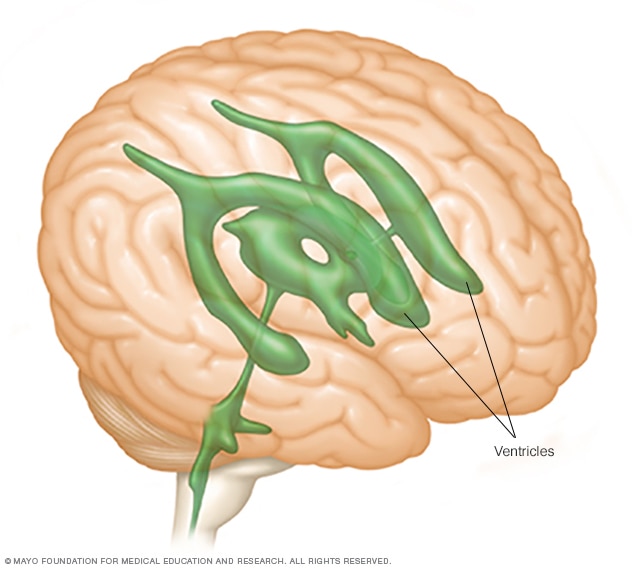
脑室
大脑悬浮于脑脊液中。脑脊液还充满大脑深处的较大开放性结构(称为脑室)。充满脑脊液的脑室有助于保持大脑悬浮并为大脑提供缓冲。
脑脊液(CSF)由脑室内膜组织产生。这种液体流经脑内部腔隙,然后进入脑和脊髓周围的区域。大部分脑脊液由脑外层的血管吸收。
CSF 在维持脑部健康方面发挥着重要作用。作用包括:
- 帮助脑悬浮,避免其过度压迫颅底。
- 为脑提供缓冲,抵御突然的运动或损伤。
- 清除脑细胞产生的废物。
- 在脑和脊髓之间流动,有助于控制颅内压并适应血流变化。
脑室中脑脊液过多的原因可能包括:
- 流动受阻。 液体积聚最常见的原因是阻塞导致脑脊液流动减缓或停止。这可能发生在脑室之间,或者脑室与脑周间隙之间。
- 液体吸收障碍。 人体有时难以吸收 CSF。这种情况较少见,通常继发于疾病或损伤引起的肿胀或炎症。
- 产生过多液体。 在极少数情况下,脑产生的 CSF 超过了人体的吸收能力。这通常由脑脊液生成部位的肿瘤引起,如脉络丛肿瘤。
风险因素
在许多情况下,导致脑积水的病因尚不明确。但它可能是由医疗状况或出生前影响脑发育的问题引起的。
新生儿
出生前或出生后不久发生的脑积水被称为先天性脑积水。新生儿出现这种状况的可能原因包括:
- 中枢神经系统发育异常,阻塞脑脊液流动。
- 脑内出血。这可能是早产的并发症。
- 妊娠期间子宫感染(例如风疹或梅毒)。感染会导致未出生婴儿的脑组织肿胀。
任何年龄段的其他病因
脑积水也可因健康问题或损伤而在年龄较大时发生。其中可能包括:
- 脑肿瘤或脊髓肿瘤。
- 脑或脊髓感染,例如脑膜炎或流行性腮腺炎。
- 卒中或头部受伤引起的脑出血。
- 影响 CSF 流动或吸收的其他类型脑损伤。
并发症
如果不予治疗,脑积水通常会随时间推移而加重。未进行治疗可能导致严重问题,例如学习延迟、肢体或发育障碍,甚至死亡。如果脑积水程度较轻且得到及早治疗,许多人几乎或完全不会出现长期并发症。
预防
脑积水并非总能预防。在许多情况下,病因不明,或在出生前就已埋下病因。但某些措施可能会降低风险,尤其是对于在年龄较大时导致脑积水的状况。
怀孕期间
- 定期进行产前护理。 常规检查有助于发现可能影响脑部发育的感染及其他问题。产前护理还有助于降低早产风险,早产与脑出血和脑积水的几率较高相关。
- 避免感染。 孕期风疹、梅毒及其他感染可能会增加脑积水风险。疫苗接种和保持良好的卫生习惯有助于预防这些状况。
在任何年龄段
- 预防感染。 接种针对脑膜炎等疾病的疫苗可以降低脑部感染的风险。
- 防止头部受伤。 使用汽车座椅、头盔和安全带,以保护脑部免受外伤。
- 尽早治疗脑部感染。 对脑膜炎或脑炎等感染进行及时治疗有助于预防并发症。
- 管理健康状况。 卒中、肿瘤和某些损伤可能导致脑积水。关注整体健康状况(例如管理血压)可能有助于降低风险。
您应该接种脑膜炎疫苗吗?
咨询医务人员您或孩子是否应该接种脑膜炎疫苗,脑膜炎曾是导致脑积水的常见病因。美国疾病控制与预防中心建议,青春期前儿童接种脑膜炎疫苗,青少年接种疫苗加强针,
还建议因以下原因可能存在脑膜炎患病风险增加的幼童和成人接种疫苗:
- 前往脑膜炎常见的国家/地区旅行。
- 患有称为终末补体途径缺陷的免疫系统疾病。
- 脾脏受损或已切除。
- 住在大学宿舍。
- 参军。

CON-20373582
